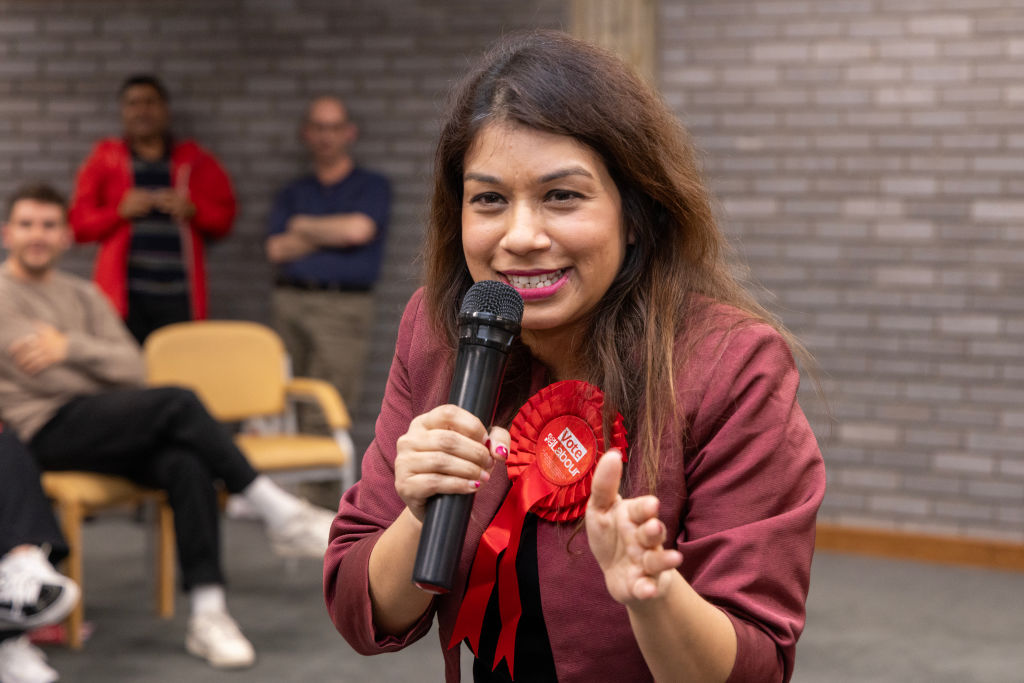
A Bangladeshi court sentenced the Labour MP Tulip Siddiq to two years in prison in absentia on Monday. Siddiq, who stepped down as anti-corruption minister earlier this year, has been found guilty of ‘influencing’ her aunt, the former Bangladeshi prime minister Sheikh Hasina, to secure a plot of valuable piece of land for her family outside Dhaka. Hasina was pushed out of power following massive demonstrators last year and has since been sentenced to death by Bangladesh’s International Crimes Tribunal. She is currently living in exile in India.
It does appear that Siddiq is now complaining about the very forces in Bangladesh that propelled her to power in the first place
Siddiq strongly denies the corruption charges and claims the evidence against her has been forged. On Monday, she said the verdict should be treated with ‘contempt’ and had been delivered by a ‘kangaroo court’. Indeed, there are grounds to believe that Sheikh Hasina, her aides and her family are being politically pursued by the Mohammad Yunus-led interim government.
It does appear though that Siddiq is now complaining about the very forces in Bangladesh that propelled her to power in the first place.
While campaigning to be elected to Camden council in the late 2000s, Siddiq worked for Hasina’s Awami League (AL), and even appeared on BBC as a spokesperson for her aunt’s party. After Hasina became prime minister of Bangladesh in 2009, Siddiq’s political career took off in the UK. She became a Camden councillor in 2010, before being elected as the MP for Hampstead and Kilburn in 2015. A 2013 meeting with Vladimir Putin, as part of Hasina’s official trip to Moscow, underlined Siddiq’s parallel political involvement in Bangladeshi politics. And she continued to address AL rallies while serving as a British MP.

Throughout Hasina’s reign in Bangladesh, AL workers campaigned for Siddiq in the UK. Siddiq has benefitted from both political and familial ties with Hasina, with the Labour MP reported in 2024 to be living in a £2 million mansion owned by AL leader and business tycoon Salman Rahman. Hasina and the AL are accused of siphoning up to $234 billion from Bangladesh between 2009 and 2023. (Hasina and the Awami League deny all allegations of corruption.) Much of this money ended up in the UK, with £400 million worth of British property linked to the former Bangladesh premier. The National Crime Agency has also frozen assets worth £170 million belonging to senior AL leader Saifuzzaman Chowdhury in the UK.
Still, despite having the Awami League’s political machinery at her disposal in the UK, and coming from one of South Asia’s most powerful political families, Tulip Siddiq managed to build a career as a Labour politician based on victimhood, complaining of ‘unconscious bias’ in her Hampstead and Kilburn seat.
She even managed to paint herself as a victim when her aunt was exercising authoritarian control in Bangladesh. When journalists asked her to speak to her aunt Hasina over the fate of an abducted man in 2017, Siddiq told them to ‘be very careful’ since ‘I am not Bangladeshi’.
Even today, Siddiq doesn’t appear to be using her position, and the publicity of her trial, to speak up against the continued abuses carried out by the interim government in Bangladesh. Hindus are under attack from Islamists while political dissenters face being abducted and tortured. Siddiq seems to have no words of support for Awami League workers being attacked in Bangladesh who do not have the luxury of living in the UK.
While Siddiq is currently expending much of her energy to try and salvage her political career in the UK, her days as an MP might be numbered. The Bangladeshi forces that assisted her political rise in Britain no longer exist in Dhaka. The Bangladeshi diaspora, including AL workers and supporters in the UK, will find it hard to continue to back someone who has so blatantly abandoned them.
But perhaps most importantly, it is voters who should be increasingly wary of the identitarian victimhood which is so often propagated in the West by immigrants from elite backgrounds.




Comments