
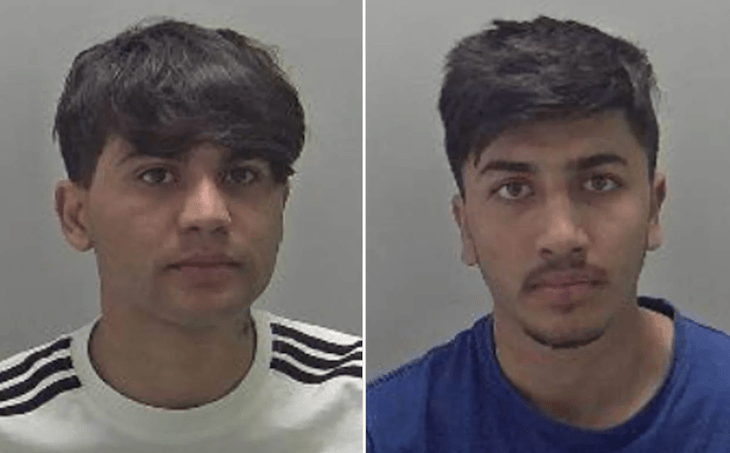
Everything about that rape of a 15-year-old girl in Leamington Spa is horrifying. First and foremost, the barbaric act itself. It took place on 10 May. Just after 9pm the girl was separated from her friends and abducted by Jan Jahanzeb, a 17-year-old Afghan asylum seeker. He frogmarched her to a darkened park with the intention of sexually assaulting her.
If officialdom had done what voters have begged it to, and properly policed our borders, these young men might not have made it here
Then there was Jahanzeb’s sickening phone call to his friend, Israr Niazal. ‘Come quick’, he said. Come and help me rape this girl – that’s what he was saying. Niazal rushed to the scene. They forced the girl to perform oral sex on them. They’d been in the UK just a few months. They had bed and board in taxpayer-funded accommodation. And they repaid our charity by savagely assaulting an innocent.
Then there are the details. They are beyond grim. The girl had the wherewithal to record her abduction on her mobile phone. ‘Let me go’, she cries. ‘You are going to rape me’, she says. She screams for help. Jahanzeb cruelly smothered her pleas by putting his hand over her mouth. To these brutes the girl was little more than a piece of meat, existing solely for their gratification.
And there’s the most galling fact of them all: that this beastly act could have been avoided. The rapists arrived on small boats, as do hundreds of young men every day. If officialdom had done what voters have begged it to, and properly policed our borders, these young men might not have made it here. The girl might not have been raped. Her family might not have had its soul ripped out. ‘Something broke in all of us that day’, said the girl’s mother in a victim impact statement.

The Afghans received their sentences at Warwick Crown Court this week – ten years and eight months for Jahanzeb, nine years and ten months for Niazal. But what about the others? What about those who might be said to have facilitated this evil act through their reckless disregard for Britain’s sovereign sanctity? What about the creaking bureaucracy that has lost control of our borders, and the activist class that aids and abets the arrival of illegals by advising them on how to play the system and stay here?
At what point might we make a case of criminal negligence against people in power who have failed in their first duty to the people of Britain – to guard us from external threats? Every week, there are reports of serious crimes being committed by people who came here illegally. To fail to enforce our borders in such circumstances is to be complicit in these horrors.
It feels like certain politicians and preening activists cherish the virtuous glow they get from being ‘pro-refugee’ more than they do the safety of Brits, including British women and girls. Even when their post-borders ideology is proven to have dire consequences, still they cling to it for virtue points. Apparently their feelings of moral rectitude matter more than the dignity and security of your daughters.
There was one more striking thing in this grim case, a truly telling moment: the attempt to conceal the identities of the rapists. Barristers for the Afghans tried to prevent their names from being made public. If their backgrounds and the details of what they did were to become public knowledge, they argued, there might be ‘widespread public disorder’.
And there it is: the elitist dread of public opinion that so often shapes the discussion of illegal immigration. That fear of public anger that keeps the establishment awake at night, and even makes some of them think we should veil the truth in order to mollify the violent urges of the little people.
We see this obfuscating instinct all the time. On the ‘grooming gangs’ crisis, too, officials held back basic facts because they feared the response of what they view as an Islamophobic throng, a hotheaded mob given to outbursts of blind fury and bigotry. That’s us, the people. That’s how many in positions of power view us: as capricious, untrustworthy, too childlike and spiteful to be able to handle hard issues like Pakistani grooming gangs or Afghan rape cases.
Thankfully, the judge, Sylvia de Bertodano, struck down the pleas for anonymity. It is in the public interest, she said, that these Afghan nationals be named and known. She’s right. We citizens have a fundamental right to know who carried out this sickening crime, where they came from, how they got here, and what will be done to ensure other such people do not arrive on our shores. We won’t take lectures on ‘disorder’ from a political class that is recklessly endangering the public.




Comments