
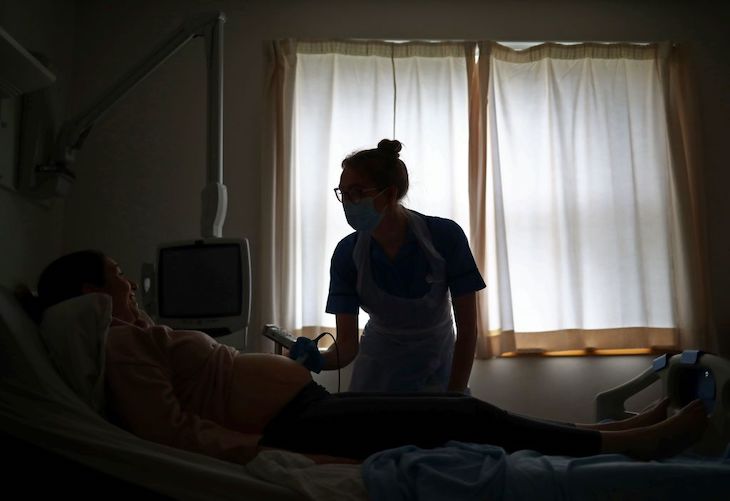
Is anyone happy with the latest maternity safety report, published by Baroness Amos today? The former UN diplomat says the standard of care that she has found so far in the NHS has been ‘much worse’ than she’d anticipated. This is quite striking, given the appalling findings of the many reviews that have already taken place into failings in maternity units across England. You might expect this review to merely have confirmed what has already been uncovered.
From grooming gangs to maternity safety to unsafe housing, the intrays of Whitehall are groaning under ‘recommendations’
But many campaigners have responded to Amos’s interim report with a weariness and frustration. Victims of poor NHS care, many of whom are bereaved, are annoyed that there is another ‘rapid’ review rather than the public inquiry that many have been calling for.
Other investigators, such as Donna Ockenden, who conducted the inquiry into care at Shrewsbury and Telford and who is now leading a review of failings in Nottingham, are annoyed that their own recommendations to prevent future failings are continuing to gather dust.
The Royal College of Midwives, which has had to answer many difficult questions over the years about ‘normal birth’ ideology contributing to many of the scandals, is complaining that it has been raising concerns about understaffing in maternity units, but to no avail.
In short, while today’s report has reminded anyone who cared to forget briefly that NHS maternity services are not fit for purpose, it doesn’t yet offer any evidence that this is the report that changes things. For many maternity campaigners (a term that glosses over the fact that a ‘maternity campaigner’ tends to be someone whose child or partner died and who then had to deal with the patronising denial of the NHS that anything went wrong), the system seems to have got stuck at the point of promising to listen, but with a rate of actual change that makes bitumen look runny. Nothing seems to precipitate the cultural, structural and political shifts necessary. Amos is due to publish her full findings early next year, while Ockenden is repeatedly being asked if she might chair other inquiries in Sussex and Leeds, even while she continues to work on the Nottingham cases. Will those inquiries make any difference either?

Amos herself points out that ‘at the time of writing, the NHS has recorded a staggering 748 recommendations relating to maternity and neonatal care, the majority of which have been made since 2015’. She adds:
‘This naturally raises an important question: with so many thorough and far-reaching reviews already completed, why are we in England still struggling to provide safe, reliable maternity and neonatal care everywhere in the country?’
Amos says that the aim of her investigation is to ‘develop national recommendations that, once put into practice, will help ensure that safe, compassionate care is consistently delivered everywhere.’
The word ‘once’ is doing Olympic levels of heavy lifting here. What evidence is there that these recommendations will move any quicker out of the intrays of government and the NHS than the previous 748? Maternity is not the only scandal-hit area where there have been plenty of reviews and recommendations and little action: it is becoming a commonplace in Britain to say that we are addicted to public inquiries but not to doing anything about them.
There are patterns of behaviour across government and the public sector that make change – which is already hard and lengthy – take longer than it should. In each case there are also reasons why individual departments and organisations feel they don’t need to be the ones to take action first: the Royal College of Midwives complaining about staffing, for instance, is also a way of that organisation deflecting from the many incidences of ideology endangering safety – something it has only reluctantly faced up to in recent years. Politicians often focus on the reverse, talking about the danger of promoting one form of birth over another while failing to acknowledge that many maternity units are understaffed and that the consequences of that are not just seen in women being left alone or not monitored sufficiently, but also in compassion fatigue among the staff who are there.
Speaking of fatigue, that seems to be exactly what the system more widely is suffering from: a sense of overwhelm at the scale of change needed and no clear idea of how to even begin. From grooming gangs to maternity safety to unsafe housing, the intrays of Whitehall are groaning under recommendations and the corridors echoing with promises to implement them. No wonder public trust in institutions is so low, when so often these inquiries amount to little more than another entry on an impossible to-do list.



Comments