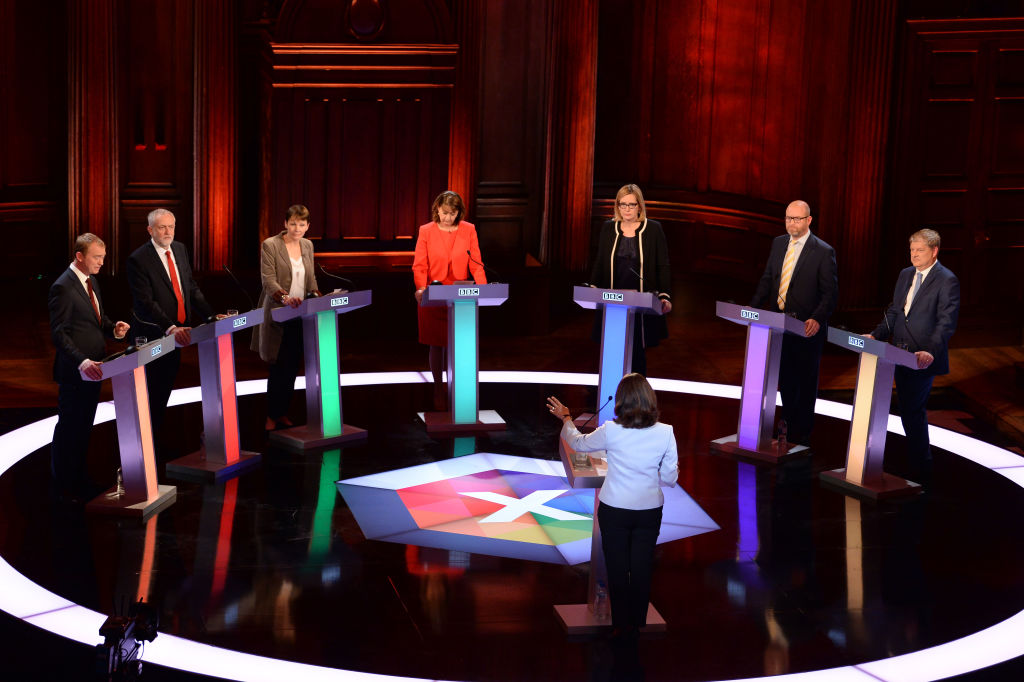
The BBC’s seven-way election debate proved that you can’t have a proper debate with seven people in it. It was a shouty, bity affair in which no one really stood out. This meant that Theresa May pretty much got away with her decision not to turn up.
Jeremy Corbyn wasn’t as good on this programme as he had been on the Sky / Channel 4 election programme on Monday night. It was also a problem for him that Caroline Lucas was delivering essentially the same argument as him, but in a more compelling way.
Tim Farron, again, tried his northern funny man routine. He had some good quips; his line that as Theresa May didn’t have time to turn up to this debate, voters shouldn’t have time for her was effective. But, overall, he came across as lacking in gravitas. Vince Cable, one suspects, would have been a rather more formidable performer for the Liberal Democrats.
Predictably, Amber Rudd was the main target of the other six. She held her ground relatively well, and accused Corbyn of believing in a magic money tree at every opportunity. Indeed. Rudd placed a far greater emphasis on the economy than the Tories have so far in this campaign—bringing up the deficit very early on in the debate. She will have done her standing in the party no harm with her performance this evening.
Are you sure your plans add up? “Absolutely”, Jeremy Corbyn sayshttps://t.co/3UgzdU67uv #BBCDebate #GE2017 pic.twitter.com/dcvuhjNcxJ— BBC News (UK) (@BBCNews) May 31, 2017
The other three leaders didn’t have that much of an impact on the night. Paul Nuttall was happy to pick fights with the other debaters but you sense that the air is going out of the Ukip balloon. Angus Robertson was oddly reluctant to insert himself into proceedings and Leanne Wood’s most significant moment came right at the start when she had a pop at May for not turning up.
https://www.youtube.com/watch?v=39-xOoUgbMY
One of the main talking points this evening was the audience, which did come across as very left-wing—the New Statesman’s George Eaton tweeted that ‘This feels like most left-wing audience in any election debate’. But the fact the audience was such a subject of discussion was a sign that the debate itself hadn’t made that much of an impact. I’d be very surprised if it moved many votes.
The BBC’s seven-way election debate proved that you can’t have a proper debate with seven people in it. It was a shouty, bity affair in which no one really stood out. This meant that Theresa May pretty much got away with her decision not to turn up. Jeremy Corbyn wasn’t as good on this programme




Comments