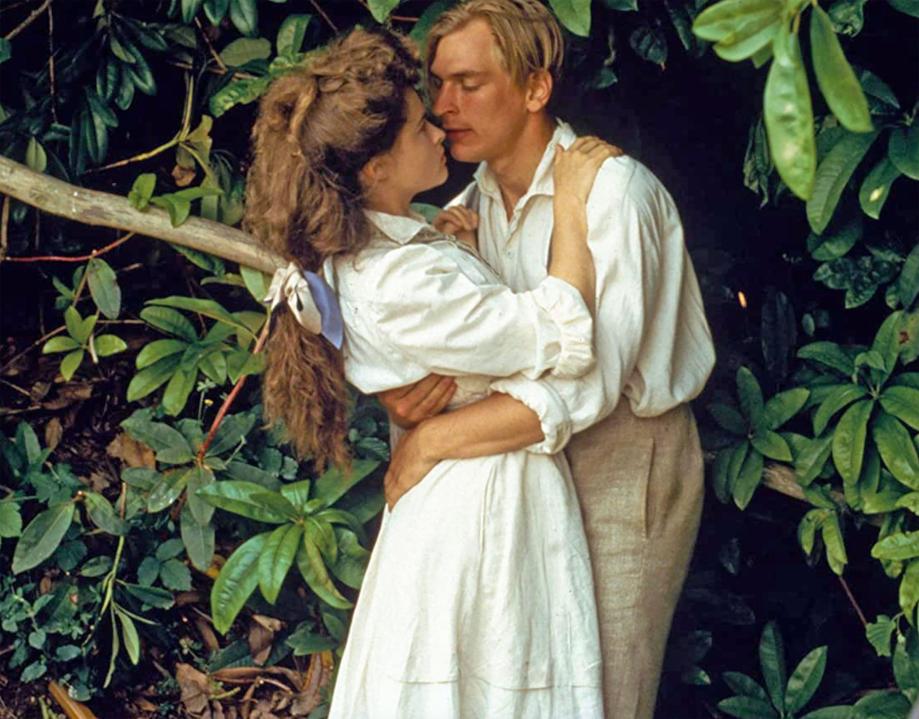
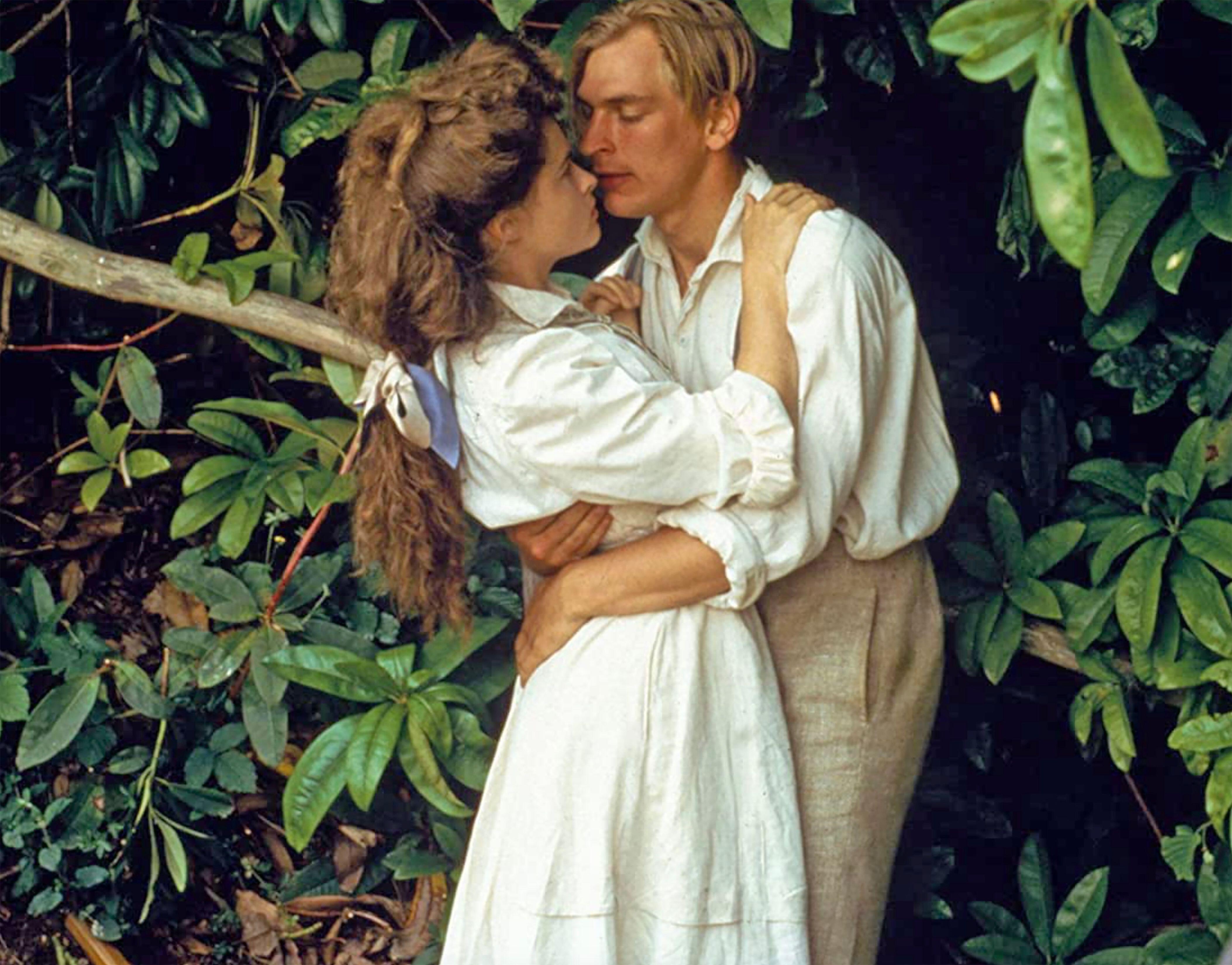
It may come as surprise to discover that A Room with a View, the celebrated Merchant-Ivory adaption of the E.M. Forster novel, is 40 this month. Yes, as hard as it is to believe, the film starring Helena Bonham Carter and Maggie Smith had its premiere in December 1985 and went on general release in April 1986.
Step back, if you will, from the baffling realisation that somehow A Room with a View is therefore exactly equidistant between the present time and the death of Adolf Hitler in 1945, and instead focus on a rather more cheerful point altogether. Because A Room with a View, the low-budget tale of mismatched love in Florence, is almost certainly the greatest period drama ever made.
I know, it’s a bold claim. For since the last rays of the long Edwardian twilight were finally extinguished in the 1950s or even 1960s, an incalculable amount of creative effort and 35mm film has gone into reimagining the lost world of old England on the screen.
From the undoubted brilliance of, say, Gosford Park (2001) through to the BBC’s 1995 adaptation of Pride and Prejudice that put Colin Firth on the cultural map, or Joe Wright’s 2005 effort that did the same for Keira Knightley (to say nothing of Malcolm Macfadyen or Carey Mulligan), the costume or period drama has become as culturally totemic as it is ubiquitous. Where our forebears built ships and exported coal, we have given the world endless tales of Georgian, Victorian and Edwardian aristocratic and bourgeois domestic angst.
Along the way it’s probably not too much to say that period dramas have saved the once flailing British film industry, one ruff, silk stocking or crumpet at a time – not to mention helping to rake it in for the National Trust. Who, after all, can fail to be beguiled by Ang Lee’s Sense and Sensibility (1995) – the one with Emma Thompson, Kate Winslet, Hugh Grant, Alan Rickman, Imelda Staunton and Tom Wilkinson – or the taut self-denial of 1993’s The Remains of the Day? And we haven’t even arrived at the mass-market cultural juggernaut that is Downton Abbey, all six series plus Christmas specials and three whole feature films. It is, then, a jolly crowded field.
Yet at the grand village fete of all period dramas, the one presided over by the immortal spirit of Margaret Rutherford with a hat the size of a Shetland pony, just one winner’s rosette – the victor ludorum – can be awarded, and it goes to A Room with a View. Every time.
That’s not just because of the utter life-affirming beauty of it, though that helps a lot. It’s because when you watch it, you can’t help but struck by the sheer life in it, the joy of it, the insuppressible buoyancy of the acting, of the soaring music, or the film’s effervescent spirit. To see it again is to fall in love all over again, with cinema, with Florence and Tuscany, with the idea of being in love itself. It is the cinema equivalent of a superfood, one which stands out in a world of ultra-processed nonsense. You watch A Room with a View and you feel as good as the galloping pensioners in Cocoon, also made, incidentally, in 1985. You are young again.
To see it again is to fall in love all over again, with cinema, with Florence and Tuscany, with the idea of being in love itself
There’s also the matter of the film’s cast. Dame Maggie Smith as Poor Charlotte is probably at peak Dame Maggieness. OK, that was accomplished in Gosford Park (remember her holding up the jam pot and declaring ‘Bought’) – but because she was Poor Charlotte and not Imperial Maggie there is a wryness and a richness in her eyes as she shepherds Miss Lucy Honeychurch, the scrumptious Helena Bonham Carter and mid-1980s answer to Simonetta Vespucci, through her marital and romantic crisis.
Then we have Daniel Day-Lewis as the impenetrable Cecil Vyse, offering a masterclass in straight Edwardian cricket-whites campery; then there is the unsurpassable and alas very late Denholm Elliott as Mr Emerson, earthy but evangelical and warm; and then there is Simon Callow as Mr Beebe, the kind of vicar that the Anglican church would be blessed to have today. Oh, and we have Dame Judi Dench as the romantic novelist Miss Lavish. In dinner party terms it’s like turning up and discovering you’re seated between Napoleon and Gandhi and that Leonardo da Vinci is handing round the canapes. And don’t forget Rupert Graves and the late Julian Sands, whose sublime earnestness somehow defies us not to disbelieve him.
Somewhere between this impeccable casting and the dreamy English and Italian settings, we have a script that steers closely enough to Forster – that opening dialogue, for instance, is straight from page one – while at the same time reimagining his genius for the cinematic age, thereby stopping it feeling bookish or trapped in the pages.
With all that, despite the fact that this is a film made in the 1980s and set in an era eight decades before, it doesn’t feel dated; rather it takes Forster and arguably betters it, offering period drama at its best because it’s one of those productions where the period is somehow the least and yet most important dimension of the story all at once. Small wonder, then, that it won three Oscars (including for Best Adapted Screenplay) and was nominated for eight, when British film was not far off its all-time nadir in terms of success. (At the Baftas it scored five hits out of a staggering 14 nominations and took home Best Film.) It also made a packet at the box office.
In the final analysis, it is surely to the American director James Ivory (now 97), the late Indian film producer Ismail Merchant and the late Booker-Prize, double-Oscar-winning writer Ruth Prawer Jhabvala that we owe significant thanks. Them and Puccini by way of Dame Kiri Te Kanawa, alongside the glories of Florence itself, of course – not least the Basilica of Santa Croce and the pea and potato soup-green of the winding, listless Arno.



Comments