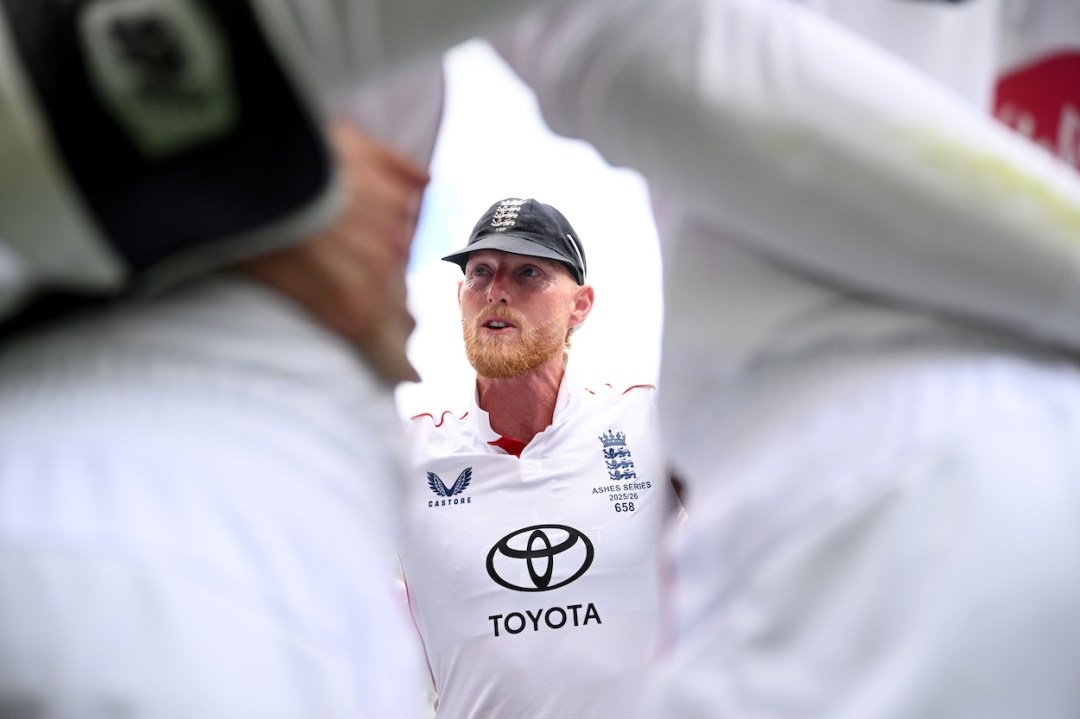
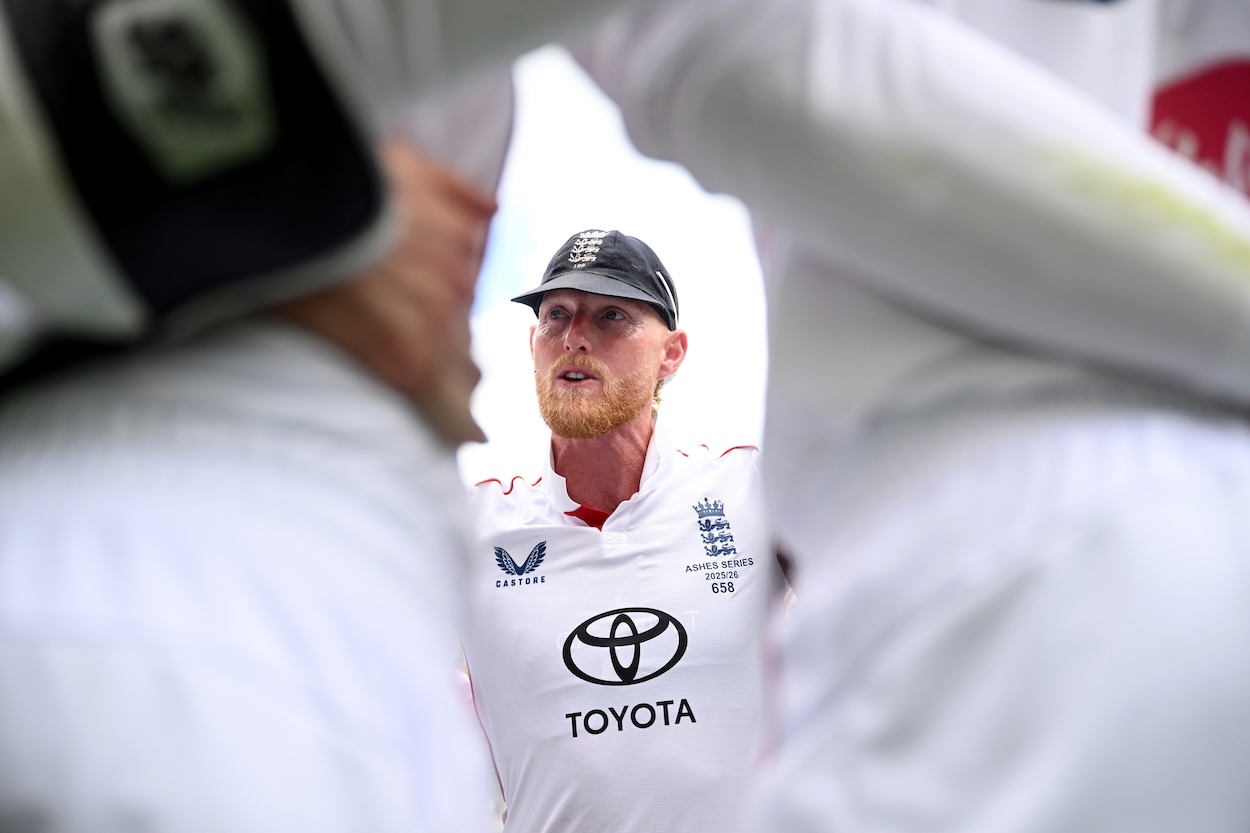
It is, England cricket fans must remember, only one match in a five-Test series. They began the Ashes needing to win three Tests and the requirement remains the same despite the humiliation in Perth. There is still a reason to get up at 4 a.m. tomorrow for the next game. Lightning need not strike twice, even if the foolhardy way that England bat reminds me of Terry Pratchett’s line about the man who stands on a hilltop in a thunderstorm wearing wet copper armour and shouting ‘All gods are bastards!’
Even those who made an 18,000-mile round trip to see the Ashes begin two weeks ago and got three extra days of sightseeing along the Swan River should cling to the fact that England were competitive at halfway. ‘As Good As It Gets’ was the Times headline after Day 1 and it wasn’t meant pessimistically at the time.

Perhaps, as I used to say on the rare occasions when I took a set off my father at tennis as a boy, Australia merely got their consolation win out of the way early on. This is when some readers may look at my surname and ask ‘Who are you kidding? Bring ’em home!’ The natural pessimism that afflicts England cricket fans, as well as recent Ashes history, leads us to fear a wipe-out after one reverse Down Under.
But even when England have won the Ashes, they have often been poor starters. Richard Whitehead’s new book on the 1954-55 series reminds us that Len Hutton’s team went 1-0 down in Australia after being thrashed in the opening Test and still won 3-1. And that was after six weeks of acclimatisation and seven warm-up matches, not the gentle two-day social game the current side enjoyed.
In the 1911-12 Ashes, England were similarly walloped in the first Test but won the next four. Almost a century later, they were 220 runs behind after the first innings of the tour and then Alastair Cook made a double-hundred to save the draw. The series was won 3-1, with all of England’s wins coming by an innings. In 2005, at home, England threw away a strong position to lose the first Test and won the series 2-1.
Then there was Ian Botham’s Ashes in 1981: England went 1-0 down after two Tests and the captain was sacked. Released from the burden, Beefy produced match-winning performances with bat and ball to seal a 3-1 win. I am not suggesting that Ben Stokes should be dropped but, like Botham, he needs to find his inner gorilla.
The politics of the early 1980s also reminds us never to judge a series on how it starts. Margaret Thatcher’s Tories led in only one poll between the 1979 election and January 1982, and that was by half a per cent, yet they romped home a year later. If only Travis Head, Australia’s match-winner in Perth, could turn into Michael Foot.
A filthy start can quickly turn to gold. David Bowie’s The Laughing Gnome was followed by Space Oddity. There are plenty of examples of stirring comebacks in sport. Björn Borg lost the opening two sets of his first French Open final in 1974 against Manuel Orantes, then won the next three 6-0, 6-1, 6-1. He lost only one more match at Roland Garros in six years before retiring. What would have happened if he’d thrown in the towel at two-nil down?
Australia merely got their consolation win out of the way early on
Here’s some more precedent: Liverpool won the Champions League final in 2005 after losing the first half 3-0 to AC Milan. Six years earlier, Manchester United went 1-0 down after six minutes in the final and beat Bayern Munich with two goals in stoppage time. The New England Patriots rallied from 28-3 down with 17 minutes left to win the 2017 Super Bowl against the Atlanta Falcons. The United States team, with Britain’s Ben Ainslie as their tactician, won the 2013 America’s Cup 9-8 after trailing New Zealand 8-1.
The most miraculous comeback I was privileged to witness was the 2012 Ryder Cup in Medinah, near Chicago, when Europe trailed 10-4 on the second afternoon. Even after they won the last two four-balls matches they required a record turn-around in the Sunday singles. Few expected them to beat America in their favourite format at home.
On the Saturday night, Colin Montgomerie, who had captained Europe to victory two years earlier, was asked what order he would send the team out for this unlikely mission. ‘I’d start with Faldo,’ he said, ‘then Seve, Langer, Me…’ All great players who were retired and in one case dead. Perhaps England should open in Brisbane with Hobbs, Cook and Hammond and give the new ball to Larwood and Tyson?
But they are only 1-0 down. There are four more chances. They should write off how they threw away the first match. Now is not the time for gloom. Save that for if England lose again, since only one team has won the Ashes from 2-0 down and that was Australia in 1936 when they had Don Bradman. For now, hope may not spring but it still dribbles.



Comments