
‘After having thrown a sheep six times from the top of a tower,’ reported the Gloucester Journal in 1784, ‘Montgolfier prevailed upon a man to try the experiment, which was performed with the utmost safety.’ The trick was done thanks to ‘a machine called a parachute’.
Within weeks, a kind of hat called the Parachute Bonnet became the craze. An alternative to the Parachute Bonnet was the Lunardi, named after the ‘Daredevil Aeronaut’ Vincenzo Lunardi. In 1785 Robert Burns berated a louse for exercising on ‘Miss’s fine Lunardi, fye!/ How daur ye do ’t?’.
Lunardi made an ascent before 200,000 people on 15 September 1784 in a hydrogen balloon, with a dog and a cat. The cat was sick. The balloon was exhibited in the Pantheon in Oxford Street, where James Wyatt had designed a domed rotunda 60ft wide as an assembly room. The site is now occupied by Marks and Spencer.
The word parachute was constructed on the model of parasol, being a protection against a fall (chute) rather than the sun. In the 17th century the French had coined the term parapluie; the Spanish called it paraguas.
In England, a parasol was often called an umbrella or ombrello. A broad-brimmed hat or detachable sunshade was a bongrace or umbella [sic].
In 1716 John Gay in ‘Trivia’, his satirical poem of advice on walking the streets of London, says that Persian women might use an umbrella against the sun’s rays, but in Britain housewives ‘underneath th’ umbrella’s oily shade,/ Safe through the wet on clinking pattens tread’. Robinson Crusoe, whose adventures were published in 1719, took great pains to fashion one on his island and ‘it was a most useful thing to me, as well for the rains as the heats’.
Jonas Hanway, who’d braved rebel Khyars by the Caspian Sea, suffered taunts and was pelted with mud by hackney carriage men when in the 1750s he carried an umbrella in the rain. He attracted more attention by wearing at the same time a sword, by then an outmoded accessory. Hanway Street, off Oxford Street in London, was not, I think, named in honour of Jonas Hanway or the umbrella, but after his uncle John.
Anyway, the English gentleman so took to the contraption that Ralph Waldo Emerson, in London in 1847-48, observed: ‘An Englishman walks in a pouring rain, swinging his closed umbrella like a walking-stick.’ English men seem to have lost such hardihood or formality, and slop around in hoodies.
These para- inventions are all protections, from the Latin parare, ‘prepare’. Another example is parapet (‘There was a Wall, or Parapet of teeth set in our mouth, to restraine the petulancy of our words,’ wrote Ben Jonson). In 1844, Lord Brougham, who had been Lord Chancellor, coined the humorous para-bore, a device to fend off bores: ‘to protect me, like our musquito-curtains’.
But there is another family of para- words that signify being beside things, from the Greek para. This basic sense is found in parallel, where -allel means ‘one another’. The modern world has found much need for names of objects or people that are not the real thing but stand beside them: paramedics, paramilitaries, parapsychology, the paranormal.
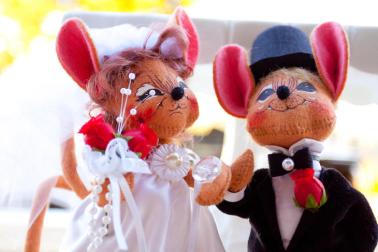
In 1956, two American sociologists, Donald Horton and R. Richard Wohl, noticed the one-sided sense of intimacy felt for a television celebrity by a viewer. ‘One of the striking characteristics of the new mass media – radio, television and the movies – is that they give the illusion of face-to-face relationship with the performer,’ they wrote in the journal Psychiatry. ‘We propose to call this seeming face-to-face relationship between spectator and performer a para-social relationship.’
This is familiar at a trivial level. I was embarrassed when my husband said hello to Sir Chris Whitty in Waitrose, though they had never met. Once it was children talking to their teddies, but parasocial relationships have acquired an alarming aspect with the spread of AI companions and online chatbots.
These resemble imaginary friends, but seem to respond to individuals. In America, attorney generals united in alarm against AI assistants that ‘flirt and engage in romantic roleplay with children’ as young as eight. Mothers have blamed chatbots for encouraging their children to kill themselves.
Amid these horrors, Cambridge University has named parasocial as its word of the year. I suppose in 1862, when there was a panic in London about street robbery with strangulation, labelled garotting, that would have been the word of the year.


Comments