
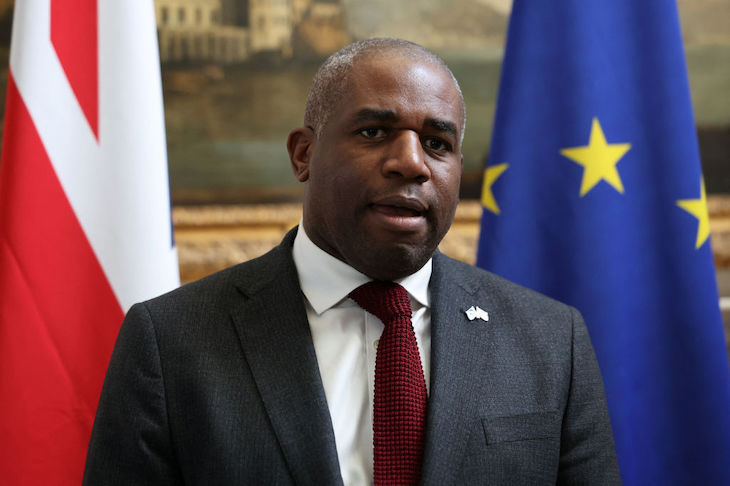
David Lammy believes Britain should rejoin the EU customs union to boost economic growth. In an interview on Thursday, the Deputy Prime Minister argued that leaving the EU had ‘badly damaged’ Britain’s economy. A reversal of Brexit would be good for business he suggested. It was ‘self-evident’ that other countries had ‘seen growth’ after joining the customs union, Lammy told the News Agents podcast.
The deputy PM avoided the question of whether Britain should rejoin the euro, as did Health Secretary Wes Streeting earlier in the week. Having declared that Britain was worse off out of the EU, Streeting was asked if the government was planning to take Britain back in. ‘I don’t think so,’ he replied.
At the start of the week, the Prime Minister also took Brexit to task during his address at the Lady Mayor’s banquet in London. Leaving the EU, said Keir Starmer, had ‘significantly hurt our economy’, and it was time to ‘confront the reality’.
Is this the EU that David Lammy and Keir Starmer wish to rejoin, one run by Germans for Germans?
Here’s a reality that appears to elude the Prime Minister and his government: the EU is a social, economic and diplomatic disaster zone.
It is increasingly inconsequential on the world stage, its voice ignored by the United States, Russia, China and most of the Middle East powers. One just has to look at how the EU has been sidelined during the peace talks between Donald Trump and Vladimir Putin. This is a hard truth now acknowledged by the pro-European media, such as the New Statesman. ‘Europe is largely irrelevant to the question of how and when it will end,’ it said in an op-ed this week of the war in Ukraine. ‘The continent has marginalised itself.’ The words were written by a German, Hans Kundnani, a fellow at the Open Society Foundations.
The EU marginalised itself through a combination of incompetent, cowardly and complacent leadership. This is also to blame for the social ills afflicting the EU, or at least the western half. In recent weeks, there have been warnings from senior figures in Belgium and France that they are in danger of becoming ‘narco-states’. Holland already is, as Niko Vorobyov explained last year on Coffee House.
Then there’s Islamism and insecurity, linked, like the rise of the drug cartels, to mass immigration. EU long ago lost control of its borders. The consequences are being felt from Paris to Brussels to Berlin.
But it is the economy where the EU has failed most spectacularly in the last decade. In September 2024, Mario Draghi published a damning report about the state of the bloc’s economy. Draghi is a former president of the European Central Bank and a committed Europhile, but even he admitted he was ‘having nightmares’ about Europe’s future. ‘For the first time since the Cold War, we must genuinely fear for our self-preservation,’ he warned.
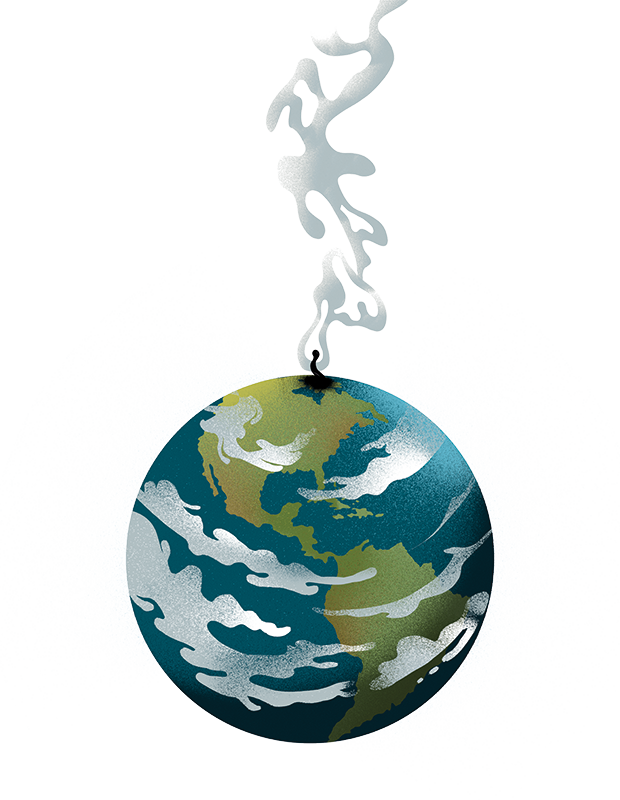
Europe required additional annual investment of at least €750 billion (£650 billion) – approximately five per cent of the EU’s gross domestic product – if it was to remain competitive.
His warning fell on deaf ears. In September this year, Draghi accused the EU of failing to rise to the challenge. Governments had ‘not grasped the gravity of the moment’ and as a result the EU’s growth model was ‘fading fast’, he said.
Draghi backed up with bleak assessment with facts: the EU’s trade deficit with China has expanded by 20 per cent since December 2024; energy prices are nearly four times higher in the EU than in the United States, which was holding back EU technology, particularly as AI electricity demand will increase by 70 per cent in Europe by 2030. In 2024, the United States produced 40 large AI foundation models; China 15 and the EU three.
There was more bad news for the eurozone last month, when it was disclosed that its GDP rose by just 0.2 per cent in the third quarter of 2025. Bankruptcies, on the other hand, were up 4.4 per cent with accommodation and food services, transport and financial services hit hardest.
Since 2020, eurozone labour productivity growth has been 0.7 per cent per year, less than half the United States’s annual rate of 1.5 per cent. According to OECD figures released this week, Britain’s GDP growth projections for 2027 are 1.3 per cent. France’s are 1.0 per cent, Italy’s 0.7 per cent and Germany’s 1.5 per cent.
There are fears in France that as Germany’s economy recovers quicker than its EU neighbours, it will begin once more to throw its weight around. A headline in this week’s Le Figaro declared: ‘Friedrich Merz, Ursula von der Leyen and Manfred Weber (the leader of the dominant EPP Group in the European Parliament), the German trio imposing its agenda on Europe’.
The paper quoted Sander Tordoir, an economist at the Centre for European Reform in Berlin: ‘Merz has decided to re-engage Germany on the European stage. He needs von der Leyen to push his German economic agenda in Brussels.’
Is this the EU that Lammy and Starmer wish to rejoin, one run by Germans for Germans? Angela Merkel was Europe’s de facto leader for many years, and look at the damage she inflicted with her disastrous decisions about immigration, energy and defence.
Britain is better off out of the EU. That is the reality Labour needs to confront.

Comments