

Many years ago, a friend described one of my serious literary novels as ‘clever’. I was offended – but I shouldn’t have been. The friend was from across the pond, where I now understand ‘clever’ simply means smart. For Americans, cleverness infers a shallow, facile intelligence. Applied to people, it often hints at sly, calculating deviousness or cunning. It has no positive moral qualities, as westerners understand them. Tax evasion can be ‘clever’.
Let’s move on to ‘culture’ – a big, fuzzy word we throw about with careless abandon that often summons images of traditional clothing and cuisine. But, parsed in its most profound sense, culture might best be defined as ‘what a people admire and what they deplore’.
Culture might best be defined as ‘what a people admire and what they deplore’
Now we’ve got our terms straight, a trigger warning: I plan to make sweeping over-generalisations. But we freely make sweeping generalisations about western nationalities. Supposedly, Americans are gun nuts, Germans control freaks, the French hedonists, etc. All those postulations are too broad but contain a kernel of truth. So I claim the same latitude to make wholesale characterisations of elsewhere.
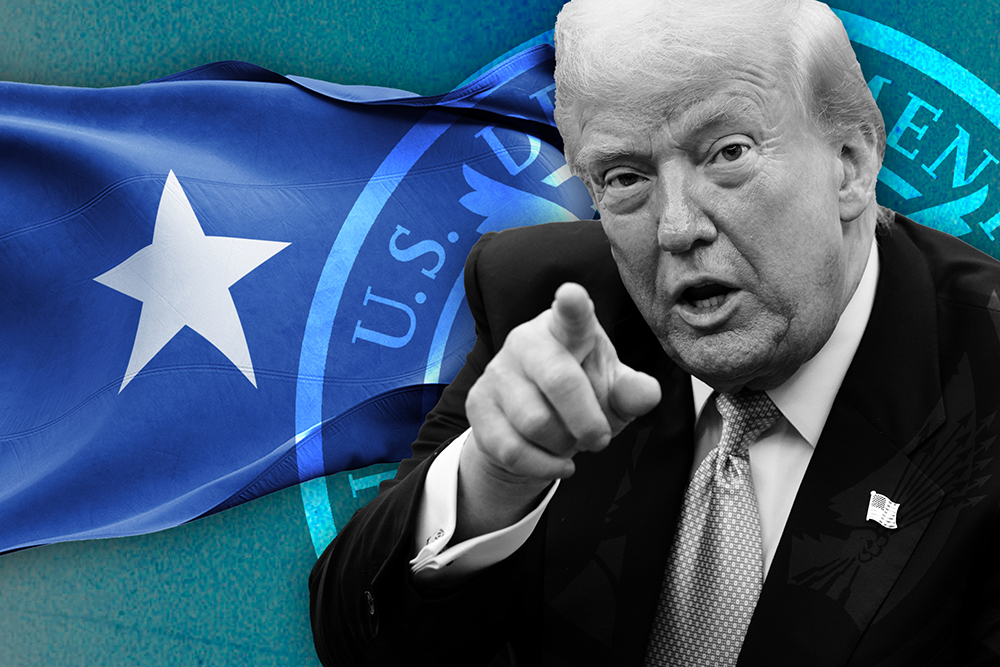
Finally, our peg. Christopher Rufo and Ryan Thorpe recently authored an investigative report for City Journal (a brilliantly written, data-driven magazine based in New York) entitled ‘The Largest Funder of al Shabaab is the Minnesota Taxpayer’. It describes a set of systematic schemes (in the American sense; more fun with linguistics! For Brits, ‘schemes’ are neutral programmes; for Yanks, ‘schemes’ are always underhanded) to defraud the state’s taxpayers on a staggering scale.
Taking advantage of 28 different, poorly-regulated, do-gooder programmes that address the likes of homelessness, childhood nutrition and autism, a vast network of swindlers managed to syphon not just millions but billions of dollars from public funds. The money went to designer goods, domestic and foreign real estate, luxury cars and (whoops!) terrorism. As for the perpetrators, and this is not an over-generalisation: they’re almost all Somali.

Unfortunately, officials first raised the alarm about these programmes’ costs soaring to improbable sums during the George Floyd hysteria, for which the state’s largest city was ground zero. Questioned about their invoicing practices, the recipients of Minnesota’s unintentional largesse sued. Officials backed off their investigations pronto, because the Somali suspects had reached for the magic word: these suspicions were racist! Man, that’s what I call proper assimilation.
Rufo and Thorpe focus on the revelation that, according to ‘federal counter-terrorism sources’, millions of this stolen public money have been transferred to Somalia, where much of it has landed in the coffers of al Shabaab, an affiliate of al Qaeda. While the New York Times claims to find no evidence of the loot directly funding terrorism, the left-leaning paper otherwise wholly confirms the conservative magazine’s story, verifying that this elaborate, highly organised and, to us, unconscionable fraud was overwhelmingly conducted by Minnesota’s Somali community, the largest in the US. It’s the nationality that grabs my eye.
Having been to Africa multiple times, lived in Kenya for over a year and even visited Mogadishu during a none too salubrious historical period for Somalia, I’ve learned, as most travellers have, that everyone is not the same. Most importantly, what we admire and what we deplore are not the same. So here comes the over-generalisation. Broadly, African cultures such as Somalia’s, more than the pat western ideals of honesty, self-reliance and respect for property rights, admire cleverness. In the American sense.
Tribal cultures are organised not only socially but morally around loyalty to family and clan. The good is defined as whatever benefits your own. If it disadvantages outsiders, who cares? If anything, so much the better. Seen through this lens, the Somali subterfuge in Minnesota is virtuous. Why, it’s neglecting to line the pockets of kith and kin with the riches of irrelevant American taxpayers that would appear deplorable. Hence the expression ‘It’s our turn to eat’, the title of my friend Michela Wrong’s excellent book on Kenyan corruption. Meaning, our tribe got elected; we feed at the public trough.
This tribal sensibility admires deceit and even outright thievery, so long as you get away with it and your lot comes out on top. Summarising the views of a Somali-American professor in Minnesota, even the New York Times reported: ‘Somali refugees who came to the United States after their country’s civil war were raised in a culture in which stealing from the country’s dysfunctional and corrupt government was widespread.’
It’s no coincidence that 72 per cent of Somalis in Britain live in social housing. Because obtaining housing from a state to which you’ve never contributed is clever.
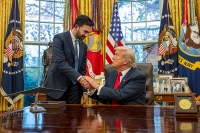
The point: western governments should feel free to welcome, reject or deport immigrants on the basis of nationality. Following the fraud scandal, Donald Trump’s kneejerk cancellation of the Temporary Protected Status programme for Somalis living in Minnesota is probably illegal and doesn’t sort the institutional issue. The figures are gettable. On average, identifiable immigrant nationalities are more apt to commit crimes (including terrorism), be drains on the public purse over their lifetimes and fail to integrate with the host country, especially with regard to language. These qualities are quantifiable. It should be possible to bar or minimise the acceptance of immigrants whose net benefit to their adoptive country is statistically unlikely. Discrimination – in the old-fashioned sense of applying standards – could be politically justified by hard and fast numbers, to wit: folks from X, Y and Z countries are a bad bet. Pakistan and Iran are now expelling Afghans by the million for being security risks, even including naturalised citizens.
Culture is more consequential than quirky hats or spicy food. Tribal peoples are taught to be loyal to their own group rather than to abstract ideals, much less to a nation, their relationship to which may be extractive. Installing immigration regimes that restrict the admission of nationals who don’t share what we flabbily call ‘western values’ – who don’t admire the same things (such as getting over on people) or deplore the same things (such as stealing, as long as it’s for your gang) – would be clever. In the British sense.


Comments