
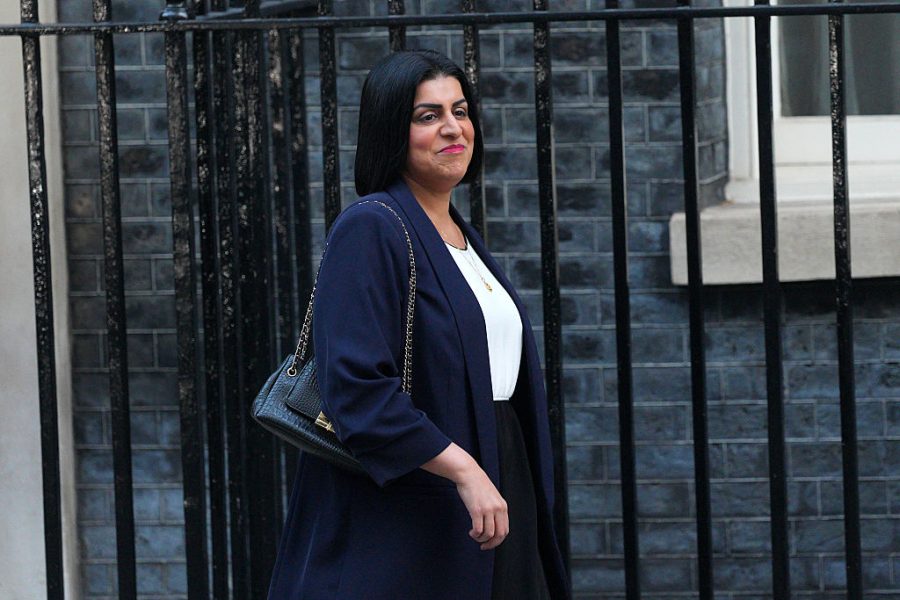
The Home Secretary is feeling the collars of our 43 chief constables. Shabana Mahmood has let it be known that she favours a dramatic reduction in police forces in England and Wales to as few as 12. Her comments come ahead of the publication of a white paper on policing in the new year. The white paper has, in typical fashion, been delayed because – in a style now familiar to both her admirers and detractors – Mahmood wishes to be bolder than the many previous attempts to reform policing which have become stuck in the bureaucratic glue over the past few decades.
We do need urgent reform in policing but not simply in the dead language and terminology of the bean counter. The Policy Exchange review of Sir Mark Rowley’s mid-point tenure as Metropolitan Police Commissioner revealed that public confidence in his organisation had collapsed: less than half of Londoners think the Met is doing a good job. Citing efficiency savings in procurement and pooling resources is all very well as cover for such a dramatic change, but it will mean nothing but pain if it fails to reconnect with the needs of local neighbourhoods marooned in postcodes of criminal impunity.
Fewer forces have to be better at the basics
Many of the reasons for this rationalisation are similar to the arguments put forward for the botched amalgamation of eight regional forces into Police Scotland twelve years ago. Mahmood would do well to study all the ways that this restructure failed – poor preparation, poor communication, underfunding, IT failures, leadership issues and operational disruption which plunged police morale into depths it has arguably not recovered from.
The culture and structure of the police megaforces Mahmood is weighing up cannot be more of the same. Savings need to be transferred not back to the treasury but into visible, confident and assertive frontline policing in neighbourhoods where engagement is important but enforcement is not forgotten.
New forms of democratic accountability will also need to be created following the unlamented demise of policing and crime commissioners, whose raison d’être was to oppose larger forces. Turkeys don’t vote for Christmas. When I was the senior Home Office civil servant in South West England responsible for community safety, we had detailed data and public service agreements that allowed me to hold five chief constables to account, reporting directly back to the Home Secretary. This was a relationship of necessary tension and some of the crime targets turned out to be perverse but the central state does need to be reconnected with policing outcomes.
Outsourcing these to new metro Mayors is not the whole answer by any means. Consider what is happening in London, where the man responsible for the political control of policing, Sadiq Khan, affected not to know what ‘grooming gangs’ were earlier this year, let alone whether they have been active across the capital. This even sparked allegations by the shadow home secretary of a ‘cover up’. This is one of the most explosive issues in current public consciousness, which has devastated public confidence in policing that our social contract depends on. Partisan political appointees obfuscating the truth on crime to preserve their own electoral chances will not improve trust in policing.
There are other models of policing that ought to be at least considered in the interests of restoring the reputation of the country’s police. They are even bolder than the Home Secretary’s ideas. France and Spain have both models of law enforcement that distinguish between urban and rural policing, which have often very different characters. A local police service operates in cities and a rural gendarmerie provides cover across the rest of the country.
Jurisdictional overlaps and cultural squeamishness in a smaller country such as Britain would probably rule out such an approach. But it would certainly be more popular with the electorate outside our cities, who feel wide open to rural crime, which is not prioritised by overloaded response cops in metropolitan areas.
Whatever the verdict, few people will now doubt Mahmood’s capability to absorb criticism and take action. This change is coming and, with it, the opportunity to reshape Britain’s policing posture for the next decades. Whatever the new model looks like, it carries with it other opportunities, such as dismantling the absurd engine of woke coppering, the College of Policing, which has done so much to alienate both frontline police and communities begging for assertive law enforcement. Fewer forces have to be better at the basics. It’s what Robert Peel would have wanted.



Comments