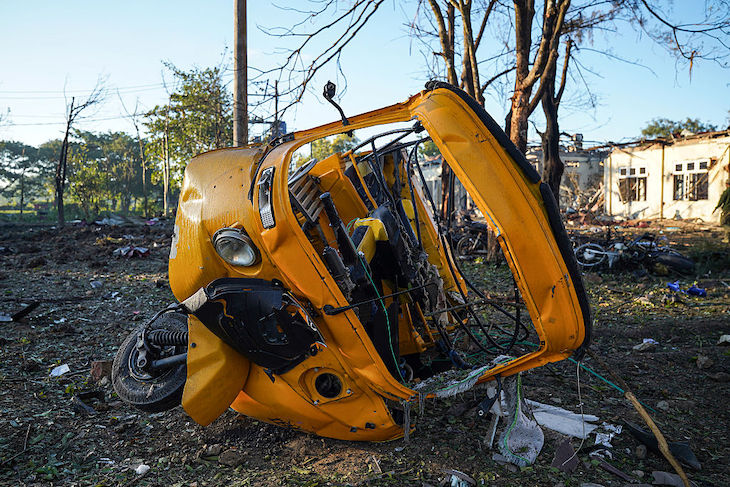
Myanmar’s junta has once again shown its true self: calculated, despicable, and violently unrestrained. Last night, warplanes dropped two 500-pound bombs onto a crowded hospital in Rakhine State. The blast tore through the building with surgical cruelty, sending glass and metal through wards where patients slept. Dozens were killed instantly; others bled out in the darkness as the hospital collapsed around them.
Many of the victims were children and infants. This wasn’t a tragic misfire
Many of the victims were children and infants. This wasn’t a tragic misfire, nor a reaction to combat nearby. It was a targeted strike: planned, ordered, and executed in the dead of night.
The generals in Naypyidaw chose their moment with perverse intent. They carried out this massacre on International Human Rights Day, sending a message they knew would be heard far beyond Myanmar’s borders: we will continue to do this, and nothing, no principle, no global norm, will restrain us.
More than 30 people died in this attack, with more expected to succumb to their injuries in the coming days. The point was not tactical advantage: it was terror. The military wanted the country – and the world – to watch.
Yet none of this is surprising. Over the past year, as I’ve reported from Karenni State, Shan and elsewhere, the junta has dramatically escalated its use of airpower against civilians. They are losing the ability to win in ground attacks across the country and have turned to what they see as their last advantage: the ability to kill from above.
The war is now defined by unconventional aerial tactics – daily drone strikes, bombs dropped from gyrocopters, even explosives hurled from paragliders. These methods, brutal and improvisational, are difficult for resistance forces to counter. Since the 2021 coup, thousands of civilians have been killed by airstrikes, and thousands more detained, tortured, or disappeared.
All of this is happening weeks before the junta’s planned election –an exercise that neither outside governments nor human rights groups consider credible. The day before the hospital bombing, activists across the country staged a ‘silent strike’, staying home, emptying the streets, and quietly signalling their rejection of the vote.
And then the junta’s response came from the sky. It was meant to say: If you refuse us, we will kill you and your children.
We have seen this message before. In recent months, they’ve bombed a monastery packed with displaced villagers. Before that, they hit a school. I’ve walked through the rubble of these attacks: shattered classrooms, blood on broken tiles, families sifting through what remains. These aren’t accidents of war. They are the strategy: the systematic destruction of civilian life to break the will of a nation. This is what terrorism looks like.
And yet it continues to fail. Across the country – from the hills of Chin State to the valleys of Karenni and the mountains of northern Shan – resistance commanders tell me the same thing: they will not give up. These attacks don’t weaken the resistance resolve; they clarify the stakes. Every atrocity the junta commits only reinforces why so many continue to fight, even with limited resources.
The truth is when massacres like this happen, morale briefly falters. But it doesn’t stay there, it eventually turns into fuel for the resistance to use to continue to wage this war. That is the fundamental difference between the junta and those resisting it. One side kills innocent children to maintain their power; the other risks everything to end that brutal cycle of violence.
The world should understand this latest atrocity for what it is – not an aberration, but a window into the junta’s worldview. Until that worldview is defeated, Myanmar’s civilians will continue to pay the price in blood.



Comments