
A few years ago the podcaster Lex Fridman published a list of books that he was hoping to read in the year ahead. It included works by George Orwell, Fyodor Dostoyevsky, Hermann Hesse and others. If he had published this in the world of print media he might have got back some encouraging noises. But because he put the list online – worse, on the platform then still known as Twitter – he received mostly mockery. ‘Who hasn’t read Animal Farm?’ was the general tenor of the blowback, as though a man who had been a researcher at MIT was next to being a neanderthal.
I watched that passing storm with interest because one of the things that often strikes me about people who presume themselves to be well-educated is how often they feel the need to give off the impression that they have read, heard and know everything. As if at some stage between the cradle and the end of their formal education the whole canon was downloaded into their heads.
Several things result from that, not least that it probably puts some people off trying at all. So reading, listening and looking closely at art become cordoned-off areas, available only to those who already know almost everything. Tell somebody that you have just listened to Beethoven’s Symphony No. 4 and that it’s really, really good, and you’re likely to be greeted as either a pseud, a fraud or a gibbering idiot. Who hasn’t heard it already? Besides, who expresses enthusiasm about something we all know – or are meant to pretend to know?
I think about this because one habit of mine is going back and reading things I know I’ve missed, and listening to things I haven’t heard before. It’s partly because, for instance, I noticed how many people have a favourite piece by a composer and just stick with that, leaving behind all the other works from the same pen that are waiting for them.
When Nicky Haslam started performing cabaret (mainly songs from the first half of the 20th century) he noted that people would often come up afterwards and say some variant of: ‘Why don’t they write them like that any more?’ To which his reply went something along the lines of: ‘They don’t have to – there’s thousands of them no one knows.’ Which is completely right. Take the American songbook – surely America’s greatest contribution to world culture. Most people will recognise a couple of Cole Porter or Rodgers and Hart songs, but veer away from the standard tunes and it’s blank faces all round. Which is ridiculous, because there’s gold all over the place – even before you venture into the lesser-known songwriters of the period.
Reading, listening and looking at art become cordoned-off areas, available to those who already know everything
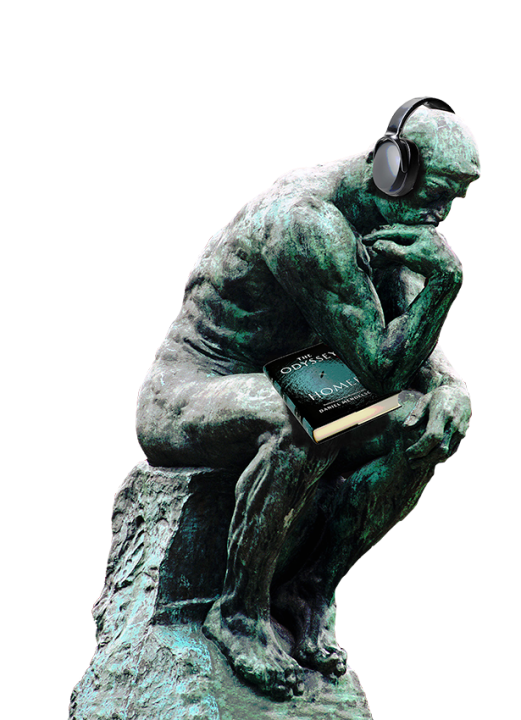
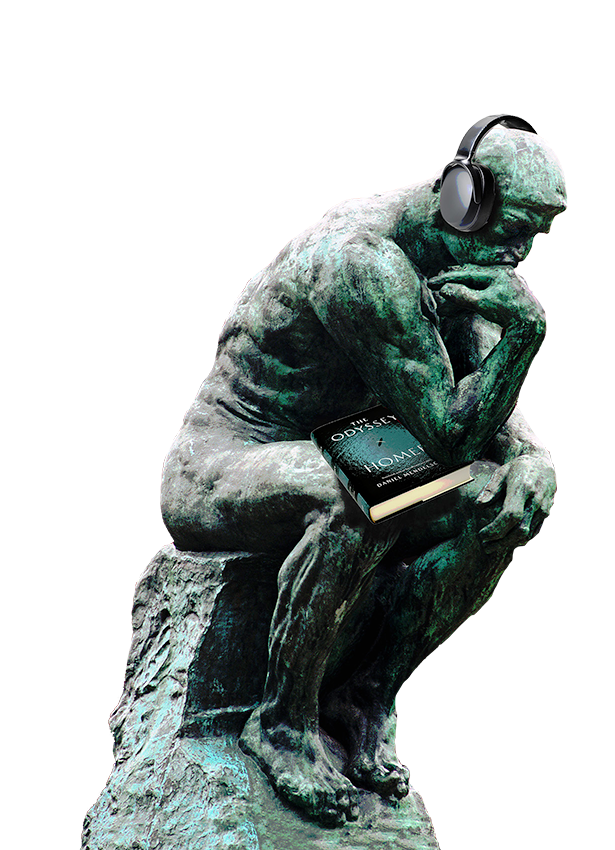
One of the joys in my life is to keep digging while trying not to be abashed about doing so. If I look back over the past year, one of the greatest things in it was reading Daniel Mendelsohn’s new translation of the Odyssey. I picked it up because Mendelsohn is one of those authors whom I read everything by the minute it comes out. But some way in I had a strange sensation; I was sure I knew the Odyssey. I must do? Yet except for some of the big set-pieces (the Cyclopes, the Sirens and so on) much of it seemed completely new territory. I realised that, like one of those academics in a David Lodge novel, I had never actually sat down and read the Odyssey all the way through before. Doing so changed my life.
Since reading it I’ve been seeing it every-where, not just in other works of literature and art, but in everyday encounters. I can’t stop thinking about parts of it, or thinking we should all be talking about it most of the time. When I got to the part where Odysseus, on his ten-year voyage home, lands on the island where Helen is living, reunited with her husband Menelaus, I didn’t stop talking about it for days. It is so appalling, unexpected and real: that the woman who started all this is back home, when Odysseus still is not, and that the men he set out with and fought with at Troy for a decade – because of her – are all dead.
As a result of discoveries like this I realise that I have become a lot better at just saying: ‘I don’t know that. Tell me about it.’ A friend recently told me about a beautiful, fairly recent, choral piece by Bob Chilcott called ‘High Flight’. It sets the opening of a poem by Henry Vaughan (‘I saw Eternity the other night’) and a sonnet that it turns out all American schoolchildren used to know and which I had never heard of.
The poem, by John Gillespie Magee Jnr, begins: ‘Oh! I have slipped the surly bonds of Earth/ And danced the skies on laughter–silvered wings.’ The poem gained fame in part because Magee was a second world war pilot who died in a crash over England in 1941 at the age of just 19. Then I realised that this was the poem that Ronald Reagan referred to in January 1986 on the evening that the Space Shuttle Challenger exploded. It was the genius of his speech-writer, Peggy Noonan, to have the US president refer to Magee’s poem at the end of his remarks to the nation – remarks in which he specifically addressed the children who had watched the disaster live. ‘We will never forget them, nor the last time we saw them this morning as they prepared for their journey and waved goodbye, and slipped the surly bonds of Earth to touch the face of God.’
So what started with a discussion about a piece of music ended up going out in all of these directions. And it seems to me that reading and learning is always like that – it spills out endlessly. Perhaps because of that it can be off-putting: there is so much to know.
Some people might say: ‘I admit my ignorance.’ But I’d like to suggest a slight alteration to that phrase. Perhaps something like: ‘I’d like to admit my curiosity.’ Because it’s only when we accept what we don’t know that the whole world really opens up.

Comments