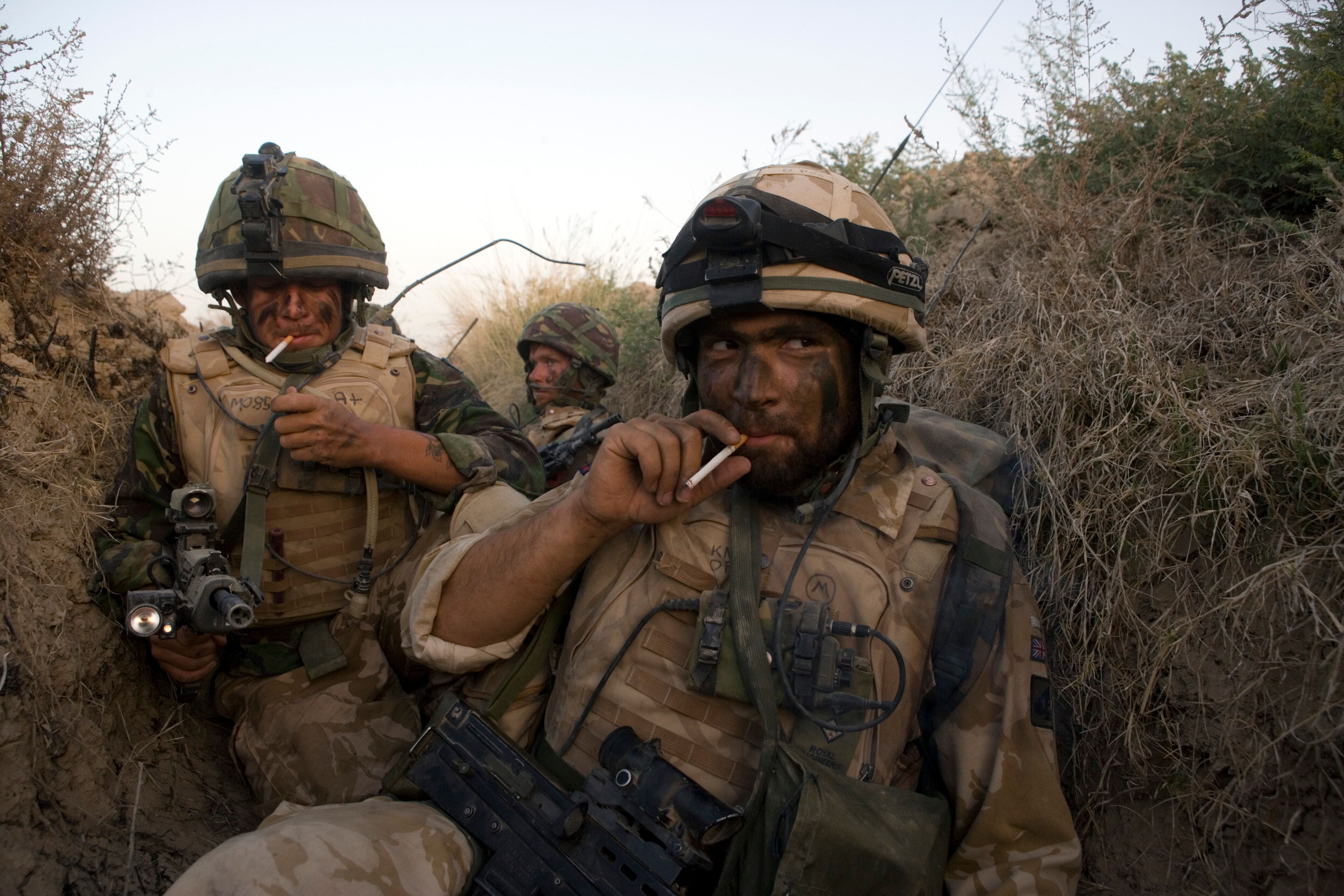
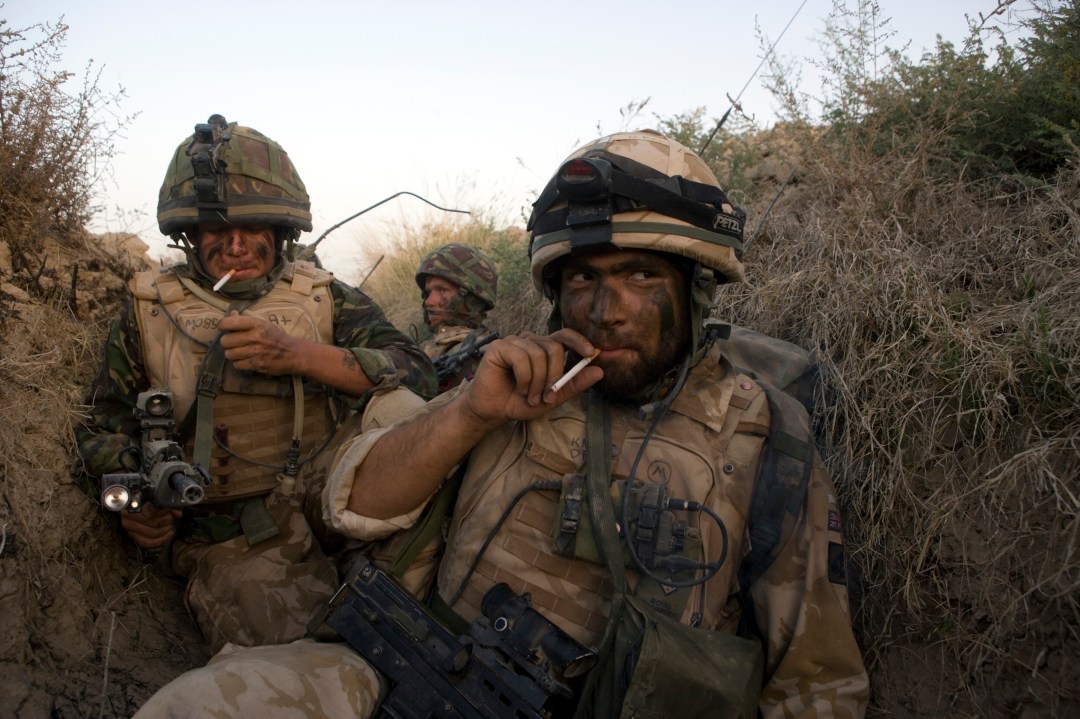
The French success – if such it be judged – in Mali probably merits more attention. But I wonder if Simpson’s theory has a relevance beyond military operations. I suspect it can apply to politics too. Perhaps this should not surprise – war and politics having been dancing partners through the centuries – but I still think it merits some attention even if you may also think Simpson’s views scarcely revolutionary. “War on Terror” was, I think most people now agree, an unfortunate phrase. It wraps everything together in a kind of Unified Theory of Geopolitical Instability. And, partly as a consequence of that, it puts some pressure on the United States and its allies to respond to instability anywhere on earth. Because everything is part of the War on Terror nothing can be removed from the War on Terror. It is everywhere and the US (and allied nations) are permanently responding to fresh provocations, no matter where they may take place. It’s a kind of chaos theory of war: the flapping of a suicide bomber’s robes in Yemen causes a small earthquake in Washington DC. But what, more generally, about politics? The “strategic audience” for any campaign is wider, more diffuse, than once it was. Moreover, voters are easily stirred to outrage by policy decisions that have no impact on their lives whatsoever. Sectional interests are not what once they were. So if voters take a kind of pick’n’mix approach to politics (and if they are increasingly promiscuous) then it might be possible that government needs to be rethought too. I wonder if, so to speak, The Era of Joined-Up Government is coming to an end. Of course this has always been more of an aspiration than a quotidian reality. Nevertheless and while some co-ordination between the different departments of state is doubtless necessary it seems quite probable that government – that is, the state – is now such a hydra-like creature that co-ordinating its movements, or even its objectives, has become impossible. And perhaps there is this too: the more a government talks about its objectives the harder it becomes to achieve those objectives. Talking about the War on Terror re-reminds citizens of its existence and, thus prompted, that it probably cannot be won. Since the term is now loaded with negative associations, it is a counter-productive means of framing the discussion of foreign and security policy. Similarly, perhaps, with talk about the economy or the deficit (or government debt). The more ministers talk about it the more they reveal their essential impotence. Moreover, progress towards one objective often comes at the expense of progress towards another. Which means one challenge might be to, as Simpson puts it, compartmentalise goals rather than aggregate them. Which in turn might mean politicians talking a lot less since talk reveals the limitations of government expertise while simultaneously often making government objectives less popular. Of course, asking ministers to regrain from talking so much is also an impossible, unattainable objective…As a young soldier in the Prussian army, Clausewitz fought at a time when the whole conception of conflict was being revolutionised. In the late 18th century, war was not unlimited: the great powers would try to defeat the enemy on the battlefield to gain an advantage but they rarely knocked out other states. Following the French Revolution, Napoleon was able to mobilise millions of soldiers and overthrow other regimes. “The whole state was at risk. It was a fundamentally different concept,” Simpson says. He argues that a similarly decisive change in conflict is taking place today. Thanks to videos taken on smartphones and the universality of social media, the “strategic audiences” in any war are global. As we are seeing in Syria, images of conflict can be flashed around the world in a heartbeat. “Can we get back to a situation where there is a clear divide between military and political activity? I don’t think we can. Any war is going to be contaminated by contact with audiences around the world who have an interest in that conflict,” he says. That has two big consequences. First, there needs to be a fusion of military and political activity at the operational level. But, second, conflicts have to be dealt with on their own terms and compartmentalised to prevent their proliferation, as the French have successfully done in Mali. “How you can box in a conflict will be the number one strategic question that will govern the next few decades,” he says. In Simpson’s view, one of the biggest mistakes the US has made has been to talk about a “global war on terror”, a phrase he describes as silly because it raises expectations that can never be met. “If you elevate this to a global concept, to the level of grand strategy, that is profoundly dangerous,” he says. “If you want stability in the world you have to have clear strategic boundaries that seek to compartmentalise conflicts, and not aggregate them. The reason is that if you don’t box in your conflicts with clear strategic boundaries, chronological, conceptual, geographical, legal, then you experience a proliferation of violence.”
 Alex Massie
War from the ground up and the limits of modern government?
Emile Simpson’s War from the Ground Up, hailed by no less an authority than Michael Howard (the historian, not the politician) as a Clausewitz-for-our-times, is on my “to read” list. So I was interested to discover that he’s the latest subject of the Financial Times’s reliably excellent “Lunch with the FT” feature. The whole article merits attention but among the good bits is this:


Comments