World

Iran’s leaders are fighting a losing battle

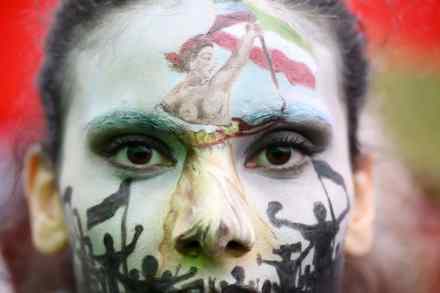
Iran’s rulers are holding firm. The country’s Supreme Leader Ayatollah Khamenei has expressed sorrow at the killing of Mahsa Amini – who died last month after being arrested by the state’s morality police – while squarely, and unsurprisingly, blaming foreign agitators for the protests that have followed. Ominously, Khamenei has said the protestors are not ‘real Iranians’ – a statement which echoes his crocodile tears in 2009 before he unleashed a bloody crackdown. Protesters have a key advantage over the regime Hundreds died during those and subsequent demonstrations, in 2017 and 2019, as state security forces struck back against ordinary Iranians who had taken to the streets. In the coming weeks, it seems depressingly
Will guns from Ukraine end up on the streets of Britain?

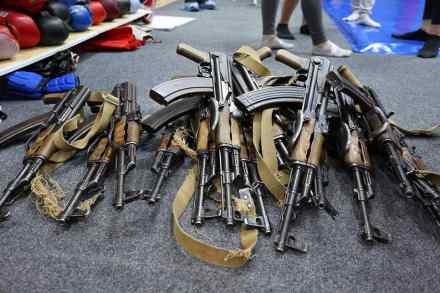
While visiting a Ukrainian militia this summer, I nearly trod on an anti-tank mine which was being used as a doorstop at the entrance to their HQ. ‘Don’t worry, it’s a broken Russian one that we found,’ said my breezy host, Eduard Leonov. ‘We’re trying to fix it so we can use it.’ Eduard’s militia isn’t exactly the SAS of Ukraine’s forces. It’s a volunteer army and he himself is a folk-singer-turned-fighter in his fifties. Eduard’s dozen-odd comrades are Dad’s Army age, yet even so they still have a formidable arsenal – everything from grenade launchers to Kalashnikovs. I thought about Eduardo when Scotland Yard issued their recent warning about

Who has the most nuclear weapons?

Out of office Could Liz Truss end up being Britain’s shortest-serving prime minister? She would have to remain in office until 2 January to outlast George Canning, who was PM from 12 April 1827 until his death on 8 August of that year. Like Truss, Canning had served as foreign secretary, where he was credited with boosting trading opportunities for British merchants. However, he became leader of a divided Tory party, which split between his supporters and those of Sir Robert Peel and the Duke of Wellington. Tax returns Some countries by the top rate of income tax: Japan 56% Denmark 55.9% Sweden 52.9% Belgium, Israel 50% Netherlands 49.5% Ireland

Portrait of the week: Tory party conference, gas supply warning and Denmark’s royals stripped of titles

Home Liz Truss, the Prime Minister, came up with a message for the Conservative party conference: ‘Whenever there is change, there is disruption… Everyone will benefit from the result.’ Her words followed a decision not to abolish, after all, the 45p rate of tax, paid by people who earn more than £150,000 a year. Backbench Conservative MPs had let it be known they would not vote for it. ‘The difference this makes really is trivial,’ said Paul Johnson, director of the Institute for Fiscal Studies thinktank. But the pound rose and the government was able to borrow a little more cheaply. Kwasi Kwarteng, the Chancellor of the Exchequer, told the

The lessons of New York’s carnage

New York I am seriously thinking of visiting a shrink (just kidding) as I now have definite proof that I am crazy. Instead of remaining in England and going to Badminton for the Duke of Beaufort’s 70th birthday bash, and catching a glimpse of the love of my life, Iona McLaren, I find myself in a rotten place where a small headline in the New York Post announces: ‘16 shot during bloody day in NYC.’ All I can say is that the Bagel’s salad days are over. The streets are awash with homeless druggies who are violent and perform their functions right out in the open, even on Park Avenue.

Why did North Korea fire a missile over Japan?

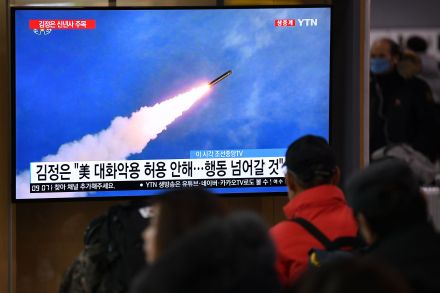
It was a new dawn, a new day, and a new North Korean missile test. The land of the morning calm – as South Korea is affectionately-nicknamed – awoke to the launch of the fifth North Korean ballistic missile in ten days. Over the past ten months, the international community has become accustomed to a growing number of North Korean missile launches, of an increasingly diverse range of missiles. Kim Jong-un’s determination for North Korea to become a nuclear state, and be recognised as such is only heightening. Russia and China are now more reticent than ever to side with the West and support sanctions on North Korea Last night’s

Will Catalonia ever achieve independence from Spain?

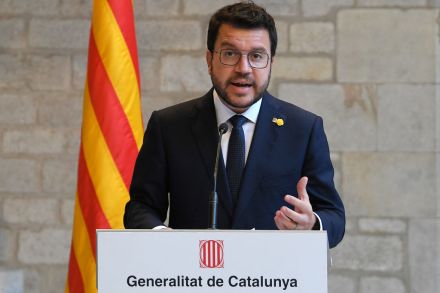
Catalonia’s pro-independence government almost imploded last week. A major disagreement between its two governing parties occurred after one half of the coalition – hardline secessionist party Junts per Catalunya (Together for Catalonia) – proposed a no-confidence vote against president Pere Aragones for not pushing the secessionist cause hard enough. Aragones, a member of the more moderate Republican Left of Catalonia (ERC), promptly fired his deputy president Jordi Puignero. He said this was ‘absolutely necessary to strengthen the government’. Although an understandable reaction, it’s also just as likely to have the opposite effect. Aragones is the most capable leader the Catalan separatists have had in years, but he’s in an impossible position.

Gus Carter

Kemi Badenoch: ‘I’m Brexit fatigued’

Liz Truss wants growth at 2.5 per cent. That figure will allow the UK to pay off the huge cost of her energy subsidy – predicted at around £40 billion – while also putting the public finances on a more sustainable footing. The problem is that growth is elusive. Between the financial crash and the Covid lockdowns, the UK’s average growth rate was just 1.3 per cent.  One of the few sure-fire ways to grow the economy is trade. New markets give companies the chance to grow their sales purely by matching up new consumers with goods that they want. The power to do this, to set our own trade

Isis is wreaking havoc in Afghanistan

The bomb tore through an examination hall in Kabul on Friday, where students – mostly minority Hazara, mostly young women – were sitting a practice test in preparation for university. Thirty-five were killed, dozens more injured. An unspeakable human tragedy. We don’t formally know who did it, but we can guess. Under the Taliban’s leadership, Afghanistan is a haven for terrorists. And the terrorists compete. The Taliban is, in my judgement, indistinguishable from al-Qaeda. Its eyes are still firmly placed on international terrorism: a campaign of domestic terror within Afghanistan against ‘enemies within’ – be they former members of the internationally-recognised Afghan government, or religious minorities, or campaigners for liberty

Succession and power: a look ahead to the 20th Party Congress

58 min listen

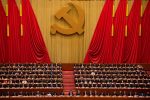
Every five years, Beijing goes into heightened security as senior members of the Chinese Communist Party gather. The National Party Congress is an occasion for the party to review its track record and determine its future direction, but most crucially, it’s a moment to unveil future leaders. Older members of the seven-member Politburo Standing Committee are retired while fresh blood is brought in, including at the very top – the General Secretary. Under a norm set down by Deng Xiaoping, this General Secretary is meant to be changed every other congress – in other words, every ten years. But at this upcoming Congress, most China watchers expect Xi Jinping to

John Keiger

France and Britain are brothers in despair

Since Brexit, Britain and France appear to have drifted apart. Leaders from both countries have engaged in an on-off war of words. But despite these political fractures, Britain and France have actually come to resemble each other more closely than ever. It is now difficult to differentiate the economic, financial, social and political conditions that exist on both sides of the Channel.  France and Britain face a wave of strikes over the coming months. After a lull over the summer, Gallic workers are once again walking out: public sector and railway worker unions staged a national strike for wage increases last week. Even moderate unions are now threatening mass stoppages if Macron continues his labour reforms. Meanwhile,

Jake Wallis Simons

The bizarre story of the ‘Jewish Taliban’

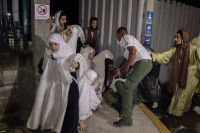
One of the more bizarre stories to have hit the headlines in recent days was the unsuccessful attempt by police to arrest 20 members of a radical Jewish sect in Mexico. Where to start with a story like this? We could talk about how their jungle base, 11 miles north of Tapachula in Chiapas state, was raided last Friday and two members were detained on suspicion of human trafficking and serious sexual offences. We could talk about how the raid took place after an investigation and surveillance operation lasting months, carried out by Mexican and Guatemalan authorities with the assistance of a four-man team of former Israeli spooks. We could

Will the GOP blow the midterms?

At the start of the year, largely thanks to the actions of the president, the Republican party was sitting pretty. It would be generous to say that Joe Biden’s first year in office didn’t live up to expectations. The former vice president who was heralded by his party and the liberal media as the man who would return the country to normalcy, restore faith in government institutions and protect democracy instead created new post-pandemic chaos. Biden and the Democrats failed to deliver in pretty much every area that mattered to Americans: gas prices, inflation, supply chains, the southern border, Afghanistan, Covid-19 and crime. National polls reflected the mood; Biden’s approval

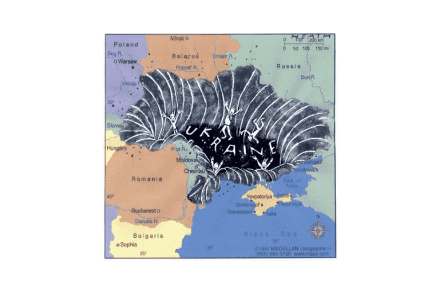
A short history of language in Ukraine

After six months of war in Ukraine, most observers agree that the roots of Russian aggression lie in the country’s deep-rooted attitudes to culture and history. In line with Russia’s nationalist traditions, Putin denies any place for a separate Ukrainian identity. The Ukrainians, in contrast, see themselves as a proud nation with their own history, culture, centuries long struggle for independence, and, of course, language. And while Ukrainian has been dismissed as a dialect of Russian in Moscow, it in fact has a long history – and is very much a language in its own right. That independence can be seen in the genesis of the word ‘Ukraine’ itself. In

Svitlana Morenets

Will Nato accept Ukraine?

Shortly after the invasion of Ukraine, Volodymyr Zelensky made an offer to Vladimir Putin. Ukraine would drop its ambition to join Nato and would instead stay neutral, he said. It would not align with the West, in exchange for an end to hostilities. It was a sincere offer, and unpopular with Ukrainians. Yet it was significant: Putin had cited Ukraine’s Nato ambitions as the main reason for the invasion, saying it showed the West was somehow threatening Russia. But today, that offer ended and Zelensky is seeking the ‘accelerated’ Nato accession granted to Finland and Sweden this year. Will Nato accept? Jens Stoltenberg, Nato Secretary-General, dodged the question when asked today. ‘Our focus

Lisa Haseldine

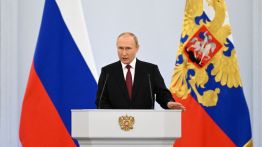
Putin fires a warning to the West

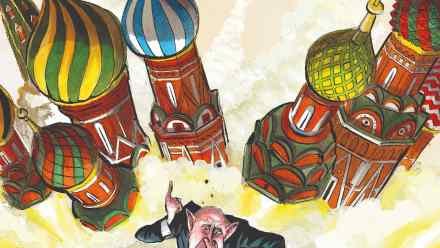
‘The West has let their mask slip and revealed their true nature!’ That was Vladimir Putin’s message to a hall of vacant-looking officials at the Kremlin this afternoon. The Russian president gathered the great and the good of Russia to reveal the formal annexation of the Ukrainian regions of Donetsk, Luhansk, Zaphorizhzhia and Kherson. But Putin’s audience in the hall would be forgiven for quickly losing sight of this. This was a speech aimed at Russia’s enemies in the West. Putin justified the expansion of the Russian Federation by insisting that the four now-annexed Ukrainian territories had voted in favour of joining Russia: ‘This is the will of 20 million people’, he said. The

Mark Galeotti

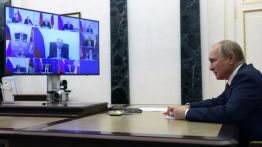
Even Putin’s minions are turning against him

Sergei Melikov, head of the Dagestan Republic within the Russian Federation, is hardly a dissident. As Colonel General Melikov, he was deputy head of the National Guard, the main militarised internal security force, and he has been a loyal agent of Moscow’s all his life. Nonetheless, he has become a no-doubt-temporary phenomenon on social media for his abusive diatribe against over-enthusiastic military recruiters. Draft officers had been driving round Derbent, Dagestan’s second city, loudspeakers blaring calls for every adult male to go straight to their local military commissariat. ‘Utter nonsense’ was about the most polite thing Melikov had to say about this ridiculous (and illegal) gambit. He even implied that

Kate Andrews

Podcast special: Britain in the global fight against Covid

39 min listen

The UK was the first country in the world to begin its formal vaccine rollout, starting with the 91 year old Margaret Keenan. In the years since, the pandemic has been almost entirely routed in this country (though its impact on the economy, on healthcare, on the criminal justice system, continue to be suffered). But the British vaccine – developed by Oxford University and AstraZeneca – was a key part of the global fight against the pandemic. What was it like to be on the inside during those crucial first months? The Spectator has brought together politicians, advisors and scientists who played key roles during that time, to reveal a