World

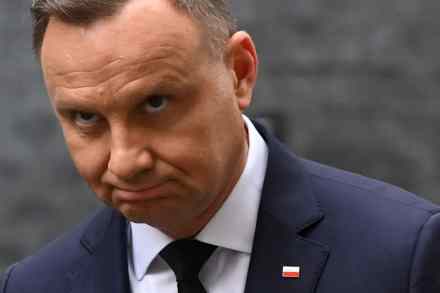
The EU needs to work with Poland, not push it away

Today, Europe needs nothing more than a strong Polish leadership. Poland already counts among the largest providers of military and financial assistance to Ukraine, and Poles have admirably shouldered the burden of Ukrainian refugees flowing into the country. Diplomatically, however, Warsaw punches well below its weight in the EU. That is a problem in an age when the EU’s natural leader, Germany, has lost its way. Just two days into the exhumations in Izyum, which have exposed yet more alleged war crimes by Russian forces, Germany’s chancellor Olaf Scholz characterised the tone of his phone conversations with Vladimir Putin as ‘friendly’, notwithstanding their ‘very, very different, indeed widely differing views’.
Sam Ashworth-Hayes

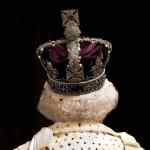
Don’t blame the Queen for the British Empire

If a country’s greatness can be measured by its enemies, Britain can set fears of national decline aside: we’re still doing pretty damn well. Now that the Queen’s funeral has taken place, the dignitaries have been despatched, and the corgis are in good hands, it seems like the right time to take stock. Most of the world’s leaders, from president Biden to president Putin, have paid their respects to Britain’s late monarch, and sent their sorrow to Britain’s mourning people. The exceptions have been few, and noisily promoted by American media organisations desperate to make every world event somehow a commentary on domestic US politics.  The best response to this is

Why does this university want to bin Queen Victoria?

Spare a thought for New Zealand’s Victoria university. For years now, this Kiwi institution of higher learning has been pulling out all the stops to rid itself of its monarchial name. The events of recent weeks have made its mission much more difficult. Victoria marks its 125th anniversary this December. Few things are likely to have gladdened the hearts of the university’s bigwigs than if this year could have been the last in which it was saddled with her majesty’s imprimatur. The death of Queen Elizabeth — and the tidal wave of warm Antipodean feel it has brought about — can only have thrown yet another spanner in the works. New

Steerpike

Watch: Aussie broadcasters fail to recognise Liz Truss

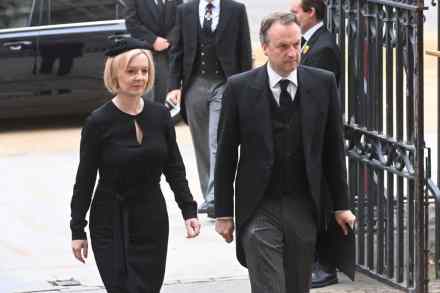
Poor Liz Truss. While Boris Johnson is recognised the world over thanks to his famous ruffled hair, Britain’s new Prime Minister isn’t quite as well known overseas. As the great and the good arrived at Westminster Abbey for Her Majesty the Queen’s funeral service earlier today, Truss was shown with her husband entering the church. Unfortunately, two Aussie commentators, broadcasting on the country’s Channel Nine, had no idea who Truss was. ‘Who’s this? Maybe minor royals,’ said presenter Peter Overton. ‘We can’t spot everyone unfortunately’, said his colleague Tracy Grimshaw. ‘They look like they could be local dignitaries,’ she added.  Oh dear. After some panicked whispers off air, Overton eventually told Aussie viewers: ‘I’m

Stephen Daisley

In praise of France’s tributes to the Queen

The death of Elizabeth II has reacquainted Britain with all the cherished irrationalities that make us who we are. Hereditary monarchy. Unfathomable pageantry. Democratic grief. The joy taken in queuing. There’s no understanding these customs; tradition exists to be followed, not deduced. To love the British, you have to love, or at least accept, their curious foibles. There is one irrationality that is not exactly cherished but endures nonetheless and the Queen’s death has underlined just how irrational it is and how difficult to love. The British aversion to the French seems all the more perverse given la république’s extraordinary reaction to the passing of Britain’s longest-serving monarch.  France may

Freddy Gray

Joe Biden’s Taiwan muddle has become untenable

Under Joe Biden, the longstanding American policy of ‘strategic ambiguity’ vis-à-vis Taiwan has taken on a curious post-modern quality. The official US position on arguably the biggest international question of the moment is now so ambiguous that even the president of the United States doesn’t appear to know what it is. In a long interview with CBS 60 minutes this weekend, president Biden was asked if US forces would defend Taiwan in the event of a Chinese attack. ‘Yes,’ he replied. ‘If in fact there was an unprecedented attack.’ The White House promptly clarified that, in fact, the US position has not changed, suggesting that America still might not commit

Svitlana Morenets

Ukrainian nuclear power plant shelled by Russia

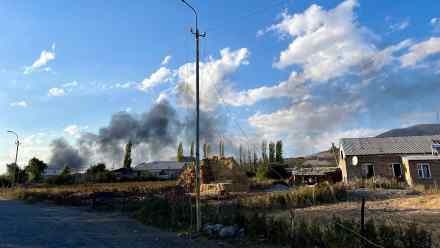
If Putin is losing the ground war in Ukraine and running out of troops, what other options does he have? The obvious fear is that he’d use nuclear weapons or attack Ukraine’s nuclear power stations. Last night, the Pivdennoukrainsk nuclear power plant in Mykolaiv oblast, 300 km (200 miles) south from Kyiv, was struck, with more than 100 windows destroyed by the blast. Such plants are designed to withstand explosions although not missile attacks. The reactor was not hit and there (as yet) are no reports of any radioactive leakage.   For nuclear plants to be shelled at all shows a dangerous turn of events. Energoatom, Ukraine’s state nuclear company, has

When the Ceausescus came to tea

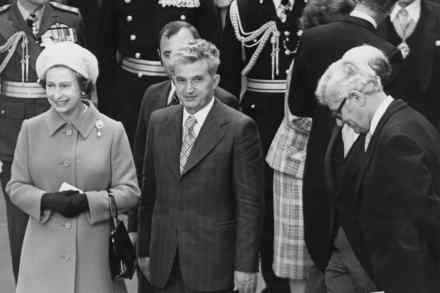
Anyone still in any doubt about the lengths to which Queen Elizabeth II was prepared to go in the line of duty might consider the hideous company the role at times foisted on her. In 1991, she had to clink glasses with Zimbabwean dictator Robert Mugabe, and 20 years earlier had dined with Ugandan despot Idi Amin (though she later privately vowed to hit Amin with a sword if he dared to gatecrash her Silver Jubilee). But perhaps none of these grisly encounters was as gruelling as having to host Romanian tyrant Nicolae Ceaușescu and wife Elena on a three-day state-visit, complete with Palace quarters, in 1978. Though a domestic

Ian Williams

Even Xi is unimpressed with Putin’s bungling autocracy

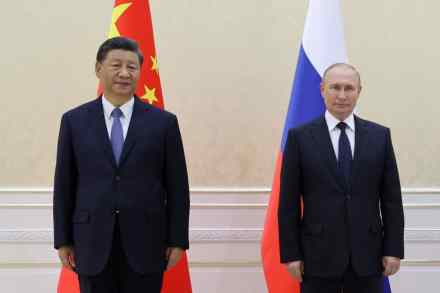
To say that Vladimir Putin is giving autocracy a bad name is rather to state the obvious. But it now appears to have dawned even on his ‘old friend’ Xi Jinping that Russian incompetence and cruelty in Ukraine is undermining their joint ambition to re-write the international order. Putin’s admission that Beijing might have ‘concerns’ about his bungled war was cryptic but striking. ‘We highly value the balanced position of our Chinese friends when it comes to the Ukraine crisis,’ Putin said in remarks ahead of their meeting in Uzbekistan. ‘We understand your questions and concerns about this. During today’s meeting, we will of course explain our position.’ Xi was

Cindy Yu

It’s wrong to ban China from the lying-in-state

Unlike some Americans, China’s communists have no problem getting their heads around hereditary monarchy. Last week, President Xi sent his condolences to the United Kingdom. Now, he’s sending one of his most trusted deputies to pay respects at the Queen’s funeral. China has called off its wolf warriors, its diplomatic ideologues known for berating the West. Beijing is on best behaviour. Instead, the bellicose rhetoric is coming from a few British MPs, indignant that Chinese officials have been invited to the funeral. Vice-president Wang Qishan, the man tasked with representing China, is one of Xi’s most reliable lieutenants, having led the President’s flagship anti-corruption drive. But the two men go even further back,

Gavin Mortimer

The inconvenient truth about France’s forest fires

Montpellier Last month the Prime Minister of France, Elisabeth Borne, visited the south-west of the country to offer her support to firefighters tackling a series of large forest fires. It was also a good opportunity to broach a subject close to her heart. ‘More than ever,’ she warned, ‘we must continue to fight against climate change and to adapt. A new plan for adapting to climate change will be put out for consultation at the beginning of the autumn’. Borne isn’t alone in connecting the forest fires that have ravaged much of France this summer to climate change. Newspapers such as Liberation have also linked the two. Last week the

Lisa Haseldine

Wagner Group exposed recruiting Russian prisoners for Ukraine

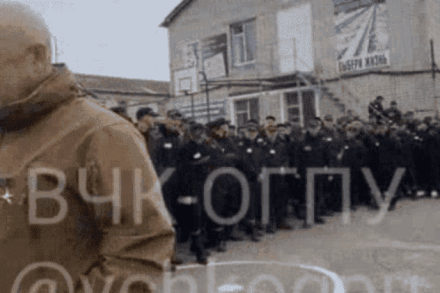
The Wagner Group thrives in the shadows, but now its founder has been caught on camera: recruiting prisoners from a Russian penal colony for the war in Ukraine. In the video, Yevgeniy Prigozhin paces about a large group of prisoners, giving them the hard sell on joining the Russian war effort. He offers them a deal: six months of service in return for a pardon for their crimes. But, should they arrive in Ukraine and refuse to fight, they will be considered deserters and shot. ‘The war is difficult,’ he says; the pro-Kremlin group has used ‘more than two and a half times’ the amount of ammunition used by Soviet

Lionel Shriver

Not all Americans are so crass

In the face of American snark about the Queen’s death, many a British newspaper reader was disgusted. With bad tidings imminent on Thursday last week, an academic at Carnegie Mellon tweeted: ‘I heard the chief monarch of a thieving raping genocidal empire is finally dying. May her pain be excruciating.’ An assistant professor in Rhode Island tweeted that she would ‘dance on the graves of every member of the royal family, especially hers’. Once the bleak news was in, a co-host of the popular US television show The View imagined this the ideal time to observe: ‘If you really think about what the monarchy was built on, it was built

Elizabeth II’s devotion to the Commonwealth

It’s a question which would inevitably surface during any serious discussion of Queen Elizabeth II: who was her favourite prime minister? Unlike her grandfather, George V, who was clear that he favoured Ramsay MacDonald (and told him so), or George VI, for whom Winston Churchill was the clear winner, Elizabeth II always kept us guessing. Was she, too, a Churchill devotee? Some say she harboured a greater fondness for her first Labour PM, Harold Wilson, and not just because he was good company and shielded her from the republican wrath of his own MPs. He did not, unlike Churchill, outstay his welcome but timed his resignation to divert attention from

More mad than Vlad: Russia’s ultra-nationalist threat

‘Russia without Putin!’ was the cry of Muscovites who turned out to protest against Vladimir Putin’s return to the presidency for a third term in December 2011. Crowds 100,000 strong chanted their opposition on Moscow’s Academician Sakharov Prospect – as symbolically named a venue as you could wish for – as riot police stood calmly by. There was anger in the crowd. But there was hope, too, not least because the massive protest was officially sanctioned. One after another, prominent opposition politicians such as Ilya Yashin, Boris Nemtsov and Alexei Navalny denounced Putin from a stage provided by the city authorities. Today the memory of those protests seems to belong

A hereditary monarchy is good for politics

I suppose it was inevitable that with the death of HM the Queen certain floodgates would open. During her reign it often felt as though there were forces that she was single-handedly holding back. As Lionel Shriver has noted elsewhere, they have come in particularly malicious form from parts of the US. But there is one part of the republican critique of monarchy that has returned which is too little addressed, and which I have found myself countering in recent days. Not, I might add, from the sort of people who are simply hostile to our country and its past, but rather from people who wish us well but are

Sweden’s new powerbrokers

Sweden may soon have a centre-right prime minister – an unusual turn of events for a country in which the Social Democrats have won 19 of the last 24 elections. Ulf Kristersson, leader of the Moderate party, is now set to take power. ‘I am now starting the work of forming a new, effective government,’ he said ‘A government for all of Sweden and all citizens.’ But it’s a government that is not really due to his success: his party, the Moderates, actually lost ground in the election and finished third for the first time in decades. He is preparing for power thanks to the success of another party: the

Lisa Haseldine

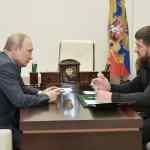
Has Kadyrov turned on Putin?

Just how much of a grip does Vladimir Putin have on the situation currently unfolding in Ukraine? Over the weekend, the Ukrainian Army made a series of rapid advances, reportedly regaining control of as much as 3,000 square kilometres of formerly Russian-controlled territory. According to one Ukrainian commander, the counter-offensive had Russian soldiers fleeing for the border ‘like Olympic sprinters’. In a sign of just how dire a situation the Russian war effort looks to be in, Chechen leader and Putin loyalist Ramzan Kadyrov took to social media to criticise the campaign. In a rambling voice note on the messaging app Telegram, Kadyrov slammed the Russian retreat from the towns

Svitlana Morenets

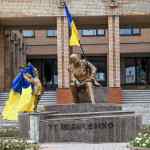
The horrors of Russian occupation are being uncovered in Ukraine

Ukraine is racing to establish control over the newly-liberated Kharkiv region. The country’s president Volodymyr Zelensky paid a surprise visit to the city of Izyum, until recently a strategic point for Russia’s occupation reinforcements (photos here). ‘We are moving in only one direction – forward and towards victory’, he said after the Ukrainian flag was raised in the city centre. The restoration of civic apparatus in these liberated areas is being carried out with military speed. Some £9 million  been allocated from the state budget to rebuild critical infrastructure. The national postal providers are already resuming work, delivering aid kits with medicine, food, clothing. Pension payments will also be posted: this still