Politics

Read about the latest UK political news, views and analysis.

Fraser Nelson

Brexit odds – live updates on percentage chance of UK leaving the EU

With opinion polls showing dazzling range – from Leave being 4 points ahead to Remain 13 points ahead – it’s worth looking at the betting markets. The below is a live chart, which will update every time you revisit this page. It updates several times throughout the day. At the time of writing, the graph underlines a basic point about referenda: no matter what the polls say, the status quo has a huge in-built advantage. Or, at least, a lot of people are betting that voters will stay with the status quo. Mind you, this time last year, the betting markets gave David Cameron a 10pc chance of winning a majority. Greater than the

Northern overexposure

‘The shortest way out of Manchester,’ it used to be said, ‘is notoriously a bottle of Gordon’s gin.’ But that was a long time ago, when ‘Cottonopolis’ was the pivot of the Industrial Revolution, the British empire was expanding and life was cheaper. They tend not to drink gin any more in the bars on Deansgate. It’s cocktails, a tenner a pop. The hub of George Osborne’s ‘Northern Powerhouse’ is a much-changed city. Now they’re queuing to get in, even though the super-duper HS2 rail link may go no further than Crewe, which is in Cheshire, and only southerners think Cheshire is in the north. Andy Burnham is the latest

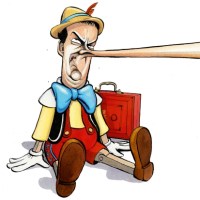
Brexit, and the return of political lying

Sir John Chilcot’s report into the Iraq invasion, due to be published on 6 July, is expected to highlight the novel structure of government created by New Labour following its landslide victory of 1997. As Tony Blair started to make the case for war, he began to distort the shape and nature of British government in several ways — the most notable being the deliberate debasement of the traditional idea of a neutral, disinterested civil service. Under Blair, civil servants were told to concern themselves less with the substance than the presentation of policy. They were informed that their loyalty lay more with the government of the day, less with the

James Forsyth

This referendum has shown us the real Cameron

Westminster has a tendency to get ahead of itself. MPs want to discuss the aftermath of an event long before it has happened. They play never-ending games of ‘What if?’ At the moment, the political class cannot stop discussing, in great detail, what the post-EU referendum political landscape will look like. The speculation is, in and of itself, part of the political process. Much of the talk of the post-vote challenges facing David Cameron is intended to persuade him to pull his punches in the final weeks of the campaign. What no one disputes is that the Prime Minister will find governing even harder after 23 June. His majority is

The power trap

Soon after the date for the EU referendum was set, Timothy Garton Ash published a piece in this magazine under the title ‘A conservative case for staying in’. He was followed by Ian Buruma, attacking the idea that, having left the EU, the British would be more free. And then, after the Obama visit to London, there was Anne Applebaum, assuring us that the US had ‘excellent reasons’ for being opposed to Brexit. Like the little boy at the back of the street brawl in the old Punch cartoon, I want to ask: ‘Is this a private fight, or can any former foreign editor of The Spectator join in?’ Tim

Matthew Parris

If I were in charge of Leave, here’s what I’d say…

It may be too late. But with only about three weeks before our referendum on EU membership I am itching to take the leadership of the Leave campaign. I could do them a power of good. Two serious objections may be raised to my bid. First, I couldn’t chair a parish meeting, let alone a snakepit of warring Leave enthusiasts. Secondly, I certainly don’t think Britain should leave the European Union. Setting these disqualifications aside, however, as a former speechwriter and politician I see so clearly the strategic direction the Leave campaign should set if they are to stand an outside chance of winning — and a much greater chance

Lloyd Evans

PMQs Sketch: Osborne managed to fight off Labour’s pocket Boadicea

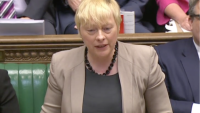
The only MP who doesn’t want Angela Eagle to be the next Jeremy Corbyn is Jeremy Corbyn. He was away today — thank Gawd! — leaving Eagle to take on George Osborne who replaced the PM. Eagle is quality. Her low stature, her kindly, nunnish face and her merry eyes give her a huge advantage in debate because she appears to be without defences. What weapon could this sweet-natured tinky-winky milkmaid possibly wield? A roll of grease paper? A warm scone? A rubber duck? When she strikes, as she does, the blow arrives invisibly. She has a slangy northern tongue that can easily make an Oxbridge toff look like a

Steerpike

David Cameron’s new enterprise tsar proves to be a problematic hire

Oh dear. Today at PMQs, George Osborne could not resist boasting about the government’s new enterprise tsar, Sir Alan Sugar. When asked whether he could confirm reports that The Apprentice star would be assisting the government, the Chancellor replied that this was the case — after Sugar had recently told Labour they were ‘fired’. However, for all their glee at the celebrity appointment, Mr S suspects Cabinet members should refrain from getting too excited. When Andrew Neil asked Matthew Hancock on the Daily Politics why he thought Sugar was such an expert on business, the minister seemed lost for words: AN: I just wonder why you politicians are so obsessed with

James Forsyth

PMQs: After a strong start, Angela Eagle lost her way

It was George Osborne v Angela Eagle at PMQs today, with David Cameron at the G7 in Japan. Eagle, who is a far better despatch box performer than Jeremy Corbyn, started off by contrasting Osborne’s handling of Google’s tax affairs with the French authorities raiding the company’s Paris office. She then went on to do what Jeremy Corbyn won’t, or can’t do, exploiting Tory divisions over the EU referendum. She asked Osborne if he agreed with Priti Patel or Len McCluskey on the EU and workers’ rights. But after this Eagle lost her way, her questions turned into mini-speeches and Osborne batted them away with increasing ease. By the end of

Steerpike

Watch: Angela Eagle teases Osborne for banishing Brexiteers from the frontbench

With David Cameron away, it fell on George Osborne to field questions from Labour’s Angela Eagle today for PMQs. While Osborne had plenty of gags up his sleeve, it was Eagle who managed to provide her party with the biggest laugh of the session. Needling the Chancellor over the EU division in his party, Eagle pointed to the fact there was only one Brexiter present on the Conservative front bench: ‘Instead of providing the leadership the country needs, they’re fighting a bitter proxy war over the leadership of their own party. I notice that no Out-er… all the Brexiteers have been banished from the bench.’ After much heckling, it became apparent

James Forsyth

Hilton: Brexit would be the crowning achievement of Tory modernisation

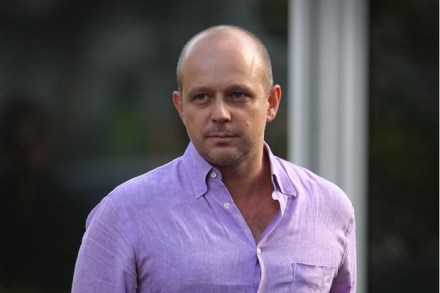
In a speech to Policy Exchange today, Steve Hilton—David Cameron’s former senior adviser—will make the case that ‘any intellectual rigorous examination makes it impossible for a Tory moderniser to support staying in the EU’. He argues that Tory modernisation was about trusting people, and that the EU does not; that modernisation was about localism, and that the EU is inherently centralising; and that the EU helps the rich and not the rest. I think there’s much to be said for Hilton’s analysis. (Though, of course, it should be recognised that there are Tory modernisers on both sides of the argument.) But where Hilton is surely right is that the EU

Tom Goodenough

Today in audio: Fallon says Putin would ‘Vote leave’

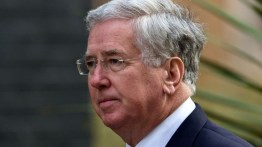
Vladimir Putin’s name has popped up again in the Brexit debate. This time, however, it wasn’t the Prime Minister suggesting that the Russian president would favour Britain leaving the EU, but the Defence Secretary. Michael Fallon said Putin would ‘Vote Leave’ and he also told a Commons select committee that ‘there is absolutely no doubt in my mind that a British exit from the European Union would be applauded in Moscow’. He added that it would be a ‘payday for Putin’: Michael Fallon went on to say that being in the EU ensured that Russia had ‘paid the price’ for its intervention in Ukraine. Meanwhile, the Prime Minister gave a

Isabel Hardman

How good government often goes unnoticed and unrewarded

What make a good minister? Is it how well they perform at the Dispatch Box in the Commons? Or their ability to field questions on Newsnight? Or even their ability to be a good lunch guest for a member of the lobby? The truth is that often we don’t know whether someone has been a good government minister until years after they’ve left the department and the policies they introduced have actually run their course, rather than just enjoyed a bit of media limelight. Take the 1999 Teenage Pregnancy Strategy. Launched in June of that year by Tony Blair, the strategy examined a study by the Social Exclusion Unit and

Alex Massie

Project Fear 2 is a rubbish sequel. But it will still work

Sometimes, in this game, it’s tempting to over-complicate things. The lesson of Talleyrand’s death – What did he mean by that? – has been all too well absorbed. And so we search for hidden meanings and a deeper truth whenever a politician says something. The real story always lurks beneath the surface, nothing should be taken at face value and everyone is always thinking three moves ahead. It’s an appealing thought right enough. The trouble is it’s also often nonsense. Sometimes even politicians just mean what they say. Nicola Sturgeon’s visit to London yesterday offered a case in point. The First Minister insisted, as she has always insisted, that she wants the

Tom Goodenough

So what if Brexit briefly raises the cost of a family holiday, Prime Minister?

Nicola Sturgeon urged the Government yesterday to lay off the ‘Project Fear’ strategy and instead focus on spelling out the positive reasons for remaining in the EU. Unfortunately, it seems it’ll take the Prime Minister some time to heed that advice. Cameron will warn today that Brexit would ramp up the price of a holiday. He’ll argue later that: ‘The choice facing the British people on 23 June is increasingly clear: the certainty and economic security of remaining in the EU, or a leap in the dark that would raise prices – including the cost of a family holiday. All the evidence points to the value of the pound falling

Tony Benn on the 1975 referendum

This letter from Tony Benn to his constituents was written in 1975 and published in The Spectator.  In 1975 you will each have the responsibility of deciding by vote whether the United Kingdom should remain a member of the European Common Market: or whether we should withdraw completely, and remain an independent self-governing nation. That decision, once taken will almost certainly be irreversible. In both the 1974 general elections I fully supported our manifesto commitment on the handling of the Common Market question. The present Government is now engaged in renegotiating the terms of entry along the lines set out in those Manifestos and is solemnly pledged, whatever the Outcome

Steerpike

George Osborne ‘uncorks the Gauke’ once again

At last month’s Westminster Correspondents’ dinner, George Osborne made light of his behaviour during his budget U-turn. Joshing about his decision to send his Financial Secretary David Gauke to field questions from angry MPs: ‘A big speech in parliament, the pressure is on, you lot are baying for blood. My answer? Uncork the Gauke.’ So, it ought to come as little surprise to Osborne that MPs were weary to his ways when he appeared to use the same old strategy to avoid awkward questions on Monday about the latest Treasury EU report. With Osborne absent from proceedings, it fell on Gauke to answer the question — much to John Bercow’s