
Society

Jonathan Miller

More booze won’t save France’s dying village life

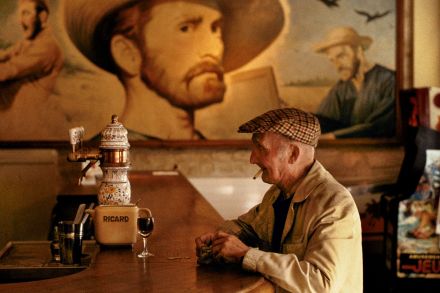
Reach for the pastis, Jacques. A law is making its way through the French parliament to relax alcohol licensing, to make it easier to open bars and cafes in French towns and villages. French politicians are desperate to try anything to stimulate commerce in villages that are dying, the life sucked out of them by shopping centres with everything just five minutes away in the car. That more bars will be helpful is likely to be wishful thinking. The days when the Café de la Paix was at the centre of village life are long passé. It is easy to over-sentimentalise the role of the café in France’s 40,000 small
Save Eastbourne’s bowls club!

Somewhat unfairly (the actual median age of residents is 45) the East Sussex coastal resort of Eastbourne is known as ‘God’s waiting room’ because of the high number of old people who live in Britain’s sunniest town. Although Eastbourne’s reputation as a paradise for retirees may be overblown, it can’t be denied that the town is quieter and more sedate than the raucous youth culture pervading its coastal neighbours Brighton and Hastings. And now, according to the Times, Eastbourne’s elderly people are facing a new threat to their health and happiness alongside the inevitable aches and pains that accompany the autumn of life: their bowling club may have to close. The

Letters: Wokery is a form of dictatorship

Democracy rules Sir: I share the sentiments of both Rod Liddle (‘Trump displays weakness, not strength’, 8 March) and Douglas Murray (‘How MAGA turned on Ukraine’). I am one of those peculiar political animals who finds himself in agreement with certain elements of the right, including those represented by Donald Trump, on just about everything except Ukraine. Nevertheless, I see his election as an essential antidote to the poisonous ideology of the woke that has all but conquered the rest of the West in terms of the manner in which we live and are governed. Nor is the US immune. Without wishing to quibble with a courageous and eloquent speaker

Does might make right?

The criminals Donald Trump and Vladimir Putin both believe that might is right. The whole question fascinated the ancient Greeks.  In his famous history of the long war between Athens and Sparta (431-404 bc), Thucydides (d. c. 400 bc) explored the question through speeches on both sides, but on one occasion – when Athens demanded the surrender of the small island of Melos – he put it in the form of a debate. Here is an edited sample, strangely apposite too: Ath: You know as well as we do that, in the real world, justice comes into it only between equals in power, while the strong do what they can

Mary Wakefield

The cat that tamed Dom

I don’t like cats. I don’t like their reptilian stealth, or the way their heads are set low and poke out from their bodies. I don’t like the constant showing off of their puckered bums, or their disregard for the normal rules of mammal eye contact. There are nearly 13 million cats in Britain – one in three of us owns them. There are roughly 74 million in the United States and until recently I found it inexplicable. Why would anyone choose to love and nurture a psycho that dismembers songbirds, often torturing them first in a casual, playful way? I’ve enjoyed in the past writing about the idiocy of

Toby Young

I was right – and Gove was wrong – on lockdown

In an otherwise excellent article for the Sunday Telegraph last week about our government’s hopeless pandemic response, Dan Hannan made one comment I’d like to take issue with. He wrote: ‘For years to come, Britain will be poor, indebted and repressive because, in early March 2020, no one (with the exception of one brave Sunday Telegraph columnist, modesty forbids, etc) wanted to stand in the way of a stampede.’ In fact, he wasn’t the only one and, lacking Dan’s modesty, I’m happy to name myself as one of the first journalists to oppose the lockdown policy, along with Peter Hitchens, Allison Pearson, Ross Clark, Julia Hartley-Brewer and a handful of

How ‘Boom Boom’ are you?

Do you Boom Boom? Or are you just Booming? Can Boomers Boom Boom or is it just for Zoomers? Can you Boom Doom? Hear me out: I’m getting to grips with the new vibe shift. In December, Sean Monahan, an American trend analyst, announced the arrival of the ‘Boom Boom’ aesthetic, which he described as a ‘pure expression of excess’ or ‘an Eighties archival look that is maximalist in its appetites’. He apparently came up with the term as he sat in London’s low-lit Decimo restaurant. Monahan is taken fairly seriously when it comes to predicting cultural trends. In 2013 he coined the term ‘normcore’, which is defined by a

Roger Alton

Angela Rayner’s war on Britain’s playing fields

With the world on fire – not to mention large swathes of the North Sea – it is understandable that some of the scurvier implications of Angela Rayner’s stonking planning bill, aimed at streamlining all development, from roads and power stations to housing, might have gone unnoticed. Which is a pity, because it’s not very pretty. To make sure everything goes swimmingly, it seems that those objecting to any developments too much will have to keep their trap shut. Among the bodies that won’t have to be consulted any more is an outfit called Sport England, which may have its faults but is dedicated to promoting grassroots sport. Now, of

I’ve started a memoir club – in memory of Jeremy

Provence Molly MacCarthy launched the Bloomsbury Memoir Club in the spring of 1920 with two aims. The first was to bring together the old Bloomsbury set who’d been dissipated by the first world war and the second was to encourage her dilatory husband, Desmond, to write his memoir. She was successful in the first but not the second. The original club was composed of old friends and family members: the MacCarthys, Virginia and Leonard Woolf, Vanessa and Clive Bell, Duncan Grant, Roger Fry and John Maynard Keynes. The aim was ‘serious but also to amuse’. There were few rules, ‘one of which was that no one should be affronted by

Tanya Gold

A great-day-out cafe that’s good value: Kenwood House reviewed

The immaculate bourgeois socialists of north London – that is not code for Jews – like to eat and drink in the former servants’ quarters of Kenwood House, because this is a mad country.  Kenwood is beautiful. It is Hampstead’s best house, standing at the top of the heath, near the head waters of the River Fleet, the river of the journalists. Further down the hill the immaculate bourgeois socialists gambol in the swimming ponds, which is apparently a fashionable thing to do. I prefer the lido, but I am not afraid of working-class teenagers. Hampstead Heath is an excitable woodland. There was a what-is-a-woman debate at the Kenwood Ladies’

Why would anyone drive at 30mph on a dual carriageway?

After running all the errands I could to help my parents, a letter from West Midlands Police arrived. They were throwing the book at us because I’d been caught doing 40mph in a 30 in my parents’ car. The photo evidence showed their little silver Peugeot being driven by me on a dual carriageway in Coventry. A dual carriageway. In what world would anyone think they should be driving slower than 40 on a dual carriageway? I was bringing the car back from its MOT, having been asked to please sort this out by my father as one of a mountain of things he had let pile up since becoming

What does Meghan mean by ‘intentional living’?

‘What are your intentions towards my daughter?’ said my husband, screwing an imaginary monocle into his eye. We had been trying to work out what intentional living meant, with regard to the Duchess of Sussex’s new brand of flower sprinkles and raspberry jam. ‘The collection is infused with joy, love, and a touch of whimsy,’ says the publicity. ‘Thoughtfully curated, As Ever celebrates intentional living.’ Intentional living could be the opposite of assisted dying, I suppose. It is quite a puzzle.      ‘The debut As Ever collection showcases eight intentionally designed products, personally developed by Meghan, Duchess of Sussex,’ says another bit of PR. In the OED, the meaning ‘on purpose’

The Sandown meeting that’s a good predictor of next year’s prospects

I never enter a Cheltenham Festival week without thinking of the Irish punter who won enough on champion hurdler Istabraq to pay off the mortgage on his house. He then lost the lot when Ireland’s hope Danoli failed to win the Gold Cup. ‘To be sure,’ he declared, ‘it was only a small house anyway.’ Alas, publication dates mean that this column must be penned before this year’s Festival starts, and I began my week with feelings so mixed about the fortunes of Istabraq’s owner J.P. McManus that they should have been rattled in a cocktail shaker.  As racing’s biggest benefactor and a man with an impeccable record in looking

Senior service

England’s over-65 team triumphed at the World Senior Team Championships, held in Prague last month. They began this event as second seeds behind the German team Lasker Schachstiftung, whose strongest player Artur Yusupov, originally from the Soviet Union, was once ranked third in the world. That crucial England-Germany match ended in a 2-2 tie, but England’s team of John Nunn, Glenn Flear, Tony Kosten, Peter Large and Terence Chapman scored more consistently against the rest of the field, helped by an outstanding 7/8 score for Peter Large. In the game below, his primitive threat to the f7-pawn at move seven bears a funny resemblance to Scholar’s mate, which arises after 1

Bridge | 15 March 2025

Everyone has good days and bad days; no one more than me. I like to think my A game is pretty good but my B game is such a car crash that sometimes I feel like giving up. Great players also have A and B days, the difference being smaller the better the player. Towards the end of last year I was thrilled with my game: defences seemed to go swimmingly, ditto bidding and even my declarer play was unusually successful. Sadly it went crashing down to B with no explanation. Today’s hand came up towards the end of my A streak. North’s 2♣️ was Landy showing both majors. I

No. 841

White to play and mate in two moves. Composed by George Edward Carpenter, Dubuque Chess Journal, 1873. Email answers to chess@spectator.co.uk by Monday 17 March. There is a prize of a £20 John Lewis voucher for the first correct answer out of a hat. Please include a postal address and allow six weeks for prize delivery. Last week’s solution 1 Qh6! and Black resigned, as gxh6 2 Nxh6 is mate. Last week’s winner Tom Hawksley, Groton, Suffolk

Spectator Competition: Contrarian song

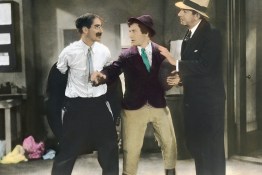
For Competition 3390 you were invited to come up with your own version of the Groucho Marx song ‘I’m Against It’, from the film Horse Feathers: Your proposition may be good But let’s have one thing understood: Whatever it is, I’m against it. Hats off to David Silverman, who got into specifics: (‘Conniving, skiving; Mo Salah diving;/ Texting while driving/ VAR’). Also to Sylvia Fairley, Nicholas Lee, Bill Greenwell and others. Sue Pickard channelled the true spirit of Groucho by keeping it general: I am the very model of a modern-day contrarian If you are a sophisticate then I’ll be a vulgarian Whatever your opinions are, mine are antithetical I