More from Books

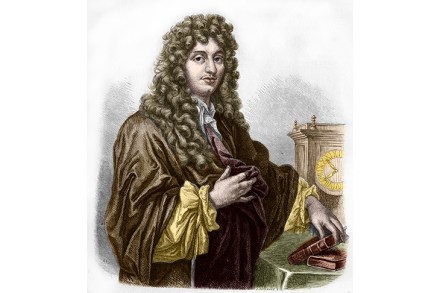
Christiaan Huygens – hero of time and space

This book, soaked like the Dutch Republic itself ‘in ink and paint’, is enchanting to the point of escapism. The author calls it ‘an interior journey into a world of luxury and leisure’. It is more than that. What he writes of Christiaan Huygens’s milieu is true also of his book: ‘Like a Dutch interior

Julie Burchill

How we laughed: the golden days of Bananarama

Saying you don’t like Bananarama is like saying you don’t like summer or Marilyn Monroe — a sure sign of a misanthropist who thinks that being a wet blanket makes them interesting. OK, they never had a blazing talent — their three small, sweet pipings barely adding up to one decent voice — but they

The Enlightenment was a many-splendoured thing

History used to be so much easier. There were the Wars of the Roses, then the Reformation, the Civil War, the Enlightenment and finally the Victorians. Each one had its own century and its distinctive tag. Throw in Henry VIII and Elizabeth I, garnish with a few zealots and adventurers, some glorious triumphs and some

All change: The Arrest, by Jonathan Lethem, reviewed

This is an Exquisite Corpse of a novel — or if you prefer another name for that particular game, Heads, Bodies and Legs, or Combination Man, or perhaps most appositely Consequences. The parlour game involves creating something and then passing along the hidden creation to which another then adds, and The Arrest reads like Jonathan

What is so special about heavy metal?

Ever since my early youth I have loved, followed and respected a certain music genre that some people consider strange, even dangerous: heavy metal. The journey started in Istanbul, at a small, stuffy music store on a side street in Taksim, nestled between an Ottoman mosque and a fish market, where I would buy cassettes

The End of Times and the coming of the Antichrist

Two things it may be wise to know before picking up this relatively short and surprisingly cheerful brand spanking NEW biography of the Antichrist: (1) the meaning of the word ‘eschatological’ (it’s fairly critical); (2) the fact that the Antichrist is not the devil (a common misapprehension). The Antichrist is actually the son/spawn of the

Unpleasant smells can actually enhance pleasure

Harold McGee’s Nose Dive: A Field Guide to the World’s Smells is an ambitious and enormous work. Indeed it’s so large, at 654 pages and weighing nearly a kilo, that I could only manage to read it at the kitchen table — which made me appreciate its wipe-clean binding. Its distinctive new-book smell (there is

Joseph Ratzinger’s coat of many colours

A common but flawed assumption about Joseph Ratzinger is that he is simply an ardent conservative. That’s the figure we see in Netflix’s The Two Popes. Anthony Hopkins’s performance may be a visual feast, but the script leaves no cliché unaired. Better informed observers note that the Vatican’s former doctrinal guardian is a poacher turned

The brutality of the Gulag was totally dehumanising

‘It was a gray mass of people in rags, lying motionless with bloodless, pale faces, cropped hair, with a shifty, gloomy look.’ Julius Margolin’s first encounter with Soviet prisoners takes place in August 1940 on the way to a labour camp in the north of Russia. Four years later, waiting at another transit point, he

War was never Sir Edward Grey’s métier

This meaty but easily digested biography pivots around the events either side of that fateful evening of 4 August 1914 when Britain’s ultimatum to Germany over Belgium ran out and Sir Edward Grey memorably remarked that the lamps were going out over Europe. As foreign secretary for almost a decade before that, Grey had deftly

James Kelman’s ‘Memoirs’ are a misnomer

James Kelman doubtless remains best known for his 1994 Booker prize win for How Late It Was, How Late and the subsequent furore. The brouhaha looks painfully absurd 25 years later with the plaudits Kelman has received (when not being dismissed as akin to an ‘illiterate savage’) perhaps the greatest in post-war English literature. Here

Who killed Jane Britton in 1969?

The problem with telling stories about Harvard is that Harvard, if it teaches anything these days, teaches distrust of stories. So, for example, two thirds of the way through Becky Cooper’s long, ambitious book about the murder of a Harvard graduate student, the author explains that ‘we’ — those attempting to fashion a narrative about

The plight of the migrant: Crossed Lines, by Marie Darrieussecq, reviewed

‘We should be living in a brave country and on a brave planet that bravely distributes its occupants,’ thinks Rose Goyenetche, a middle-class, middle-aged Parisian child psychologist and the heroine of Marie Darrieussecq’s Crossed Lines. As their hands touch, Rose feels a familiar electric ping, and their futures become linked The story unfolds on a