More from Books

All talk and no trousers: is Oxford really to blame for Brexit?

Attacks on British elitism usually talk about Oxbridge, but Simon Kuper argues that it is specifically Oxford that is the problem, which has provided 11 (out of 15) prime ministers since the war. So what’s the explanation? Kuper thinks it’s all the fault of the Oxford Union, which fosters chaps who are clever at debating

The Soviets were imperialists. Stalin’s architecture proves it

The invasion of Ukraine by Russian forces has rendered what might otherwise have seemed a fairly niche study of a Soviet-era architect rather more resonant. Boris Iofan was born to a Russian-speaking Jewish family in Odessa in 1891. After initial studies in his home city and a brief period working with his older brother Dimitri

Murder, suicide and apocalypse: Here Goes Nothing, by Steve Toltz, reviewed

Angus Mooney is dead. Freshly murdered, he’s appalled to find himself in an Afterworld, having always rejected the possibility of life after death. Moreover, he can observe his murderer getting on increasingly well with his innocent widow. Mooney’s Afterworld is a deeply unsatisfactory mixture of computerised bureaucracy and urban chaos. In a landscape undreamed of

Momentous decisions: Ruth & Pen, by Emilie Pine, reviewed

Emilie Pine writes about the big things and the little things: friendship, love, fertility, grief; waking, showering, catching the bus. She did so in her startling collection of essays Notes to Self, and she does it again in this, her equally startling debut novel Ruth & Pen. As Ruth (‘Counsellor. Patient. Wife. Wife?’) tells herself

The effortless magnetism of Marcel Duchamp

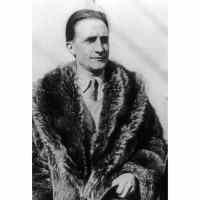
One could compile a fat anthology of tributes to Marcel Duchamp’s charm – especially what one friend called the artist’s ‘physical fineness’ – but it would be hard to top Georgia O’Keeffe’s memory of their first meeting: Duchamp was there and there was conversation. I was drinking tea. When I finished he rose from his

Accusations of racism have lost all meaning

The War on the West is Douglas Murray’s latest blast against loony left wokery, chiefly in the areas of race and ‘social justice’. ‘This is not like earlier wars,’ he writes. ‘It is a cultural war, and it is being waged remorselessly against all the roots of the western tradition and against everything good that

Katja Hoyer

German billionaires are still benefiting from the Nazis

It was a clear cold morning in January 1936 when Reichsführer-SS Heinrich Himmler arrived at the luxurious Regina Palast Hotel in central Munich. He had come to pick up a group of businessmen for a day trip. Their destination: Dachau concentration camp. Nazi Germany’s first official camp had been set up by Himmler in March

Memory test: The Candy House, by Jennifer Egan, reviewed

On page 231 of The Candy House, a sequel – no, a ‘sibling’ says Jennifer Egan – to the Pulitzer prize-winning A Visit From the Goon Squad, we meet a character called Noreen. Wasn’t she in Goon Squad? Quick check and yes, there she is playing a bit-part peeping through a fence. Now she’s older,

A tale of forbidden love: Trespasses, by Louise Kennedy, reviewed

Kenneth Branagh’s Oscar-winning recent film Belfast chronicles the travails of a Protestant family amid sectarian conflict in 1969. Louise Kennedy’s much hyped first novel, set outside Belfast in 1975, explores the same tensions from a different perspective. Like her protagonist Cushla, Kennedy’s Catholic family owned a pub in a Protestant-majority town, and Trespasses captures how

The case of the ‘Hay Poisoner’ inspired many a cosy murder mystery

The case of the retired major Herbert Rowse Armstrong, a Hay-on-Wye solicitor hanged in 1922 for killing his wife Katharine with arsenic, is one of nine examined in George Orwell’s 1946 Tribune essay ‘The Decline of the English Murder’ as having enthralled the public. ‘A little man of the professional class’, living an ‘intensely respectable

Jonathan Bate weaves a memoir around madness in English literature

There is a trend for books in which academics write personally about their engagement with literature. Examples include Lara Feigel’s Free Woman, in which the author blends a memoir of her marriage break-up with a close reading of Doris Lessing’s fiction, and Sally Bayley’s Girl With Dove, which fuses an account of a traumatic childhood

A universal language will always be an unattainable dream

The comedian Sacha Baron Cohen, in his stage persona as the dim-witted interviewer Ali G, once asked Noam Chomsky if a person could simply invent a new language from scratch. The renowned linguist gave him short shrift: ‘You can do it if you like and nobody would pay the slightest attention to you because it

Seeing and being seen: Wet Paint, by Chloë Ashby, reviewed

In this arresting debut novel we follow 26-year-old Eve as she tries to come to terms with the loss of her best friend Grace. Flashbacks punctuate the present day of Eve’s London life, gradually revealing her role in the grim circumstances of Grace’s death. Eve lives in a flatshare with a patronisingly well-meaning couple who

Arnold Bennett’s success made him loathed by other writers

Virginia Woolf admitted to her journal: ‘I haven’t that reality gift.’ Her contemporary Arnold Bennett had it in spades. He was a great novelist, as anyone who has read Riceyman’s Steps or the Clayhanger trilogy would attest. Being also the contemporary of Henry James, Joseph Conrad and D.H. Lawrence – you might say this was

Will there ever be a reliable lie detector?

For as long as we have been human we have looked for some way of telling when we are being told the truth. We tried dunking witches, only to find that buoyancy is not connected to the supernatural. We tried torture, but discovered that people will eventually say just about anything to make it stop.