Book review – social history

The ups and downs of high-rise living

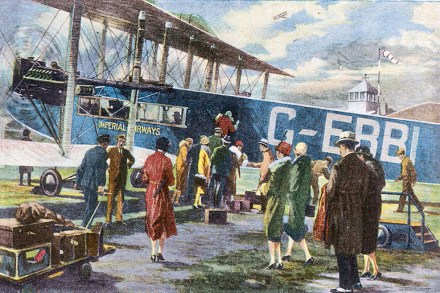
‘On BBC 2 last Monday,’ noted the Sunday Telegraph’s TV critic Trevor Grove in February 1979, ‘the return of Fawlty Towers was immediately followed by a programme about faulty towers.’ He went on: This was odd, but on close examination turned out to be without significance. After all, what connection could there possibly be between a comedy series based on the exploits of a domineering, havoc-wreaking megalomaniac called Basil Fawlty and a serious study of what has been done to Britain’s urban environment by a bunch of domineering, havoc-wreaking megalomaniacs who call themselves architects? The programme was Christopher Booker’s still remembered City of Towers, a ferocious attack on Le Corbusier-inspired

Nostalgia for the 1980s New Romantic scene 

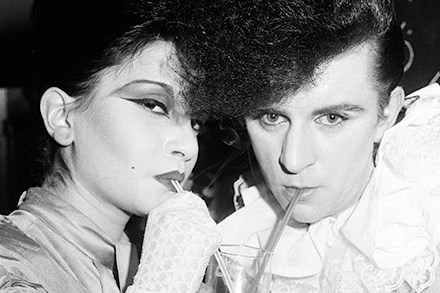
It is hard to write the history of a subculture without upsetting people. Events were either significant or inconsequential depending on who was there, which leads to absurdities. When Jon Savage wrote England’s Dreaming, his history of punk, Jenny Turner berated him in the London Review of Books for being ‘a bit of a Sex Pistols snob’. Ironically, the most exclusive British subculture of them all seems to have escaped infighting over who or what mattered, possibly because so few people were part of it. The Blitz, Steve Strange and Rusty Egan’s much mythologised early 1980s nightclub, had a brutally selective door policy. Strange let hardly anyone in, which must

Never pour scorn on Croydon

‘So f-ing Croydon,’ was the worst insult David Bowie could think of to describe a person or thing that revolted him. ‘Less of a place, more of a punchline,’ was a recent swipe by Sue Perkins, the Croydon-born comedian who grew up at the tail end of the town’s golden era of rampant employment, ambitious cultural venues and well-endowed private schools. London’s outermost, southernmost, most populous borough is an easy target for condescension: too brash, yet too poor; too try-hard, yet too lethargic; too ambitious, yet not ambitious enough. As the Croydonian author John Grindrod has written, locals are accustomed to Croydon’s ‘very existence – our existence – provoking outrage’.

Was there ever a time of equality in human society?

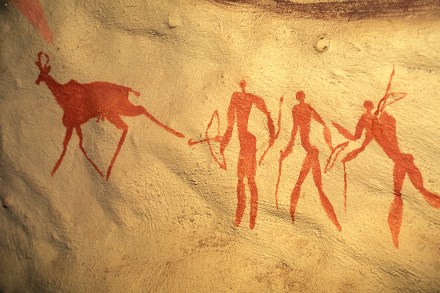
Origin stories have always helped humans gain a moral compass. Locked in a tight embrace, the Maori deities Rangi and Papa are separated by their enveloped children, creating the distant father sky and nurturing Mother Earth, bringing light to the world. Mayan gods fashion man from maize after destroying earlier clay and wood versions, who are seen to have no soul. Adam and Eve eat from the Tree of Life but illicitly also from the Tree of Knowledge. One of the more touted modern human origin stories, ostensibly based on evolutionary science, speaks of a natural inequality between violent and promiscuous men and caring and faithful women. Having evolved to