Jobs

Continental drift | 2 June 2016

It is a long time since the term ‘sick man of Europe’ could be applied to Britain. France is now a worthier candidate for the accolade — it -increasingly resembles a tribute act to 1970s Britain. A package of modest labour-market reforms presented by a socialist president has provoked national strikes on the railways and Air France. This week, the streets of Paris resembled one big Grunwick or Saltley Gate — the trials of strength between employer and union in which so many of Britain’s most bolshy trade unionists cut their teeth. This week is not a one-off: in recent years France has had a strike rate more than twice

Can we really trust the economists on EU immigration?

A recent Coffee House blog quite rightly noted that many British people are concerned that high levels of immigration have hurt their jobs, wages and quality of life, and noted too that this anxiety is understandable as workers have had a rough ride in recent times. Yet the authors, self-styled data-crunchers from the LSE, say that ‘the bottom line is that EU immigration has not significantly harmed the pay, jobs or public services enjoyed by Britons’. One might think that the lack of harm, let alone significant harm, is a poor argument for anything. On pay, real wages are little different from a decade ago. The counterfactual — which surely is

How MPs waste time in the House of Commons

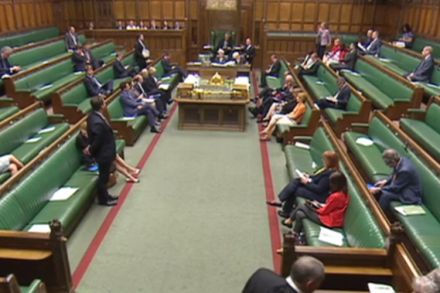
There are strict rules governing the language that MPs can use in the House of Commons. Words like ‘guttersnipe’, ‘stoolpigeon’ and ‘hypocrite’ are considered unparliamentary, and MPs can be chucked out of the Chamber for the rest of the day if they do not withdraw their comments. Sadly, though, they can get away with behaviour that is quite unparliamentary in the sense that it undermines the purpose of parliament on a regular basis. This unparliamentary behaviour popped up at today’s Work and Pensions Questions, but it occurs in almost every departmental question session, and at Prime Minister’s Questions too. It is the Utterly Pointless Question, one in which an MP

Barometer | 28 April 2016

Getting a head Barack Obama dismissed Boris Johnson’s accusations that he shown disdain for Sir Winston Churchill by removing a bust from the Oval Office. What’s the going rate on eBay for such a bust? One-sixth scale resin bust of Winston Churchill (removable head) £12.50 Sir Winston Churchill bronze/brass bust £44 English-made marble bust of Sir Winston Churchill £70 Signed classic Winston Churchill bust by Oscar Nemon £80 Tallent Winston Churchill Terracotta Bust Cigar Lighter (used) £165 The academy difference Education Secretary Nicky Morgan partially retreated on plans to turn all schools into academies, free from council control. How do academies perform against maintained schools at GCSE? Sponsored academies Capped point

Internships at The Spectator for summer 2016. No CVs, please

NOTE: Applications are now closed. Summer’s coming, and we’re looking for interns to spend a week or two with us here at The Spectator. We’re looking for people who love good journalism and understand how digital media works. The position will be paid (but not very much). We don’t mind where or whether you have gone to university; Frank Johnson was a superb editor of this magazine and he left school aged 16 (as have some of our editors). What matters is flair, imagination and enthusiasm: skills that you can’t really learn in any classroom. We’re not looking for writers, per se: The Spectator is blessed with a large number of brilliant freelance writers

Why I now believe in positive discrimination

The Prime Minister no doubt knew he would be fanning the flames when he waded into the argument about the admission of black undergraduates to universities like Oxford and Cambridge. We should do him the courtesy of trusting he means it when he says he feels strongly about discrimination in the awarding of university places – and I think he does. In this week’s issue Toby Young marks David Cameron’s essay with tutorial authority, and finds his case wanting. Particularly valuable among Toby’s marginal notes is his point that you can’t accept applicants if they haven’t applied – and black and working-class students disproportionately don’t. But we enter a vicious

Jobs miracle or low-pay disaster? Andrew Lilico and David Blanchflower debate

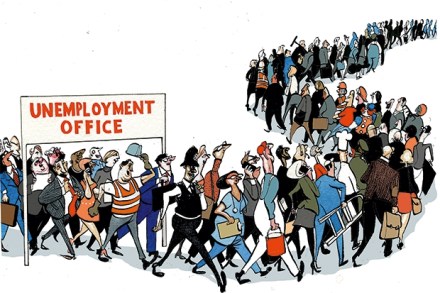
Dear David, From Q2 1979 to Q1 1981, quarterly real GDP fell in the UK by 5.5%. Unemployment rose rapidly, from 1.4m in Q2 1979 to 2.4m by the end of the recession, then continued rising through to its peak of 3.3m in 1984 – 12% of the workforce. Unemployment stayed above 3m for 51 straight months. This is the pattern economists expect in a serious recession. Unemployment rises, then stays persistently high, falling back only well into the recovery. It has also been the experience of much of the developed world since the Great Recession of 2008/09. So, for example, whereas US unemployment was below 5% in 2007, it rose

Wanted: online news editor for The Spectator

The Spectator is creating a new position, fusing together the work of print, digital and broadcast journalism. We’re looking for someone who can write, loves language and loves intelligent debate – but the emphasis, for this job, will be on audio and video. It’s a great time to join Britain’s  most influential magazine. We recently celebrated the highest sales in our 185-year history; both print and digital are rising, our website is now read by two million people a month. But the staff team is small; there are only about a dozen of us. There is growing demand for our video and podcasts, and we need someone to help us meet that demand

From the archives: the liberty of the battlefield

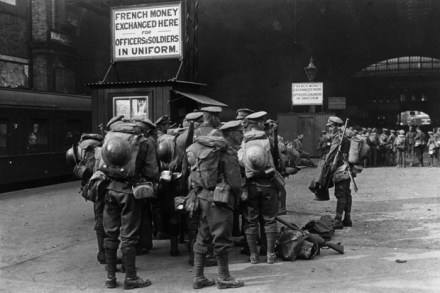
From ‘Soldiers for the land’, The Spectator, 13 November 1915: It is certain that, when the war is over, tens of thousands of soldiers will not want to return to their former urban occupations. No man who has enjoyed the liberty of a greater world and a freer life will be reconciled easily to resuming his job of, say, working a lift, or enduring stuffy hours in a shop, or addressing envelopes in an office. The nearest reproduction of the campaigner’s life which will be normally possible for him will be settlement on the land. There he will campaign, against all the pests which try to cheat the farmer of his

Matthew Parris

Here’s what’s wrong with the ‘public sector ethos’

An infuriating benefit of readers’ online comments beneath the efforts of a columnist like me is that as you read the responses an understanding dawns of the column you ought to have written. Some readers are stupid, unpleasant or obsessive; but most are not. As you learn their reactions you see where your argument was not clear, where you were short of information, and where you were simply wrong. But more than that, you sometimes tumble for the first time to where the nub of a problem that perhaps you danced around may lie. Last Saturday I wrote for the Times about the self-righteousness of spokesmen for public services threatened

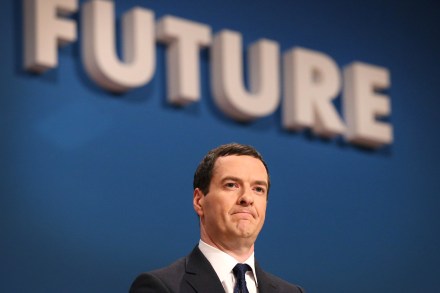
Does George Osborne really want to make himself the scourge of the strivers?

Without George Osborne, we’d probably be living under Prime Minister Ed Miliband right now. His value to the government goes far beyond his brief as Chancellor; he is across most departments most of the time. But as Chancellor, he is judged by the success (or otherwise) of his Budgets – which is why he is now in a moment of great danger. His love of complexity has come to threaten not just his own reputation, but that of the Conservative Party too. Sometimes, Osborne is so clever that he can be downright stupid: This is one of these times. In my Telegraph column today, I say that Osborne is currently

The clock towers bigger than Big Ben

Bigger Bens Big Ben will have a £29m refurbishment. Who has the biggest clock tower? Kremlin Clock: Installed on the 232ft Spasskaya Tower. Clock has a diameter of 20ft. Big Ben: Installed on 315ft Elizabeth Tower. Clock faces are 24ft across. Metropolitan Life Insurance Building, New York: 700ft high (although the clock is only two-thirds of the way up). Clock is 26ft 6in in diameter. Abraj Al-Bait Towers, Mecca: Clock is on 1,972ft tower and visible from 15 miles away. Clock faces are 151ft in diameter. Brussels clout How important is the EU as an export market? Britain’s top ten export markets by value in August this year: Value US

The jobs miracle continues: UK employment now at all-time high

Another milestone has been reached in the recovery: 73.6pc of working-aged British people are now in employment (see above) – the highest in recorded history. And, needless to say, the highest of any country in Europe. What kind of jobs? Mainly full-time employees (up 2.1pc) not self-employment (down 0.6pc). The total number of hours worked is also up, and Britain is working almost a billion hours a week. Unemployment is down, and as Michael Saunders from Citi notes (pdf):- The drop has been concentrated in the long-term jobless rate (ie the share of the workforce who have been out of work for more than 12 months), which has dropped from 2.2% a year

Come work for us: The Spectator is looking for an assistant production editor

The Spectator is looking for an assistant production editor, to help us produce our magazine and supplements. The job will be three days a week, ideally Tuesday to Thursday, and initially on a six-month contract. What kind of person are we looking for? You are a careful, rapid and sensitive text sub capable of hitting tight deadlines with grace, and comfortable creating elegant layouts from template in Indesign. Your proofreading is reliable and judicious. Your headlines are both witty and to the point; you also know to rethink them so that they fly on the web and via social media. You can keep complex publishing projects running smoothly to timetable,

Full employment, Prime Minister? What exactly do you mean by that?

‘Two million jobs have been created since 2010 — but there will not be a moment of rest until we have reached our goal,’ said David Cameron in a Telegraph article a fortnight before the election: ‘Two million more jobs; or full employment in Britain.’ It was a bold statement. Indeed you might think, given unemployment at 1.84 million in the winter quarter, that the target for new jobs was actually an error on the part of who-ever drafts the Prime Minister’s prose. Either way, it drew little attention amid the smoke of battle. But now the air has cleared it merits revisiting, because it connects all the key themes

Demob unhappy

After all the carousing and flag-waving that followed VE day in 1945, millions of young men fortunate enough not to be still fighting the Japanese faced a problem. Having spent five or six years in uniform, they needed jobs. For those who lacked explicit civilian skills, which meant most, it was hard to persuade employers that a talent for flying a Spitfire, commanding a gun battery or navigating a destroyer qualified a man to run a factory or even sell socks. For years after the shooting stopped, newspapers bulged with small ads placed by demobilised officers. Many such entries exuded unconscious pathos. That quirkily brilliant writer Richard Usborne had the

Lawyers, journalists, chefs, bankers, doctors – the robots are coming for your jobs next

At the Hannover Messe robotics fair in Germany yesterday, UK company Mobey Robotics launched the world’s first robot chef, capable of watching and mimicking the kitchen skills of a human chef and recreating them with superhuman consistency. There is already a restaurant in Soho with touch-screen tables where you can place your order and pay your bill, and restaurants in Japan where robotic waiters serve food. As these new technologies become cheaper and more widely available, they are likely to replace the need for human labour in restaurants altogether. If you find this a bit unlikely, remember that we’ve already accepted robots at the supermarket checkout, the airport check-in, the

I know just the vicar for my parish church. Pity he’s fictional

For cheap laughs you should look at the situations vacant column of the Church Times — pages of jobs for Anglican clergy. The language, with its dreary emphasis on compliance and its neglect of individualism, may help to explain why the Church of England has become the Labour party at prayer. Number one word in these adverts is ‘team’. Applicants need to be ‘team players’. Other hot words: ‘passionate’, ‘change’, ‘management’ and ‘skills’. A couple of weeks ago the Diocese of Lichfield needed a ‘team rector’ near Tamworth — ‘a visionary, imaginative and inspirational team leader, passionate for evangelism and discipleship, with experience of managing change and able to enjoy

Want more diversity? Hire groups, not individuals

If I were to give you a budget to choose your perfect house, you would quickly have a clear idea of what to buy. And typically your perfect house will be a bit boring. That’s because, when you can only have one house, it cannot be too weak in any one dimension. It cannot be too small, too far from work, too noisy or too weird. So you’ll opt for a conventional house. On the other hand, if I were to double your budget and tell you to buy two houses, your whole pattern of decision-making would change. You would now be looking to buy two significantly different properties with

Record employment figures create more problems for Labour

Britain has reached its highest ever level of employment. According to new figures from the ONS, the employment rate has risen to 73.2 per cent — or close to 31 million people in work. This stands as the joint highest rate since records began in 1971. Unemployment is down to 1.86 million. The short-term jobless rate is also at its lowest rate since 1992. Pay is also increasing, with private sector earnings (excluding bonuses) up 2.1 per cent year-on-year at the end of 2014. Youth unemployment has increased slightly, something Esther McVey has described as a ‘tiny blip.’ But never in British history have there been so many job vacancies. Never