Ravi shankar

Indian classical music's rebellion against modernity

When Gurdain Ryatt, Ojas Adhiya, Milind Kulkarni and Murad Ali Khan take to the stage at Milton Court this Sunday they will be united by a common language: the tradition of Hindustani Indian classical music, rooted in the north of India. Ryatt and Adhiya’s job will be to keep beats circulating on their pitched, drum-like tablas, while Kulkarni’s harmonium will sustain drones, apparently towards infinity. Khan plays the sarangi, a string instrument famed for its uncanny invocation of the wavering of the human voice. Shankar’s tireless advocacy spawned a crossover culture that he felt too often sullied the very music he loved British audiences have a head start when it
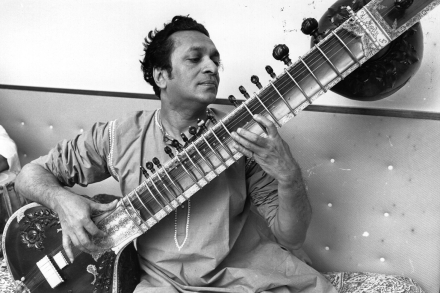
It takes a trained ear fully to appreciate Indian music

At George Harrison’s 1971 concert for Bangladesh, awkwardly, the audience applauded after Ravi Shankar and his musicians had paused to tune their sitars and tablas. ‘If you appreciated the tuning so much,’ Shankar said, half in jest, ‘I hope you’ll enjoy the music even more.’ To the untrained ear, Indian music may sound unmelodious and directionless as it strays into apparent pre-concert tuning registers and monotony. Nonetheless, its transcendental Zen-like qualities impressed Richard Wagner, who was drawn to the spirituality and joss-stick mysticism (as he saw it) of the east. A devotional song performed by the Punjab Sufi vocalist Nusrat Fateh Ali Khan can soar as ecstatically as Parsifal. Indeed