Smetana

The joy of composers’ graves

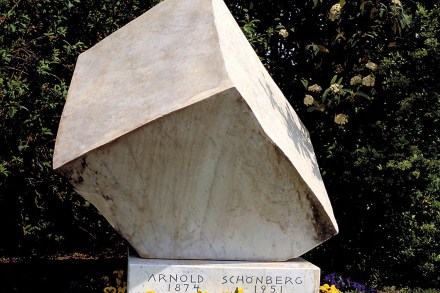
I called on Hugo Wolf the other week, and he didn’t look too great. He wouldn’t, of course; he died in a mental asylum in 1903 after suicide attempts, professional disappointment and the slow poison of tertiary syphilis. His face gazes glumly out from his monument in Vienna: above him, a single laurel branch, beneath him an eternal flame. But at least he’s not alone. A muscular youth, semi-ripped, looks away at one side. And on the other, a naked couple clinch in a passionate embrace. Talk about rubbing it in. It’s not that I make a habit of hanging around composers’ graves, you understand. But somewhere along the way
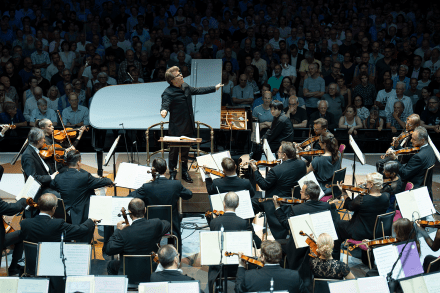
A lively showcase for a great central European orchestra at the Proms

As the Proms season enters the home straight, it’s moved up a gear, with a string of high profile European guest orchestras. First up was the Czech Philharmonic playing Suk’s Asrael Symphony under Jakub Hrusa before moving on to Janacek’s Glagolitic Mass the following night. These grand, glittering monuments of Czech music were garnished with a couple of relative rarities – Dvorak’s Piano Concerto, played by Mao Fujita, and the Military Sinfonietta, composed in 1937 by (the then 22-year-old) Vitezslava Kapralova, who died at the age of 25. It’s unmistakably the work of a young composer. Xylophone? Bring it on Kapralova’s composition is a captivating thing, starting out with fanfares