The Hundred Years’ War

Homage to the herring as king of the fishes

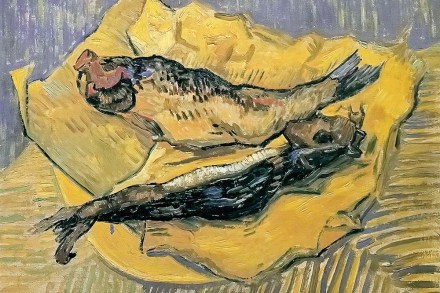
In 1755, Samuel Johnson (this was before his honorary doctorates) defined the herring as ‘a small sea-fish’, and that was it. By contrast, Graeme Rigby has spent 25 obsessive years documenting the cultural and economic importance of this creature. The resulting omnium-gatherum is like the bulging cod-end of a bumper trawl net, farctate with glistening details that embrace zooarchaeology, cooperage, otoliths, skaldic verse and Van Gogh’s ear. Clupea harengus is a highly adaptable, widely distributed marine teleost that can form shoals covering several square miles, and their milky spawning trails are so long they can be seen from space. The name may derive from the Germanic heer (army), and its
It seemed like the end of days: the eerie wasteland of 14th-century Europe

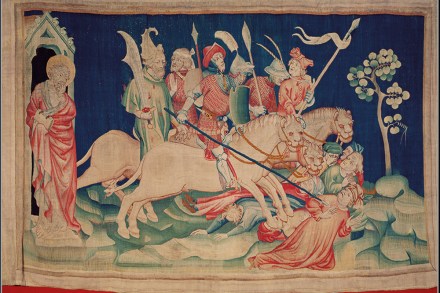
In the early 1370s, Louis I of Anjou, the second son of the French king, commissioned a vast series of tapestries, now on display at the Château d’Angers, representing the Book of Revelation. In the middle of the narrative is a group of men on horseback wearing distinctively English armour; one wears pheasant feathers in his helmet – another mark of English soldiery. As for the Apocalpyse itself, its horsemen were led by Edward III. Edward’s 50-year reign dominated 14th-century England. But, as we see in Sceptred Isle, Helen Carr’s gripping narrative account of the period, Edward himself was dominated by the dream of taking the French crown. It led