Uk politics

How will SNP MPs operate in Parliament?

Most of the new SNP MPs celebrated their party’s amazing result in the general election today with a photo call outside Parliament. They certainly looked an impressive bloc of parliamentarians, illustrating just how different this Parliament will look and feel from the last. But one of the interesting questions is how much freedom will these new MPs have to pursue their own interests, or whether they will be expected to operate as a bloc, and not outside the bloc. Many backbench MPs take up personal campaigns on a matter affecting constituents, or a small issue where they hope they can effect a change in the law. Some do this when

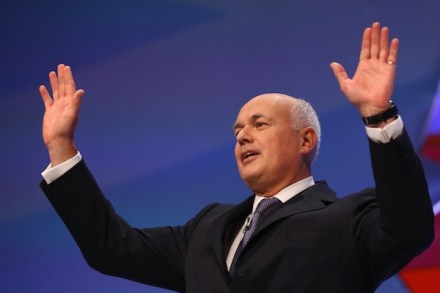
Iain Duncan Smith to stay at Welfare

News has just broken that Iain Duncan Smith is to remain as Secretary for State for Work and Pensions. Now, normally a Cabinet Minister remaining in post would not be news but there had been repeated rumours that IDS would be shuffled out of this job. The fact that IDS is staying tells us, I think, two things. First, that even with £12 billion more of welfare cuts needed, Cameron wants the policy to be as much about saving lives as money. Second, the decision not to shuffle IDS shows a sensibly cautious approach to party management. Moving IDS, a former leader, from the job he loves doing would have

James Forsyth

How David Cameron will manage his Tory coalition

Up until Thursday night, everything that David Cameron and George Osborne had done in government had had to be agreed by the Liberal Democrats. Every policy had to go through the ‘Quad’, the coalition government’s decision making body made up of Cameron, Osborne, Clegg and Alexander. That doesn’t have to happen anymore. As one Downing Street figure says: ‘It is all completely different now, we can power forward with what we want to do. There’s no need for everything to be watered down. It’s invigorating’. Not having to manage a coalition, also frees up huge amounts of time for both Cameron and the Number 10 operation. It would be well

Isabel Hardman

Revenge of the Blairites

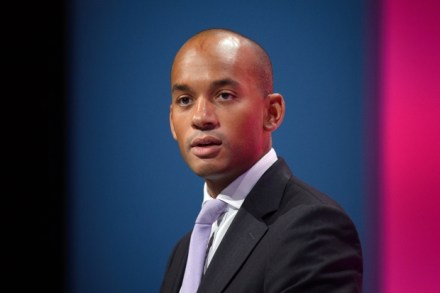
Lord Mandelson and his protégé Chuka Umunna ended up sitting next to one another on the Marr sofa at the end of the programme. Both had spent their interviews setting out what Labour had been doing wrong for the past five years, though Mandelson was markedly more savage than Umunna. The Labour peeer was particularly keen to make the point that New Labour had been too quickly discarded in favour of an ‘experiment’. He said that ‘the awful, shocking thing about this election is Labour could have won it’, adding: ‘The reason we lost it and lost it so badly is in 2010 we discarded New Labour, rather than revitalising

Starting gun fires on Labour leadership contest as candidates set out their stall

Inevitably, the Sunday papers are full of pieces by Labour leadership hopefuls dissecting why their party did so badly and offering their initial prescriptions. They are actually all rather slow out of the blocks as David Lammy said this morning that ‘certainly for people like me it’s absolutely time to step up into a leadership role’. So in the Observer we have Chuka Umunna, positioning himself, unsurprisingly, as the Blairite candidate. He says the party had ‘too little to say to the majority of people in the middle’ and that ‘we need a different, big-tent approach’ (referencing the master). He also says: – Labour didn’t engage effectively with fears that

James Forsyth

Justice for Michael Gove

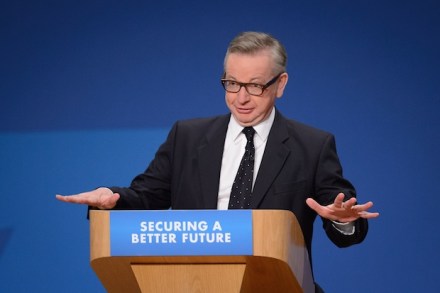
Michael Gove is the new Justice Secretary and Lord Chancellor, Downing Street has just announced. Chris Grayling will move to become Leader of the House. Number 10 is also confirming that, as David Cameron promised during the election campaign, Nicky Morgan will continue as Education Secretary. Becoming Justice Secretary marks a return to Gove running a big department after his service as chief whip in the run up to the general election. I suspect that there will be two things that Gove concentrates on. First, sorting out Britain’s relationship with the ECHR. Grayling had already committed the Tories to withdrawing from the Convention if parliament and courts here could not

Is satire a dying art?

I appeared on Radio 4 a couple of weeks ago to discuss the age-old question of whether political satire is dead. I don’t think it is, but it has lost a good deal of vitality in recent years and the role of satire in the general election campaign is a case in point. There has been no shortage of ‘satirical’ television programmes, but none of them have cut through. The only sign of life has been the flurry of photoshopped images on Twitter that have followed each misstep of the parties’ campaigns, such as Ed Miliband’s decision to carve Labour’s election pledges on to an eight-foot stone slab. If Stanley

Isabel Hardman

Revealed: the party with the most negative election campaign

Which party is the most negative in this election campaign? All of them have spent a great deal of time being negative about their opponents’ apparent negativity, claiming that only their own party is running a positive campaign about the future for this country, and so on. But it’s easy to make grand claims, and even easier not to measure up to them at all. To give us an answer, academics at British Election Leaflet Project at the University of Nottingham have analysed leaflets from the parties in this campaign. They looked at 1,300 pieces of election literature from nearly 300 constituencies. All the leaflets were uploaded on electionleaflets.org. Their

Hugo Rifkind

Scotland’s nasty party

You get bad losers in politics and bad winners, too, but it’s surely a rare business to get a bad winner who didn’t actually win. Yet this, since they lost last September’s referendum, has been the role of the SNP. Dismay, reassessment, introspection, contrition, resignation; all of these have been wholly absent. Instead, they have been triumphalist. Lording it, with cruel and haughty disdain, over their vanquished foes. Who, we must remember, they didn’t even vanquish. Well, maybe they’ve vanquished them now. I write this pre-election, with the polls all saying that the Nats will win something between almost every Scottish seat and actually every Scottish seat. Only, of course,

Nervous Tory candidates say race too tight to call

Tonight’s a nervous night if you’re an candidate for re-election in a marginal seat (or in Scotland). You might have an impressive get-out-the-vote operation, or you might have spent the past five years wheeling and dealing in Westminster on behalf of your constituents so that you have a strong personal brand, but it might be that voters just aren’t that into your party. Or, in spite of your best efforts, you. A good number of the Tory candidates in marginals who I spoke to today feel as though the race is too tight for them to have any idea whether they will be back in Westminster next week. The same

Isabel Hardman

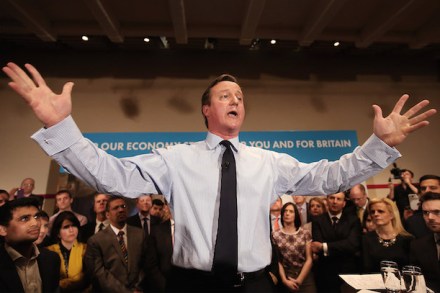
David Cameron defends ‘con trick’ line about Ed Miliband’s plans

Is David Cameron talking up the SNP as a naughty campaign tactic to hurt Labour? This morning the Prime Minister denied that charge in his Today programme interview, saying: ‘I don’t accept that; I’m fighting the nationalists in Scotland. Indeed, I’ll be there later today standing up for Conservative candidates who want a strong United Kingdom and also want our economy to continue to grow and continue to create jobs and all the other things the United Kingdom can do together. ‘But if you want to know, what would I do as prime minister on Friday to make sure our United Kingdom stays together, I would say let’s complete the

I’m not voting on Thursday — but don’t you dare call me apathetic

With just 48 hours to go before we get to vote in officially the most boring election in history, the great and good are fretting over the apathy of the little people. We’ve seen the emergence of Poets Against Apathy — a group of northern scribes keen to shake the public out of its anti-political stupor — and numerous newspaper articles bemoaning the apathy of the masses. A whole section of the Guardian website is devoted to ‘Voter apathy’, featuring Owen Jones, Polly Toynbee, Charlie Brooker and others shaking their liberal heads over the disengaged. Brooker even refers to them as ‘idiots’ who say ‘Bah to everything. BAH BAH BAH.’ This

Can David Cameron square the 1922 Committee on another coalition?

As well as trying to prepare voters for what may happen after 8 May, David Cameron needs to make sure he has his party on board for the ride after the election, too. The 1922 Committee will need to approve a second coalition, but the hope in the Cameron camp is that this will be made easier by making the approval a show of hands from Tory MPs, rather than the secret ballot 1922 Committee chair Graham Brady wants. Two interesting points that loyalists advance is that the Lib Dems approved the 2010 Coalition with a show of hands and that many prominent 1922 Committee Executive members were against the

Isabel Hardman

Which arguments about government legitimacy are legitimate?

Well, Labour has started on its own mission of framing the post-election legitimacy debate. Responding to the Tory operation to prepare the public for what might happen from 8 May onwards, Ed Miliband’s party is now claiming that David Cameron is determined to stay in Downing Street even if his coalition loses its majority. A senior Labour official has told the Guardian: ‘All the noise coming out of the mouths of David Cameron and Nick Clegg is about how they can cling on to power even if their coalition loses its majority.’ Labour needs to set up a narrative of a desperate David Cameron holed up in Downing Street, refusing

James Forsyth

Comedian Brand u-turns and urges people to vote

There’ll be satisfaction in the Labour leader’s office today as Russell Brand has done a reverse-ferret and urged his voters to vote and vote Labour. Or, to be more precise, to vote Labour in England—with the exception of Brighton where he wants them to vote Green. He seems to be implicitly urging a vote for the SNP in Scotland. To win Brand over, Miliband channelled his former US grassroots adviser Arnie Graf and talked about community politics and how the idea of a living wage came not from a policy seminar but activists in the US talking to low-paid workers. But Brand’s endorsement is of limited value given that it

Isabel Hardman

Parties turn attention to crafting post-election narrative

Ed Miliband spent a lot of his Today programme interview refusing to answer questions about how a minority Labour government would work because he is focusing both on the ‘big issues’ and on ‘winning a majority’. Both are good things to focus on when the polling stations haven’t yet opened, though of course how a government would pass laws is generally a big issue too. But what’s interesting is that behind the scenes some Labour figures do still sincerely think they could win a majority. One senior Labour MP told me in the past few days to remember that in 1992 the polls didn’t move until the very last minute

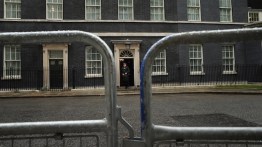
Ed Miliband turns garden designer with scary new sculpture for Downing Street garden

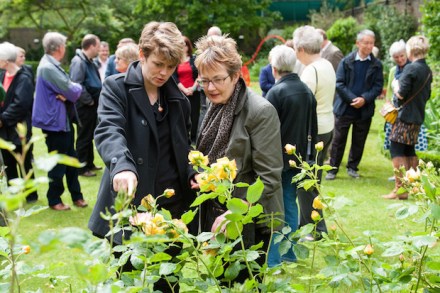
One of Britain’s great traditions is the open garden afternoon: an opportunity for folk revelling in being both middle-aged and nosy (like me) to wander around other people’s plots and peer at what they’ve planted while scoffing large slices of cake. The National Gardens Scheme and Open Squares are two of the most popular, and while they do allow people to see the true beauty of someone else’s well-maintained dahlia bed or snowdrop collection, they also help us indulge in that also very British tradition of pointing at the strange things people put in their back yards. Often these strange things aren’t weird planting combinations, but sculptures that have special

James Forsyth

Will there be a late surge to the Tories?

So, here we are. In 100 hours time, we’ll be half-way through election-day. But at the moment, the polls still remain deadlocked. Yet, there remains a sense that there’ll be some kind of late shift towards the Tories. Is there any grounds for this? Well, I argue in the Mail on Sunday that there are a few things that point towards this. David Cameron has finally hit his stride. His performances have improved markedly and the public appear to have concluded that he clearly won last Thursday’s Question Time, YouGov have the public giving it to him 42% to Miliband’s 26%. As Tim Shipman points out, Cameron’s lead as preferred

Nicky Morgan’s market place fight to hold her marginal seat

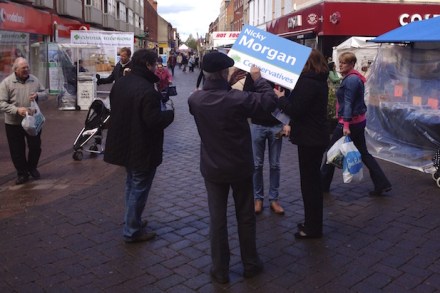
Nicky Morgan’s record as Education Secretary is coming under fierce attack in the Loughborough market place where she’s campaigning. A furious man is telling activists that he will never vote for the Tory candidate because of ‘what she’s done’. The campaigners brace themselves for a diatribe about Tory education policies. Instead, it turns out that his complaint is that ‘she’s kept all the kids in school for longer’. This has had a devastating effect, not on the kids themselves, but on the fish and chip shops in Yarmouth and Skegness, where this particular voter cannot now buy a delicious feast as he’d wish. ‘Rubbish!’ he bellows, as one Tory member

Exclusive: Senior Tories to plot election response on Friday

Tory MPs will plot their party’s response to the election result and any likely coalition partnerships in a meeting next Friday, 8 May at 4pm, Coffee House has learned. The powerful executive of the 1922 Committee will meet that afternoon in order to prepare their demands for the Prime Minister and discuss any initial outlines of a coalition agreement between the Tories and the Lib Dems that have already been passed on to them. They will be preparing for a meeting of the full party on Monday, where they will set out their demands in full. We have known for some time what the demands of the Committee will be