Uk politics

Labour’s gamble for SNP support

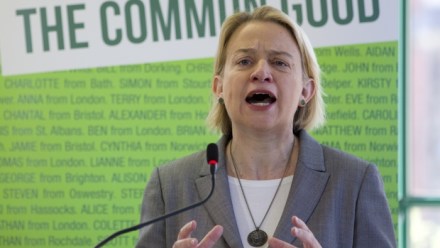
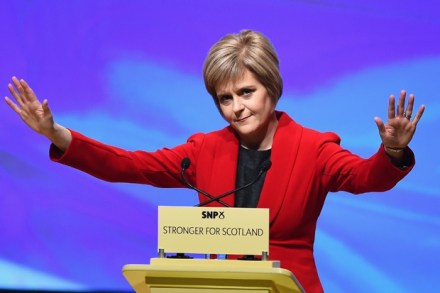
The SNP launches its manifesto today in Edinburgh. Nicola Sturgeon will be arguing that the policies in the document are for the benefit of the whole of the United Kingdom, which is a way of reassuring former no-voters who might back the SNP, and also of appealing to the left wing faction of the Labour party. Scottish Labour will be claiming that many of those policies such as voting for lower tuition fees in England are in fact a theft from their own party’s ideas, and that the SNP is in fact using Labour as a think tank for its own manifesto. But what is also interesting is how the
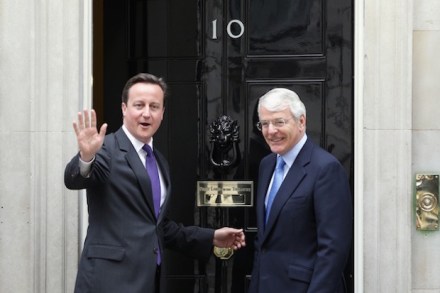
John Major to enter the electoral fray this week

David Cameron’s inner circle are always keen to talk up the parallels between this campaign and 1992. This week, the winner of that election will enter the fray on their behalf. As I report in the Mail on Sunday, John Major will give a speech warning of the dangers to the Union itself if the United Kingdom ends up with a Labour government propped up by the SNP. The Tories hope that Major’s intervention will elevate this point above the usual party political knockabout. They also believe that a former Prime Minister speaking out will make voters pay attention; they were much struck by how much coverage Tony Blair’s speech

James Forsyth

Angela Eagle: Labour would speak to other parties to get a Queen’s Speech through

On the Sunday Politics just now, Angela Eagle shifted Labour’s position on what it would do in the event of a hung parliament. Previously, Labour has insisted that if it was a minority government it would simply propose a Queen’s Speech and dare the other parties, and in particular the SNP to vote it down. listen to ‘Angela Eagle: we’d speak to any party to get a Queen’s speech through’ on audioBoom But Eagle told Andrew Neil that in the event of a hung parliament Labour ‘would speak to any party that has got representation in the House of Commons in order to try to build a majority for a

James Forsyth

Feisty Cameron warns English voters of the ‘frightening prospect’ of the SNP propping up a Labour government

David Cameron has just delivered his feistiest performance of the election campaign yet. In a combative interview with Andrew Marr, the Tory leader repeatedly described the prospect of a Labour government propped up by the SNP as ‘frightening’, telling English voters that the SNP wouldn’t ‘care’ about them and their needs. He implicitly warned that SNP MPs supporting a Labour government would result in less money for English constituencies. He had been given this opening by Nicola Sturgeon, who in her interview had made clear how the SNP would use the fixed term parliament act to give them maximum influence on a Labour government. Her point was that the fixed term

The coming battle for legitimacy

Jonathan Freedland has written a compelling column on the challenge that Ed Miliband will face to establish his legitimacy if he becomes Prime Minister despite Labour not having won the most seats or votes. But I suspect that whoever becomes the government after May the 8th will have difficulty in persuading everyone that they have a right to govern. The Tory-Liberal Democrat coalition could claim that 59 per cent of voters had backed its constituent parts. It also had a comfortable majority in the House of Commons with 364 out of 650 seats. Now, unless something dramatic happens, no governing combination is likely to have anything like that kind of

No. That poll didn’t put Ed ahead in the Prime Minister stakes.

An hour and a half watching Ed Miliband debate four people who are not going to be Prime Minister. That is the ordeal you had to go through in order to be qualified to answer Survation’s post-debate poll, which included the ‘sensational’ result that respondents preferred Ed Miliband to David Cameron by 45% to 40%. The figure set some even seasoned commentators agog at Ed’s miraculous turnaround on the preferred Prime Minister stakes, following years of languishing twenty or so points behind the Conservative leader. Everyone should hold their horses. People who watch debates are, at the best of times, the electorally aware and highly partisan, largely tuning in to

Isabel Hardman

Iain Duncan Smith is right about zero hours contracts – he’s just far too late

Into each day, outrage must fall. Today Iain Duncan Smith has performed the service of upsetting everyone by telling Sky News that zero-hours contracts should be rebranded ‘flexible-hours contracts’. The Work and Pensions Secretary said: ‘I think, with respect, the media and others have got this completely wrong, the flexible-hours contracts I’m talking about which are named ‘zero-hours contracts’, they are taking by people who want that flexibility. The reality is what we’ve had from Labour is a series of scare stories about these.’ Whatever you fancy calling these contracts, they have been rising in salience as a political issue to the extent that the Tories, who did regard them as

Isabel Hardman

How Ukip plans to boost its national campaign

What will Ukip do with the £1.3 million donated by Express chief Richard Desmond? The party cannot plough the money directly into its fight in South Thanet because strict spending limits apply on fights in seats during the short campaign. But it can spend it in other ways to promote the party, and of course to promote Nigel Farage. The plan, sources tell me, is to buy more billboard posters and other national advertising slots, as well as being up Ukip’s social media presence. The Tories have been spending hundreds of thousands of pounds each month on this, so Ukip will never match them – but the party benefits not

Isabel Hardman

The Tories have fallen for their own spin on Miliband

Believing your own hype is a dangerous thing in politics (and elsewhere). So is falling for your own spin. Spin is a message you craft that bears a tenuous link to the truth but is the line you want others to believe. You say it because something else is true, but it doesn’t suit you. You hope that the people you’re directing your spin at pick up at least some of its thrust and start seeing things the way you want them to be seen. If the Tories fail to make it back into government after this general election, one of the things they will have to come to terms

Passion | 16 April 2015

‘I long for spontaneous passion but I will never get it with my husband because I think he has Asperger syndrome,’ wrote a reader of the Sun to Deidre last week. I noticed this because the leading article in The Spectator earlier this month said that David Cameron needs ‘more passion’. It was right, of course. Deidre’s reply suggested that ‘specific requests could help him, such as “Please give me a cuddle in bed”.’ I don’t know if a similar suggestion has been made to Mr Cameron. But Tony Blair said in his recent speech: ‘I believe passionately that leaving Europe would leave Britain diminished.’ Does believing passionately that something

Fraser Nelson

Mob rules

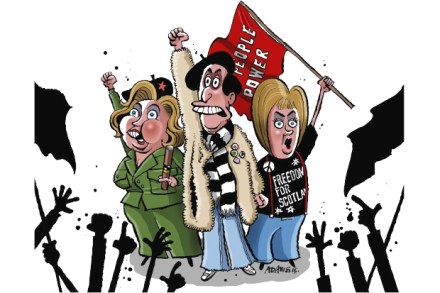
A spectre is haunting Europe — and knocking on the door of Downing Street. It has installed a president in France and a mayor in New York. It is causing mayhem in Spain and Greece and insurgency in Scotland and it may yet halt Hillary Clinton’s march to the White House. This idea — left-wing populism — is a radical, coherent and modern response to the financial crisis and the hardship suffered since. It is being effectively harnessed by Ed Miliband, taking him within touching distance of victory. And it may well become the creed that guides the next five years of British government. The Labour manifesto that was published

The Ukip pledge that other parties may well adopt

One of the Ukip manifesto pledges that’s making certain types a bit grumpy today is a pledge to abolish the Department for Energy and Climate Change. Unite has said that this ‘beyond barmy and would create chaos’. Unite is a union and is naturally keen to support the jobs of those who work for DECC and in industries covered by the department. But this particular Ukip policy might be one that a party of government ends up adopting. Nigel Farage’s party’s manifesto said today that DECC should be abolished because its ‘essential powers and functions can be merged into other departments’. Influential Tories agree with this: in 2013, the Free

Steerpike

Coffee shots: The best (silliest) manifesto photos

If voters pick up party manifestos, chances are they might not make it all the way through the 80-150 page tomes the people pitching for government have produced. But they might leaf through and look at some of the bullet points, graphics and the pictures. Here are some of the best (or perhaps the oddest) manifesto pictures from the three main parties: This woman is just so thrilled to be buying some sweets, which were only made thanks to the Tories’ long-term economic plan. This kid is definitely hiding something behind his back, and it’s not the detail of George Osborne’s £12bn welfare cuts. This student is hoping the Tory photographer

Are the Conservatives being honest about their new minimum wage policy?

The Conservatives have sent out a campaign email from David Cameron this evening promoting their key manifesto pledges. You’d expect that: now’s the time to galvanise activists’ support. But there is one line in there that jars: ‘Everyone earning the Minimum Wage lifted out of income tax altogether.’ This isn’t true. Cameron was quite careful in his speech today to say that the Tories will make sure ‘no-one on the Minimum Wage who works 30 hours a week pays any income tax on their wages’. If you’re working 40 hours a week on minimum wage pay, you will continue to pay income tax. So when the email says ‘no one’,

Cameron declares that the Tories are the ‘party of working people’ as he pledges to extend right to buy

Tomorrow’s Tory manifesto will contain the boldest policy proposal of this campaign so far. The party will promise to extend the right to buy to 1.3 million families living in housing association properties. This policy has the potential to create a new group of homeowners and to start the reversal of the decline in home ownership; even critics of the plan think that more than 150,000 families might take advantage of it. It helps to keep alive the idea of a property owning democracy which has been so crucial to the success of the centre-right in this country. It is worth remembering that the political genius of the right to

James Forsyth

Nick Clegg sets out red lines for coalition negotiations with Labour and the Tories

Nick Clegg produced Lib Dem red lines for any coalition with either Labour or the Tories in an interview with Evan Davis this evening. Clegg said that he wouldn’t go into Coalition with the Tories if they insisted on making £12 billion of cuts to welfare in the next two years. But he said that he also couldn’t recommend going into coalition with Labour until they were clearer about how they planned to deal with the deficit, making clear that what Labour said today was not sufficient. As Fraser says, this was an assured performance from Clegg who offered a robust defence of the government’s record. The Liberal Democrats would

Isabel Hardman

Labour tries to confound expectations with tough-sounding manifesto front page

Labour’s manifesto launch today sees the party seeking to confound expectations. Even though the party would prefer to fight a comfortable election campaign on the NHS, the fact remains that no party has won when behind in the polls on both the ratings of its leader and on the economy. And so the first page of the party’s manifesto, which was released last night, says this: ‘Our manifesto begins with the Budget Responsibility Lock we offer the British people. It is the basis for all our plans in this manifesto because it is by securing our national finances that we are able to secure the family finances of the working

Tories on £8bn NHS commitment: Trust in me

Towards the end of last week, the Tories were looking a bit miserable. Their slow response to Labour’s non-coms announcement, coupled with a ‘dead cat’ response from Michael Fallon which made the party look rattled and unpleasant had left the Conservative campaign looking unusually disorganised and slow-witted. But ministers have tried to pick things up, and some of their announcements in particular have left Labour in a similar mess. The story that David Cameron’s party will meet the £8bn demand for health funding from NHS England chief executive Simon Stevens has left Labour hopping around looking a bit cross and awkward. This was not how the party had planned things:

James Forsyth

This week, the Tories must seize the initiative

Even Tory insiders admit that while they broadly had the better of the first week of the campaign, Labour had the better of the week just gone.  This makes it imperative for their hopes of re-election that the Tories wrest back the initiative this week. As I say in the Mail on Sunday, if they don’t, Tory discipline—which is already beginning to fray a bit—will crack, and Ed Miliband will have the keys to Number 10 within his grasp. The Tories have made a decent start to this task. Labour has been unsure of how to respond to the Tories’ commitment to give £8 billion more to the NHS. While