Uk politics

Miliband’s jobs ‘blunder’: who’s right?

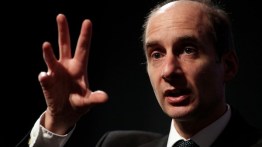
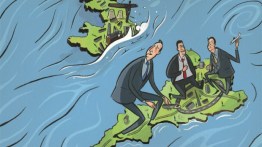
There’s been a bit of a fuss over the claim in Lord Adonis’s growth report—repeated in a draft of Ed Miliband’s localism speech—that four-fifths of the private-sector jobs growth in the UK since 2010 has happened in London. The Prime Minister tweeted: Labour get their facts wrong on jobs – again. How can they ever be trusted with the economy? http://t.co/zTZJVadFhQ #AdonisReview — David Cameron (@David_Cameron) July 1, 2014 And NIESR’s Jonathan Portes (who has form taking issue with how numbers on ‘new’ jobs numbers are used) said: @eduardmead @bbcnickrobinson That said, Labour stat certainly wrong. Conservatives much closer, but not on basis of published ONS figures. — Jonathan Portes

Briefing: The three main parties’ offers on localism

How much common ground do the political parties have on localism? As Isabel pointed out this morning, Labour and the Conservatives are engaged in an arms race to see who can out do the other on plans to devolve powers from central government. All politicians love to talk up localism — particularly in opposition, where there’s no Whitehall machine to deal with — but their dreams and slogans frequently change. This is what the three main parties have said, and currently believe, on empowering the regions: Conservatives In opposition, David Cameron put forward plans to devolve power in a more radical way than ever before. In the Conservatives’ 2010 manifesto,

Isabel Hardman

Minister demands apology from Miliband after stats blunder

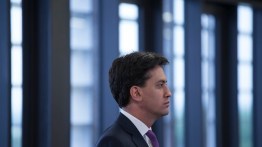
The Tories are very keen to sabotage Ed Miliband’s big speech about rebalancing the British economy, which is probably a compliment to the Labour leader as it suggests that they think he might be onto something. Both parties are certainly engaged in a localism arms race at the moment, arguing that they’re the party that really trusts voters and wants to give them back the power over their own lives. But Miliband appears to have made a bit of a statistical error which is allowing his opponents to create a bit of a sideshow to distract from the launch of Lord Adonis’ final report on growth. In his speech, the

Isabel Hardman

Labour’s localism arms race

How can politicians encourage this country’s economy to grow more evenly? Do you build a nice big railway line? Or try – and largely fail – to devolve greater power to cities using directly-elected city mayors? Today Labour sets out its answer in Lord Adonis’ growth review. Ed Miliband has already said that he will accept the central recommendation, which is to allow city and country regions to create combined authorities (like the Greater Manchester combined authority) which will gain control over all, rather than half, the revenue from business rates. George Osborne was making similar noises recently about greater powers for regional groups headed by elected mayors. There is,

Tower Hamlets: more allegations of obfuscation and electoral malpractice

Will investigators ever get to the bottom of what’s going on in Tower Hamlets? London’s most dubious borough has several ongoing inquiries into the alleged misuse of funds, electoral malpractice and voter intimidation. The first of these appears to be encountering some issues. Following a Panorama programme on the borough’s mayor Lutfur Rahman, the Department for Communities and Local Government sent in auditors to find out whether funds were being inappropriately used. This afternoon, Eric Pickles told the Commons that Tower Hamlets council has been withholding information from PricewaterhouseCoopers and their investigation will be extended — with a larger bill for Tower Hamlets: ‘In April, I instructed inspectors to launch

Alex Massie

Proof that the Liberal Democrats are a party of ninnies

I know that it is unfashionable to feel sorry for Liberal Democrat MPs. Nevertheless there are times when, contemplating their unhappy lot,  it seems appropriate to feel the odd pang of pity. The latest polling from Lord Ashcroft furnishes one of these rare moments. He asked punters who they would like to see form the next government. As you would expect 77 percent of Tory supporters want a Conservative government while 14 percent actually rather like being in coalition with the Lib Dems and would be quite happy to see that arrangement continue. The picture is much the same amongst Labour voters. 80 percent say they want Labour to govern

Isabel Hardman

Number 10 pours cold water on National Insurance story: why?

Why is Number 10 pouring cold water on suggestions that National Insurance and Income Tax could be merged? This story bobs to the surface every few months: it was suggested that National Insurance could be renamed the ‘Earnings Tax’ in the 2014 Budget, but then nothing came of it. Now the Times has splashed on the suggestion that the Conservatives will promise to merge the two in their 2015 manifesto. The principle is sound: it makes the tax system less confusing and stops parties from hitting taxpayers by stealth. Much better to have one tax than an income tax and and earnings tax. It’s also politically sound for the Tories

Alex Massie

Yes, of course the BBC is biased against Scottish Nationalists

There are many reasons for this but let’s begin with the first and simplest: it is the British Broadcasting Corporation. Who could have imagined that an organisation that, rightly or not, sees itself as both creator and guardian of much of modern Britain’s identity and culture might think itself threatened by a movement hell-bent on destroying, or at least significantly changing, that identity and culture? I know, me neither. Now of course the BBC is not consciously or deliberately biased against the SNP and against Scottish independence. It is scrupulous about ensuring ‘No’ voices are balanced by ‘Yes’ voices just as, in other areas and debates it does its best to be

Alex Massie

Confronting the Tories’ original sin: they are still seen as the party of the rich.

Dominic Cummings is at it again. Michael Gove’s former advisor has become a reliably entertaining guide to the Whitehall labyrinth. It is plain, too, that Cummings likes to think of himself as a Teller Of Hard Truths Many Of Which Our Masters Prefer Not To Contemplate Too Deeply If At All. This is fun. His latest post purports to be about swing voters, immigration and the EU but it is really about the biggest problem afflicting the Conservative party: who is it for? And who is it seen to be for? As Cummings puts it: The fundamental problem the Conservative Party has had since 1997 at least is that it

Isabel Hardman

David Davis: Cameron must turn Juncker failure into a tactical advantage

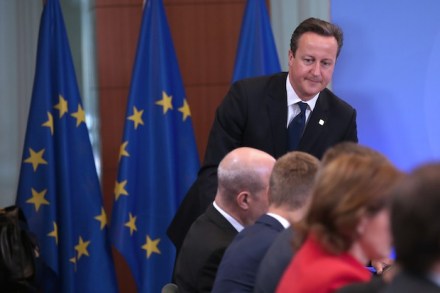
David Cameron has survived the post-Juncker post-mortem without a Tory grandee briefing against him. This is comforting for the Prime Minister, although he shouldn’t assume that he has the full loyalty of his party: it is quite clear that many are simply holding their fire until after the General Election. David Davis, who will again become a dangerous figure in 2015 if Cameron holds onto power, reminded everyone of what the PM has got coming to him when he popped up on the Today programme this morning. Davis said: ‘He’s had a very, very difficult few weeks to say the least, but what he has to do is turn this

The most awkward phone-call ever? Cameron congratulates Jean-Claude Juncker

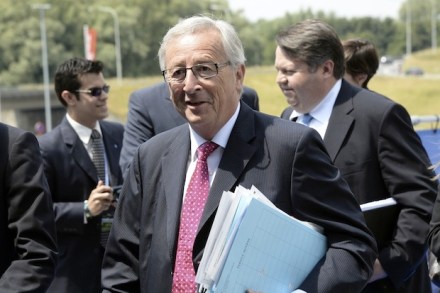
In an exchange so awkward it might rival Gwendolen and Cecily’s afternoon tea in The Importance of Being Earnest, David Cameron has this afternoon phoned Jean-Claude Juncker to congratulate him on his appointment after weeks of campaigning to thwart him. Here’s the Downing Street read-out of the call: ‘The Prime Minister called the Commission President-designate, Jean-Claude Juncker, this afternoon. The Prime Minister congratulated Mr Juncker on running a successful campaign and securing the Council nomination. They discussed how they would work together to make the EU more competitive and more flexible. The PM welcomed Mr Juncker’s commitment of finding a fair deal for Britain and Mr Juncker said that he

Leaked: what David Cameron really told Van Rompuy and the EU leaders last week

It’s well known that David Cameron voted against Jean-Claude Juncker and tried to persuade his EU colleagues to do the same. Thanks to today’s Mail on Sunday, we know exactly how forceful the Prime Minister was in warning and rebuking his fellow leaders. According to leaked reports, an angry Mr Cameron threw Herman Van Rompuy, outgoing EU chief, out of Downing Street following an argument over Juncker: ‘If it is to be Juncker, I insist on a formal vote,’ said Cameron Mr Van Rompuy blinked: ‘I will decide how the vote is conducted.’ Mr Cameron: ‘You must guarantee there will be a proper vote.’ Mr Van Rompuy: ‘I have said

James Forsyth

After being Junckered, the Cameron circle now fear for the renegotiation

Getting Junckered was not an enjoyable experience for Downing Street. Not only has David Cameron lost his battle to stop the former Luxembourg PM becoming Commission President he has also discovered that Angela Merkel’s assurances to him can be trumped by her domestic political concerns. Considering how Merkel is the hinge on which Cameron’s renegotiation strategy turns, this is worrying for him. As I report in the Mail on Sunday, members of Cameron’s circle are now contemplating that the renegotiation might not deliver enough substantive change for the UK to stay in. As one of those who knows Cameron best puts it, ‘They might plump the cushions for us but

The speech that revealed what George Osborne believes

It is a risky business for any serving Cabinet Minister to give a big picture political speech setting out their personal philosophy. It is all too easy for such a gesture to be seen as the start of a leadership bid. This was the fate that befell Theresa May when she made her big speech to the Conservative Home conference 15 months ago. But last week, George Osborne gave his own credo speech to the Centre for Policy Studies’ Thatcher conference last week. The address, delivered after dinner on the final night of the conference, was the fullest explanation yet of the Chancellor’s political philosophy. Osborne is far more of

There is a silver lining to Juncker’s appointment

David Cameron has been trying to look on the bright side after failing to stop Jean-Claude Juncker becoming president of the European Commission. And while that might look like the Prime Minister trying to spin something out of an abject failure, there really is a silver lining to this appointment for Britain, even though you have to look quite hard for it. The Commission president is indeed important, particularly given his role in determining the EU executive’s policy agenda – in practice, no policy can be proposed without his agreement. He also has control over the assigning of Commission portfolios, an argument perhaps against the Prime Minister’s decision to fight

Cameron defeated as Juncker nominated for European Commission President

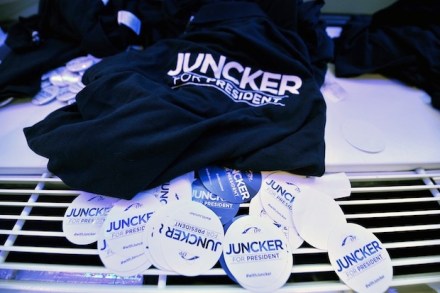
The European Council has nominated Jean-Claude Juncker to be the next president of the European Commission despite David Cameron’s staunch opposition. In the vote that Cameron forced on the appointment, he was defeated 26-2 with only the Hungarians joining the British in opposing the former Luxembourg PM. Junkcer’s appointment casts fresh doubt on whether Cameron will be able to renegotiate a new EU deal for Britain and whether this country will stay in the EU. In the coming weeks, we will have to watch and see whether other EU leaders try and come up with some kind of compensation package for Britain. When Cameron first came out in opposition to

Isabel Hardman

How will Cameron work with Juncker?

David Cameron has been repeating his line about the importance of sticking to principles in opposing Jean-Claude Juncker this morning ahed of the European Council summit where his fate will be sealed. As he walked into the summit this morning, the Prime Minister said: ‘There are times when it’s very important to stick to your principles and stick to your convictions even if the odds are heavily stacked against you, rather than go along with something that you believe is profoundly wrong and today is one of those days. I’ll tell you why it is so important: the European elections showed there is a huge disquiet about the way the

The War on Rupert Murdoch is the Real Story of the Hacking Saga.

The hacking scandal was about many things but the way in which it has played-out and, crucially, been reported reminds us that it has chiefly been about power. Not just the power of the press when weighed against the power of parliament but the relative positions of power and authority within the press. In that respect it has been a confusing, complex kind of conflict. You might view the newspapers as over-mighty magnates whose powers should have been curbed long ago. In this picture, the press barons have been so revolting – in every sense – that their activities began to threaten the security – and decency – of the

Video: George Osborne — future Foreign Secretary and Tory leader?

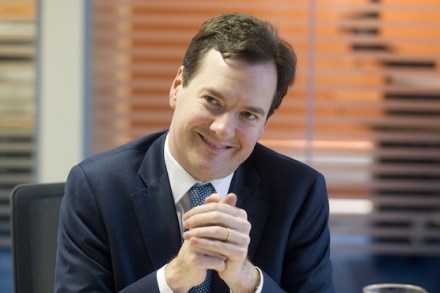
Has George Osborne reached the top of his political game? On this week’s View from 22 podcast, Fraser Nelson and Isabel Hardman discuss the rising fortunes of the Chancellor and whether he is now a plausible leadership candidate as well as a future Foreign Secretary. As well as Osborne’s improved standing to the public, is he still loved by his supporters and feared by his enemies in Westminster? You can watch the video highlights above, or listen to the full discussion here.