Uk politics

Why does the Tory party have a problem with ethnic minority voters? Because it deserves to.

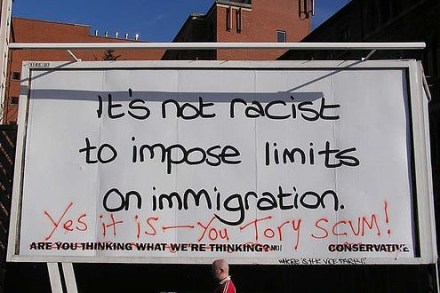
Why do the Tories have a problem with black and ethnic minority voters, daddy? It is, with all due respect to Isabel and Paul Goodman, the British political question that is easiest to answer. We all know the answer too, even those of us on the right. Race might not be the Conservative party’s original sin; it’s still a pretty high-ranking sin. And, look, it’s not ancient history either. It’s not a Different times, different attitudes but, please, can we move on now? kind of thing. Nor did it die with Enoch either. (Poor old Enoch, so brilliant but a touch troubled too, don’t you think?) It remains a virus at
Isabel Hardman

Conservatives and ethnic minority voters: how the Immigration Bill might not help

Policy Exchange’s report on the face of modern Britain this morning is fascinating reading for anyone interested in the way this country has changed and will change in years to come. But it is especially fascinating reading for those wondering how on earth the Conservative party can appeal to ethnic minority voters. This is partly because it makes quite clear that the party is currently not appealing to those voters: indeed, while politicians have a bad habit of lumping ‘ethnic minority’ voters together without good cause, the one thing that does lump these groups together is a reluctance to vote Conservative. The killer facts in the report on political engagement

Isabel Hardman

Number 10: Government is ‘active in engagement’ over Pfizer bid

What is the government’s stance on Pfizer’s takeover bid of AstraZeneca? Today the Prime Minister’s official spokesman was asked this – and his answer didn’t shed a great deal of light on the situation. He said the position was ‘active in engagement, with both companies in terms of the importance to the UK of R&D and the science base, with regard to the decision as to whether or not going ahead is the right thing to do for either company and their shareholders, is entirely a matter for the companies, their boards and their shareholders’. But what if the takeover does turn out to damage jobs and the science base

Alex Massie

Modern England: a triumph of immigration and integration.

In a better, more sensible, world David Cameron would make a virtue of the opportunity UKIP has given him. He would appreciate that defending his party’s record is actually an opportunity for a counter-attack. UKIP complain – loudly – that 4,000 people arrive in the United Kingdom from the EU each and every week. This, they suggest, is awful and Something Must Be Done to limit the number of people coming to the United Kingdom. The Conservative party appears, in its dark heart, to share this concern. It suspects the Kippers might have at least half a point. There’s something nauseous about all this immigration, isn’t there? No wonder the

Isabel Hardman

Labour market flexibility and dignity

Two front pages today report what they see as bad news, and both stories are certainly ones politicians need to worry about. The Guardian reveals a leaked letter showing jobseekers will face sanctions if they do not apply for or accept ‘certain zero hours jobs under the new universal credit system’, while the Indy splashes on research by the Resolution Foundation which found that self-employed workers are earning 40 per cent less than a typical employee. The paper says these workers are the ‘hidden victims of the recession struggling by on low pay’. Saying that either of these stories represent ‘good news’ sounds far too flippant – but they do

Why policy wonks love Milton Keynes

How can political parties solve the housing crisis? The vogue a few years ago was to talk about garden cities, although once it became clear that the National Planning Policy Framework had upset a lot of Conservative voters, politicians started to prevaricate over plans for more garden cities, and then eventually published a ‘prospectus’ asking for locally-led ideas. I spent this morning exploring Milton Keynes, which was a New Town, rather than one of the original garden cities, but which planning policy wonks, including Number 10’s Alex Morton, hold up as an example of a new development built from scratch which has become hugely successful, with high rates of private

Ukip faces its toughest test yet over the next 12 months

The European election creeps closer and the smart money has switched from Labour to Ukip topping the poll. A Labour win would be spectacular in its own right as it would probably require a doubling of their 2009 vote share. I confess there was an intake of breath in the ComRes office when our ITV News poll results were in showing an 11-point Ukip lead over Labour. But the naysayers were confounded by a second poll released on the same day showing a nine-point Ukip lead. The ramifications of a party with no Westminster MPs topping a popular ballot within a year of a General Election puts us into new territory. What

Ukip aren’t just David Cameron and the Tories’ problem anymore

How the Tory party will react if, as excepted, Ukip pushes the party into third place in the European elections is one of the most discussed topics in UK politics. But overlooked in all this is how Labour will react if Farage’s party beats them on May 22nd. If Ukip come top in the European Elections, as the polls indicate they have a very good chance of doing, Labour will be thrown into a panic. No opposition has ever triumphed at a general election having not won the previous European Elections. A failure in the European Elections would be a big blow to the idea that Ed Miliband is going

The Sunday Herald says ‘yes’ to Scottish independence. Which newspaper will be next?

If you are going to declare a clear political affiliation, you might as well do it big. In cricketing terms, if you are going to slash at the ball, slash hard — and that is exactly what the Sunday Herald has done this morning. ‘Sunday Herald says Yes,’ is the front page headline above an illustration by artist and Nationalist Alasdair Gray. Page one is the declaration and page three is the explanation. The whole of page three is devoted to an editorial setting out the reasons for the Sunday Herald’s decision to come out for the Nats. It is a pretty good and well-argued exposition of the Yes case, acknowledging the

Fraser Nelson

Health diktats, rail renationalisation – Labour’s leftwards lurch continues

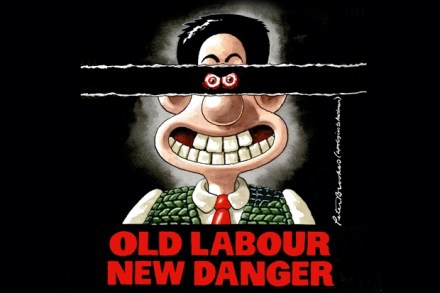
The evolution of Ed Miliband’s Labour Party continues today with a letter in the Observer from candidates demanding that the party renationalizes the railways to lower the fares. It would be popular in commuter towns, they say – no wonder, as this would pass the costs from commuters to the general taxpayer. When challenged about it on this morning’s Andrew Marr show, Miliband didn’t rule it out. ‘We’re looking at all the options,’ he said. His only concession was that he is ‘not going back to old-style British Rail,’ – he plans a new form of state intervention. Miliband then went on to accuse Cameron of being a ‘cheerleader’ for

Revealed: Nigel Farage’s path to Parliament

Now that Newark is a no-go, Nigel Farage will be turning his thoughts to where he will stand as an MP. He said this week that returning its first MP will be a huge breakthrough for Ukip, so choosing a seat that he can win is vital. After declining to stand in the 15 by-elections that Ukip have contested since 2010, it looks as if Farage will wait until 2015 to run for Parliament. Coffee House understands that, ideally, Farage would like the seat to fit three criteria. Firstly, it needs to be a marginal seat. Secondly, he wants to have some local connection — he feels his lack of

Pfizer will be hard to stop

The pattern of the global pharmaceutical industry has long been towards cross-border mergers that combine research strength, market access and the capital needed to sustain new drugs through multinational approval processes.The UK has done well in this game, with excellent laboratory work and two giants still headquartered here, GlaxoSmithKline and AstraZeneca. The latter is part-Swedish but has 6,700 British staff and a heritage that descends from the pharmaceuticals business of ICI, greatest of 20th-century British industrial names. So alarm bells rang with the announcement at the beginning of the week of a takeover bid by Pfizer of the US, which has at least two counts against it: it is suspected

Isabel Hardman

The Coalition letter war steps up a notch

Coalition relations are growing more fractious and sour. Even departments where the rapport between the Conservatives and the Lib Dems had been respectful, such as Justice, are starting to bicker publicly. Today the Mail splashes on a row between the two parties over knife crime, in the week of the stabbing of teacher Ann Maguire. Nick Clegg has refused to support mandatory minimum sentences for repeat knife offences, and the normally secret letters discussing the measures have made their way into the pages of a newspaper. Only a few months ago, ministers and advisers thought things were going sufficiently well in most parts of the Coalition (aside from Education, which

Ed Miliband’s price control pattern

Ed Miliband has got the reaction he wanted to his speech on the private rented sector, which he used today to launch Labour’s local election campaign. Landlords and nasty right-wingers hate this latest stage in his ‘cost-of-living contract’. The Residential Landlords Association said rent controls ‘would critically undermine investment in new homes to rent and are not needed’ and the National Landlords Association said ‘the proposal for a three-year default tenancy is unnecessary, poorly thought-through and likely to be completely unworkable’. On Coffee House, Policy Exchange’s Chris Walker says ‘rent controls are at best misguided and at worst could be counterproductive, longer-term’. Grant Shapps suggested that these were ‘Venezuelan-style rent controls’. Which

Alex Massie

Yes voters are the Union’s secret weapon

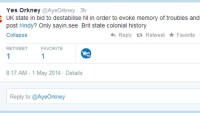
Well some of them are anyway. Consider the tweet above. It’s since been deleted and you can see why. Gerry Adams’ arrest might not be an obvious element of the Pan-Unionist Conspiracy but if you think that you lack the imagination necessary to be the wilder kind of Scottish nationalist. Then again paranoia is a consequence of monomania and breathtaking solipsism. Of course it’s just a tweet and only a single one at that. But there are plenty others like it. And yes, for sure, there are loonies on the Unionist side too. There really are people who think Alex Salmond evil and, lord knows, there are any number of Unionists making

Podcast: Britain’s masculinity crisis and Osborne’s Foreign Secretary aspirations

Is the British male in serious trouble? On this week’s View from 22 podcast, the Labour MP for Hackney North and Stoke Newington Diane Abbott discusses the topic of this week’s Spectator cover feature with Isabel Hardman. Why are boys written off more frequently than girls? Are males in trouble because females are doing better? And is it now more difficult to grow up as a young boy or girl? James Forsyth and Isabel Hardman also discuss why George Osborne wants to take William Hague’s job and be the next Foreign Secretary. Does he risk lowering his profile and getting entangled in the sticky business of renegotiating our relationship with

Matthew Parris

Ukip isn’t a national party. It’s a Tory sickness

It can happen that something ought to feel wrong yet somehow doesn’t; and you wonder whether this means that in some deep way it could be right. Take for example a discussion on BBC Radio 4’s Today programme on Saturday last week. The subject was the rise of the ‘Teflon’ United Kingdom Independence Party. I ought to have found the programme’s handling of this to be inappropriate; yet it felt both appropriate and natural. In this column I shall discuss why. Radio presenters do not give explanatory headlines to political interviews. At about 8.20 a.m. Evan Davis simply said ‘Let’s talk about Ukip’ and off they went, ‘they’ being himself

Nigel Farage is just Russell Brand for old people

Yes, yes, yes, some young ‘uns support UKIP. Just as a few black people do too. But come on. We all know – because the polling tells us so – that UKIP supporters are likely to be older and whiter than the average voter and, most importantly, also more certain that the whole bleedin’ country is going to the dogs. The sodding dogs, I tell you. It isn’t. Of course there are problems. Of course there are great injustices that need correcting. Of course there are difficult, often intractable, policy debates that resist easy answers. There always have been and always will be. Change is always alarming and always unavoidable.