Culture

Culture

The good, the bad and the ugly in books, exhibitions, cinema, TV, dance, music, podcasts and theatre.

Getting to know him

Music

Here’s a strange thing about Johann Sebastian Bach. Here’s a strange thing about Johann Sebastian Bach. You can be devoted to his work, love it more intensely than any other music, yet never get round to hearing some of his most awe-inspiring compositions, or even know what you’re missing. There are dozens — literally dozens
Triple thrill

More from Arts

After a few thematically uneven mixed programmes, the Royal Ballet takes its summer leave from the Royal Opera House with a nearly ideal triptych of works. Central to it are stunning examples of 20th-century choreography, which highlight the role that British ballet played in both making and consolidating the Western modern ballet tradition. As such,

Reliving Lockerbie

Radio

‘We will know one day why it happened,’ said the mother of Helga Mosey. ‘We will know one day why it happened,’ said the mother of Helga Mosey. Helga was just 19 when she was killed in the bomb that destroyed PanAm flight 103 as it flew over the Scottish town of Lockerbie on the

Is he a genius?

Television

You’ll forgive me, I hope, for coming back so soon to the subject of Adam Curtis, the first part of whose All Watched Over by Machines of Loving Grace was so ably dissected by Simon Hoggart last week. You’ll forgive me, I hope, for coming back so soon to the subject of Adam Curtis, the

Hay dispatch: Turning on Thomas

Hugh Thomas gave an update on his progress through his three volume history of the Spanish Empire. He has recently published volume two: the Golden Age, in which he examines the reign of Charles V and the conquest of South America. Aptly named the Golden Age because he refers to an age of amazing discovery

Honour the most exalted poet

More from Books

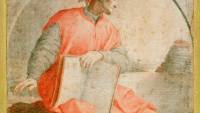
What’s your punishment going to be, when you get to Hell? At least as envisaged by Dante, you might be somewhat surprised. Hitler (mass murderer) is in the outer ring of the seventh circle, up to his eyebrows in a river of blood and fire. Still, that’s a little better than the innocent manager of

Hall of mirrors

More from Books

After the Nazi occupation of Paris was over, Sartre famously said — somewhat hypocritically, given his own slippery behaviour — that the only possibilities had been collaboration or resistance. After the Nazi occupation of Paris was over, Sartre famously said — somewhat hypocritically, given his own slippery behaviour — that the only possibilities had been

Pearls before swine

More from Books

The story of Harry the Valet is the stuff of fiction. He was a dazzlingly adept, smooth, glamorous jewel thief, who never stooped to petty crime but carried off the kind of robberies more commonly found in novels and films: huge ruby necklaces, diamonds and pearls all poured out, pirate-treasure fashion, into his waiting hands.

Recent crime fiction | 4 June 2011

More from Books

Mo Hayder has a considerable and well-deserved reputation as a writer of horrific crime novels that often revolve around the physical violence men do to women. Her latest, Hanging Hill (Bantam, £18.99), is no exception. Set in Bath, it’s the story of two estranged sisters — Zoe, a detective inspector equipped with a motorbike and

‘I told them’

More from Books

No messenger bearing bad news can expect to be popular. But to be dis- believed as well adds a particularly bitter twist, since the messenger’s character can only be vindicated by proving the truth of his horrific message. That was Jan Karski’s fate. He was the Polish resistance fighter sent to London in 1942 to

A catastrophe waiting to happen

More from Books

Gillian Darley’s book has the pace, colour and deliberation of a Vesuvian eruption, which is fitting; for we must get used to the fact that sooner or later the volcano will erupt again with a devastating power. Gillian Darley’s book has the pace, colour and deliberation of a Vesuvian eruption, which is fitting; for we

We are the past

More from Books

Julie Myerson’s eighth novel is told by a woman who roams the City of London after an unspecified apocalypse (no power, bad weather). Julie Myerson’s eighth novel is told by a woman who roams the City of London after an unspecified apocalypse (no power, bad weather). The Monument is rubble, Tower Bridge has ‘long gone’

Speak, Memory

More from Books

One day, the American journalist Joshua Foer is surfing the net, trying to find the answer to a specific question: who is the most intelligent person in the world? He can’t find a definitive answer. One day, the American journalist Joshua Foer is surfing the net, trying to find the answer to a specific question:

Elegy for wild Wales

More from Books

If you drive West out of Carmarthen on the A40, you pass through a landscape of dimpled hills and lonely chapels and little rivers full of salmon trout. This is Byron’s Country, the place where Byron Rogers was brought up in the late Forties, not knowing a word of English, until at the age of

Bookend: Bloodbath

Colin Amery has written the Bookend column in this week’s issue of the Spectator. Here it is for readers of this blog: It may have been first published in 1973, but reading it again in Persephone Books’ elegant re-print, Adam Fergusson’s The Sack of Bath remains a real shocker. The fury of his polemic against

Hay dispatch: The meaning of life

If one scientist were to sit at a table full of philosophers it might seem at first that the scientist had the upper hand purely by virtue of their self confidence. The philosophers’ humility might be no match for the all encompassing certainty of science. Peter Atkins, Professor of Chemistry and author of A Scientist’s

Link blog: Of drunks, criminals and profanity

A way of becoming very drunk while stocktaking your bookshop’s science-fiction section (via). A collector’s guide to true crime, including an unexpected connection between Dennis Nilsen and Virginia Woolf. A celebration of the typographic specimen book that is rather lovely to look at. An easy way into Jean Rhys – at least, easy if you

Two Ados

Like most Shakespeare comedies, Much Ado About Nothing is often performed as a garden party fantasy of Merrie England – so it’s a treat to see two major productions both committed to restoring the Mediterranean flavour of this hot-blooded piece, which Shakespeare actually set not in Stratford, but Sicily. 

 At the Globe, Jeremy Herrin strews the stage

Hay dispatch: Fonting up

I don’t arrive at my camp site until 11pm, partly as a result of my own sense of comic timing, partly the result of a long lunch with Dear Mary and chums. Good fortune would have it that Spectator HQ has been pitched next to Radio Cymru’s weather reader, who tells us in the morning

Rolling in the Hay

Our coverage of the final days of this year’s Hay Festival begins today. Here’s a selection of facts and myths about the world’s grandest literary festival. 1) This year’s reconciliation between Paul Theroux and V.S. Naipaul joins a long list of memorable events at the festival. In 2009, Ruth Padel held her resignation press conference

The strange case of the unreadable bestseller

It is 82 years since the publication of William Faulkner’s The Sound and the Fury. It was an unlikely commercial success.   After James Joyce’s Ulysses, William Faulkner’s The Sound and the Fury might be the most famous unread novel in English. American schoolchildren are forced to plough through it (on the assumption that the

Stirred rather than shaken

James Bond is the great chameleon. From the velvety burr of Connery through to the tango tan of Moore and the aluminium pecs of Craig. And then, of course, there is the Bond of the books. Between covers (of the literary sort, at least), Bond transforms again: refrigerated in the black-and-white of print, he becomes

Across the literary pages | 31 May 2011

The Telegraph is live at the Telegraph Hay Festival. The Salon reports on ‘Stephen from Baltimore’s’ attempt to re-write James Joyce’s Ulysees on Twitter: ‘All volunteers need to do is choose a section, or several, from the 18 episodes, structured loosely on Homer’s epic, “then thoughtfully, soulfully, fancifully compose a series of 4-6 tweets to

Ditching the dirt

Exhibitions

Cleanliness was nowhere near godliness in 17th-century Europe — except in Delft, where God came second. The Wellcome Collection’s examination of humanity’s relationship with dirt begins in Vermeer’s city, where thousands of girls with pearl earrings scrubbed hearths for a living. Delftware, those distinctive blue and white ceramic tiles so common in antique shops, was

Consolations of Constable

Exhibitions

William Cook takes refuge from the modern world at an exhibition of the artist’s paintings of his beloved Salisbury I’d always thought of Constable’s paintings of Salisbury Cathedral as grand, majestic things — but seeing them again in Salisbury, with Richard Constable, the artist’s great-great grandson, you begin to look at these splendid pictures in

Saturday Morning Country: Cowboy Junkies

Amidst all the Dylanmania this week it’s worth recalling that Steve Earle once said, “Townes van Zandt is the best songwriter in the whole world and I’ll stand on Bob Dylan’s coffee table in my cowboy boots and say that.” He may be forgiven his touch of hyperbole. Nevertheless, To Live is to Fly is