
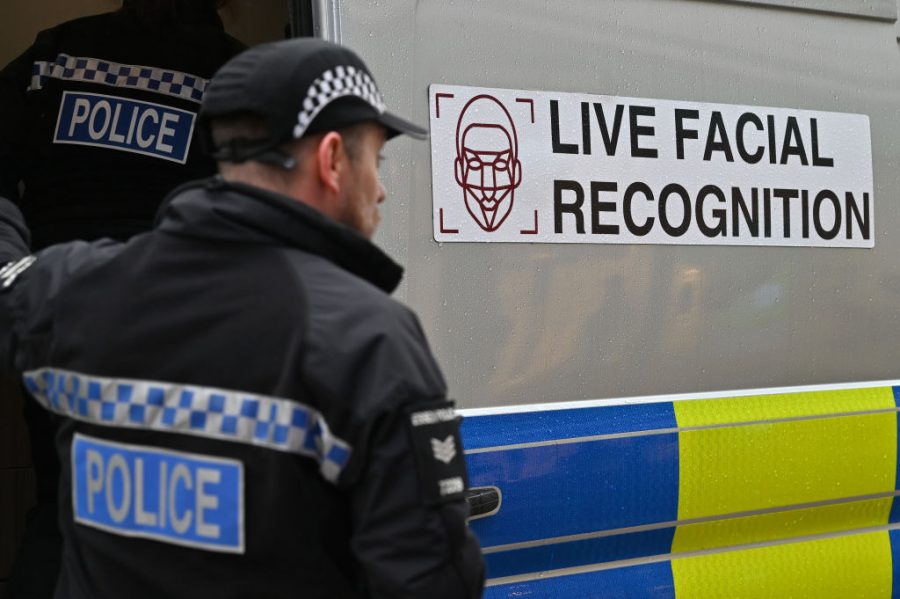
Should cops spy on kids? The revelation that police are including surveillance of young people in their expanding use of live facial recognition (LFR) systems to detect criminals and deter crime has upset the civil liberties lobby and a few MPs. Should we take these concerns seriously?
LFR was introduced in south Wales in 2016 and was rolled out nationwide in England and Wales from 2020 onwards. The operating principles have evolved during pilot schemes but are now built around cameras in liveried vans passively scanning crowds and comparing the faces of citizens against a database. Artificial intelligence scans the biometric details, alerting the operator to ‘hits’ against a curated ‘watchlist’. That database includes people wanted by the police, people subject to bail or probation conditions and those at risk of harm. It is likely that children comprise a significant number of the latter category. In 2023/24, 65 per cent of all missing persons incidents were children under 18. Many of these children abscond from care homes and are at acute risk from sexual and criminal exploitation.
Prevention is best but control is important too
Most of the arguments against the deployment of LFR are rooted in protecting the rights of the citizen of any age against unwarranted intrusion by the state. These are laudable objections, especially in the age of Starmerism, where desperation for a populist inch means an authoritarian mile. But rights for citizens also include being able to go about one’s business without being made a victim of the criminal impunity that poisons many of our public spaces. Earlier this year, the Metropolitan Police revealed that it had made over 1,000 arrests using LFR in just over 12 months, including paedophiles, rapists and violent muggers. In one example, it picked out and led directly to the arrest and conviction of 73-year-old David Cheneler, a registered sex offender in Denmark Hill, south-east London, who was with a six-year-old girl, in breach of a sexual offences protection order.

Moreover, police clear-up rates for many offences hover around 5 to 10 per cent nationally, with even lower figures for volume crimes like theft and burglary. This leaves millions of victims without justice and erodes public confidence in policing. Many of these crimes have suspects attached to them who have not been apprehended by police because law enforcement simply does not have the resources to pursue individual offenders. Court delays mean many suspects are bailed indefinitely. With an estimated 6.6 million crimes in England and Wales in the year to March, traditional methods of policing simply cannot cope with the volume.
Many of the concerns of those claiming to object to LFR have been allayed by improvements to the technology and safeguards imposed unilaterally by police constabularies. Research by the National Physical Laboratory in 2023 ruled out allegations of racial bias in facial recognition systems, provided they were calibrated at a level of detail scanning that is now the benchmark of all forces using it. The images of those not wanted by the police are instantly deleted and newer technology instantly blurs the faces of the innocent within camera range. False positives are almost non-existent.
While LFR can make young people safer in their communities by detecting and deterring predators in their midst, it is worth remembering that young people are also offenders and capable of inflicting extreme harm. There were 53,000 knife-enabled offences recorded in the year ending in March, with juveniles as offenders (and frequent victims) in 18 per cent of cases.
In this sense, the systems should make no discrimination in terms of age. Young people involved in antisocial behaviour have turned some town centres into no-go zones for the law-abiding and torture shop owners – already barely existing on slim margins – with theft, intimidation and vandalism. Many of these kids have lower-order penalties against them from youth courts forbidding them from entering certain areas at certain times.
When you add to this the huge bulge of offenders now ‘supervised’ in the community thanks to Labour’s emergency mass prison release schemes and the ending of short prison sentences, the police need all the technical assistance they can muster to protect the rest of us. Exposure to violence is 2.5 times higher in deprived areas. Prevention is best but control is important too. Just ask any bereaved parent.
But the police have form for overreach where democratic control is weak and operational common sense is overridden by fashionable distractions. While the expansion of these surveillance systems is necessary, the safeguards for their use are insufficient. New bespoke legislation is probably required with national standards and parliamentary scrutiny built in to ensure LFR is strictly confined to combatting criminality on intelligence and facts, not forecasts. Some forces are now combining LFR with fixed CCTV cameras already in place. While this is logical and efficient, it is a departure from clearly labelled vans with officers in them available to explain what’s happening, how and why. If Big Brother is watching your kids, we need to be sure someone is watching Big Brother.



Comments