Back when the free school policy was in its infancy, the general secretary of Britain’s largest headteacher union described them as ‘a reckless waste of public money…untried, untested and almost certainly unwanted’. Ten years later, West London Free School, the free school where I am joint headteacher, has been chosen as the Sunday Times‘s state comprehensive school of the year.
In the English education system, longevity has often been an indicator of quality. Ancient public schools, grammar schools founded by Tudor monarchs, Victorian pioneers of female education – these have always dominated the league tables. Now they have free schools to contend with.
The West London Free School was established in 2011, as one of the first of a new breed of state-funded schools. Like academies, we would be free of local government oversight. But unlike academies, we were brand new, with no predecessor school. As such, our mandate was to experiment, innovate, and challenge the status quo.
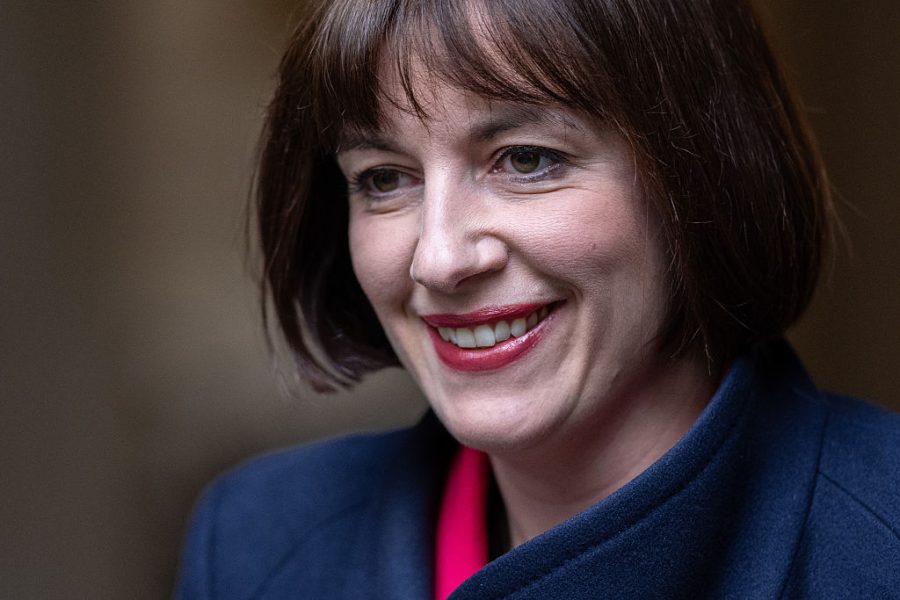
Bridget Phillipson seems unwilling to believe that Conservative policies might have improved state schools
The ethos at the West London Free School was designed in direct opposition to the prevailing orthodoxies of the education sector. Instead of dumbing down our curriculum to make it ‘accessible’ and ‘relevant’, we taught a core academic curriculum, including Latin, to every pupil regardless of ability. Where state ‘comps’ were notorious for lax behaviour policies and disrupted lessons, we were unapologetically strict. And where trendy teaching methods such as group work and discovery learning dominated classrooms, we pioneered evidence-based teaching methods that actually worked.
This approach may sound draconian, but it is delivered with patience and warmth. What is more, our staff go above and beyond to provide co-curricular experiences that strengthen pupils’ sense of belonging to the school: residential trips, musical performances, plays and sports fixtures.
This year, we achieved the fourth-best GCSE results of any state comprehensive in the country and sent 13 of our sixth formers to Oxbridge – 10 per cent of the cohort. This is not because our school is, as some suspect, a middle-class refuge from the inner-city. When the Labour shadow education secretary Tristram Hunt mocked free schools in 2010 as ‘vanity projects for yummy mummies in West London’, I suspect he was thinking of us. However, over a quarter of our pupils come from disadvantaged backgrounds, and two-thirds speak a language other than English at home.
Our school shows that an ordinary intake of inner-London pupils can – if placed in a challenging but nurturing environment – achieve extraordinary things. Schools such as ours have radically expanded people’s expectations of what children at state schools can achieve. It is no coincidence that this year, four of the top ten state comprehensive schools in the country for GCSE results were free schools.
Following last year’s election, I hoped that Labour might recognise education as a rare case of successful public sector reform. Instead, Education Secretary Bridget Phillipson seems unwilling to believe that Conservative policies might have improved state schools. On entering office, she suspended the opening of 44 new free schools subject to review. One year later, the fate of these new schools – including three elite sixth forms to be opened in underserved northern towns through a partnership between Star Academies and Eton College – remains unclear.
Phillipson’s Children’s Wellbeing and Schools Bill – which is currently making its way through parliament – will limit the very freedoms that have allowed academies and free schools to thrive. Previously, we have been able to diverge from aspects of the national curriculum, developing a distinctive curriculum with – in our case – a particular emphasis on art, music and Classics. This freedom will be removed. School uniform is central to our identity, but this will be limited to four branded items. Most worryingly of all, local authorities will be given back the power to dictate how many places the schools in their area can offer. Labour-led authorities which are hostile to free schools and academies – of which there are many – will be able to limit our size and growth.
Phillipson and the Labour party need to realise that free schools and academies don’t just improve outcomes for their own pupils. School leaders visit us every week from across the country, hoping to emulate what we do differently. Likewise, my colleague as joint headteacher, Ben McLaughlin, and I are inveterate education tourists, getting out whenever we can to beg, borrow and steal from other leading schools. Visiting free schools such as Mercia in Sheffield and Michaela Community School in Wembley – led by the formidable Katherine Birbalsingh – has pushed us to expect even more from our pupils. This year, a trip to Fulham Boys School, a brilliant free school down the road from us, finally gave us the courage to ban smartphones from our school site.
It is this virtuous cycle of autonomy, innovation and emulation that has driven English schools to improve over the past fifteen years. As a consequence, English pupils are soaring up the PISA league tables, leaving their counterparts in Wales and Scotland – where free schools and academies do not exist – in their wake. The rest of the world is taking notice. Last year, we welcomed school leaders from Australia, South Korea, Norway, Sweden and Holland to our school. In March, a delegation of twenty Belgian politicians led by the Flemish education secretary Zuhal Demir visited us and Michaela Community School. Bridget Phillipson has visited neither.
Labour needs the humility to accept that education reform based on school autonomy was an area of success for the previous government. They also need the good sense to continue this legacy. If not, they risk jeopardising one of the few areas of public sector reform where England can genuinely claim to be world-leading.



Comments