
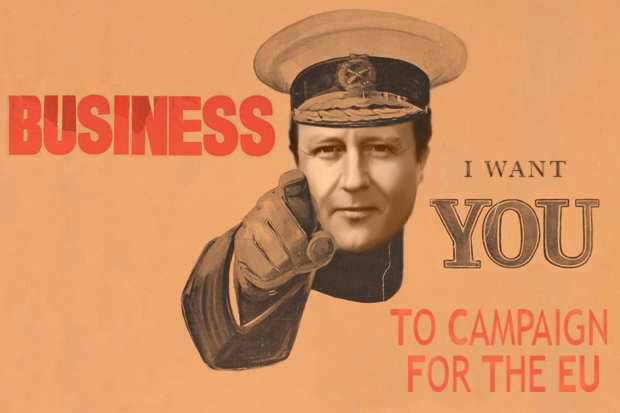
So make no mistake: the campaign has started. The Prime Minister is already leading the case for ‘in’. And who’s leading the case for out? UPDATE: The Prime Minister didn’t quite stick to the script. Here’s what he said:“The voice of business must be heard – in Britain and across the whole of the continent. If you agree with me about the changes I am arguing for in Europe; if you want a more competitive Europe, where the Single Market is completed, where there are more trade deals and fewer regulations then join me in making that case. And if you believe like I do that Britain is better off in a reformed European Union then when the time comes, help me make that case for Britain to stay.”
‘I hope that business and NGOs and other organisations won’t hold back. And I would say don’t hold back right now, even though the question isn’t settled. I think if business backs my reforms: if you want to see the competitive Europe, if you want to see the flexible Europe, if you want to see the Europe where you can be in the eurozone and win, or out of the Eurozone and win, I would argue get out there and support those things. I think it’s important with this which is such a massively important generational question, for Britain and for Europe, the sooner you can start to look at your own businesses and the examples and ideas about the benefits and the problems that there are with Europe, the more you are able to help explain and set the context for this vitally important question for Britain and for Europe.’



Comments