


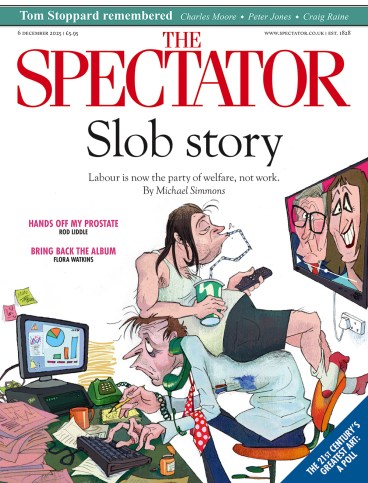
It is easy to criticise the Budget. The process was a chaotic mess. For many on the right, Rachel Reeves’s £26 billion tax raid to placate Labour MPs was a form of madness as well as badness. But good politics means understanding your opponents. One former No. 10 Tory thinks there was method in the madness: ‘It totally makes sense for Labour to move to the left.’
Nearly half of those who voted Labour last year would not vote for the party today. The number of voters fleeing Labour to the right – to Reform or the Tories – has remained steady since January at between 13 and 16 per cent, or one in seven of their 2024 voter base. Two-thirds of those votes have been lost to Reform.
‘They should be saying: “We’re taxing the rich to pay for public services”’
However, the number of votes being lost to the left has accelerated as the year has gone on, particularly since Zack Polanski became leader of the Green party and challenged Labour from a left-populist position. In January, around 15 per cent of 2024 Labour voters had switched to left–leaning parties. By September, the proportion had increased to at least a quarter.
These votes are not all worth the same, since those jumping to the right tend to be in more marginal seats. According to new analysis by Stack Data Strategy, losing 16 per cent to the right costs Labour 197 seats (the vast majority of them to Reform), while the 25 per cent loss to the left would cost only 178 seats.
But Reeves’s Budget can perhaps be explained by the fact that the potential future losses to the left far outweigh those to the right. Stack’s polling found that just 21 per cent of Labour voters from last year who have stuck with Keir Starmer say they would consider switching to Reform or the Tories, but a staggering 47 per cent say they would consider voting for the Lib Dems or Greens. Conversely, those who have switched to the Greens or Lib Dems are also more likely to return to Labour than those who have jumped ship to Reform. ‘Uniting your side is now the key factor in winning an election,’ says a Tory pollster.

This rationale is supported by the evidence of the last two general elections. In 2024, Starmer won 63 per cent of the seats in the Commons with 34 per cent of the vote. Add the Lib Dems, and ‘the left’ took 74 per cent of the seats with 46 per cent of national vote share. Last time, the Tories and Reform secured 38 per cent of the votes but won 19 per cent of the seats. Contrast that with 2019, when the Tories and the Brexit party got 46 per cent of the vote between them, along with 56 per cent of the seats. Recent polls show the right on more than 50 per cent of the vote.
So how can Labour unite the left? Higher public spending and taxes on the better off are very popular with the metropolitan university–educated ‘lanyard class’, who are a key part of the Labour, Green and Lib Dem voter base. The other issue which unites them is support for environmental causes and action on net zero.
Luke Tryl, of More in Common, said: ‘The “change” that united Labour’s 2024 coalition was a desire to see more done to lower the cost of living, improve public services and tackle poverty, and as such there is among that group of voters an appetite for a more re-distributive economic offer. Add to it that climate and the environment was the third most important issue for Labour voters, and a red-green offer is one that left-wing voters could rally around.’
Labour’s strategy, then, is easy to discern, but its messaging is not. Starmer’s team has been so keen to present him as a centrist that they have sought to deny that Labour is pivoting left – witness Reeves’s verbal gymnastics in trying to claim the Office for Budget Responsibility forced her hand on what were tax rises of choice. ‘They’re doing all these left-wing things, but they haven’t embraced them in the messaging,’ says a senior Tory. ‘Reeves still talks like Osborne in terms of “fiscal rules” and “headroom”. They should be saying: “We’re taxing the rich to pay for public services.”’
A Downing Street source insists that the cost-of-living handouts in the Budget have been noticed: ‘The retail offer of £150 energy price reductions, £300 for the poorest, plus frozen rail fares, frozen prescriptions – these are things that are cutting through. The rise in the national minimum wage really cut through online. People really know about it and people are supportive of it.’
The mistake many Labour MPs make is to assume that a leftward tilt on the economy ought to mean a rejection of tougher migration controls, like those outlined recently by Shabana Mahmood, the Home Secretary. Polling by More in Common shows that 69 per cent of all voters support making asylum status temporary rather than permanent; 65 per cent support banning asylum claims from and imposing sanctions on countries that do not accept illegal migrants back; and 53 per cent also support the government’s move to a 20-year wait before most asylum seekers can settle permanently.
Perhaps surprisingly, seven out of ten Labour voters want their MPs to back Mah-mood’s changes, along with 56 per cent of Lib Dem voters. Even almost half of Green supporters back most of the individual measures. Tryl explains: ‘I think a lot of people in politics don’t realise how far the debate has shifted on migration. It is simply untrue to suggest that Labour 2024 voters don’t care about the issue. Labour needs to neutralise the migration issue so they can get back to talking about the economy, climate and public services.’
A senior Starmer aide agrees: ‘We believe in protecting our country’s borders. It’s an absolute basic requirement of the state. But that doesn’t mean that you can’t at the same time tackle child poverty. You can and should do both.’
None of this means Labour is on course to repeat its landslide win in 2029. Starmer is a lacklustre leader. The economic headwinds, foreign and domestic, are formidable. But in a highly febrile political environment, where small changes in vote share could mean huge swings in the number of seats won, it is possible Labour has, over the past month, found a way of maximising its vote.




Comments