Tried and tested
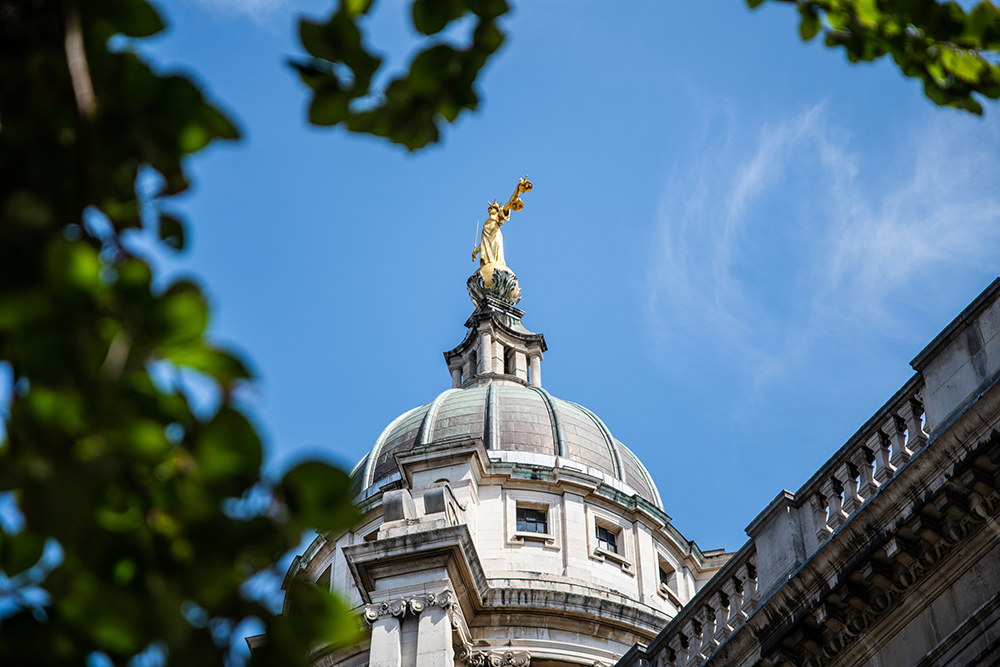
Sir: Your otherwise excellent leading article opposing proposed restrictions on jury trials (‘Judge not’, 29 November) misses two important points against the proposals. First, one can go much further than pointing to 3,000 days of unused capacity. The capacity itself can be expanded quite readily. It was once normal for courts to sit on Saturdays. Moreover, the court day once started at 9 a.m. and, after a break for supper, could go on well into the late evening – the ‘black cap at midnight’ is not a myth. The modern court day is 10.30 to 4.30, with an hour for lunch. A 9.30 to 5.30 day would add another 40 per cent capacity. Including Saturdays would increase capacity by 68 per cent.

Second, a review is needed into why criminal trials take so long nowadays. The complicated poisoning trial of Frederick Seddon and his wife took ten days and was the longest capital case in which Sir Edward Marshall Hall ever appeared. Now several days are required for the most routine jury cases, and murders take many weeks or months to try. Why? Someone should find out and suggest remedies.
Dr Richard Austen-Baker
Lancaster University Law School
English Uighurs?
Sir: There are strange assertions in Sam Olsen’s review of Edmond Smith’s uncompromisingly titled Ruthless: A New History of Britain’s Rise to Wealth and Power (Books, 29 November), but whether they come from the reviewer or the reviewed is unclear. Mill workers in the Industrial Revolution were apparently ‘driven by hunger’ and ‘Labour was cheap because life was cheaper still’. Yet British workers’ wages were the highest in the world, and foreign visitors were amazed by their standard of living. ‘The English poor appear almost rich to the French poor,’ observed Alexis de Tocqueville. Britain’s workers, we are told, were comparable with the Uighurs today. How so? They were not serfs, nor did Hanoverian Britain have the repressive powers of the Chinese People’s Republic. Britain wanted ‘a lopsided relationship’ with the world – just like China – keeping its ‘advantages inside its borders’ and keeping out foreign competition. Again, how so? Britain adopted a policy of unconditional free trade even with countries that raised tariffs against its products. The conclusion: Manchester then and Beijing now are basically the same. This is a version of history the Chinese will surely welcome.
Robert Tombs
St John’s College, Cambridge
To wit
Sir: Lloyd Evans says ‘I can barely recall making a witty or worthwhile comment in my entire life’ (No life, 22 November). He’s quite wrong, of course; he has made so many in his articles over the years that he has too many to retain in his memory. Long may this continue, as he makes my Spanish wife cry with laughter each week, and that, in turn, makes me very happy indeed
Steven Collins
Willesden, London
Where to meet
Sir: James Heale writes of Nigel Farage’s intention to express Reform’s support of the countryside and field sports by attending a Boxing Day meet (Politics, 22 November). He will be in good company, as every year a quarter of a million ‘ordinary working people’ turn out to enjoy watching this traditional spectacle. I suggest he goes to Tiverton, whose town council has just been persuaded by Chris Packham to ban the local trail hunt from its high street. He might also wish to use the green benches to expose the so-called ‘Hunting Ban Advisory Panel’, hosted in Westminster and supported by five Labour MPs. The ‘panel’ is in fact not an official organisation, but a front for a group of north London hunt saboteurs.
Neil Kennedy
Burnham on Crouch, Essex
Poor deflection
Sir: It was interesting to read that Kwasi Kwarteng has sympathy for the Chancellor (Diary, 29 November), as he more than anyone knows what it is like to be a ‘human shield’ for the PM. In his case, of course, he was unable to deflect the impact of just one event, the infamous mini Budget. In Sir Keir Starmer’s case, his ‘human shield’, instead of deflecting trouble, seems to be increasingly drawing more and more of it directly towards the PM with her mishaps, U-turns and spin.
If the dust settles, the PM might consider a reshuffle. Replacing Rachel Reeves as Chancellor with someone who doesn’t just rely on self-belief but has the ability, experience and vision to win back the trust and confidence of disillusioned British workers, businesses and farmers might not only ensure his own political survival, but could provide a slightly brighter outlook for UK plc, and even for his party.
Andrew Haynes
London SW6
Georgian frolics
Sir: I enjoyed Adrian Fry’s contribution to ‘A Letter From Jane’ (Competition, 15 November). Anyone wanting some Georgian-era rolls in the hay could read Rachel Parris’s new book Introducing Mrs Collins, where Mr Collins and Charlotte Lucas’s marital intercourse is explained in depth. I’ve been listening to the audiobook in the car on the way to work and laughed all the way in this morning.
Carrie-Anne Hunter
Newtownstewart, Co. Tyrone
Mull on that
Sir: I enjoyed Muriel Zagha’s piece about the Powell and Pressburger film I Know Where I’m Going (Arts, 22 November). But the irony is that she didn’t know! She said she was on her way to the Outer Hebrides, but Mull, where it was filmed, is in the Inner Hebrides. I concede however that the Western Isles Hotel is, despite its name, indeed in Tobermory.
Peter Mackay
Kincraig, by Kingussie
Write to us: letters@spectator.co.uk




Comments