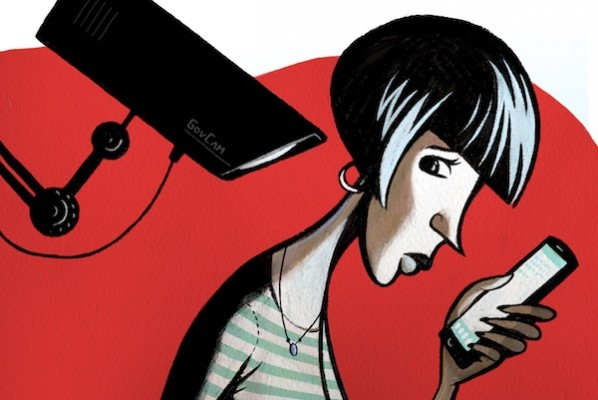
Britain has long been one of the most surveilled democracies in the world. But under Starmer’s government, things are about to take a more sinister turn. It seems we are all going to be watched by facial recognition cameras as well.
It seems will all have to pay the price for the state’s gross incompetence
According to a Home Office consultation launched on Thursday, the government is developing a new legal framework to expand the use of facial recognition technology. Rarely seen outside of China, live facial recognition cameras – which constantly scan live CCTV footage – could be installed in every town centre up and down the country. It used to be that only hardened criminals would end up on a police line-up. Soon, every member of the general public will feature on its digital equivalent.
In addition to these cameras, the government is also enrolling our passport photos in a giant surveillance database. Given the false positives facial recognition cameras regularly produce, ordinary members of the public could soon be at risk of being misidentified for a crime or harassed by police while doing their shopping.
Incredibly, one of the reasons the government has given for this breakneck lurch towards a surveillance state is to catch criminals they keep letting slip from our prisons. In other words, we will all have to pay the price for the state’s gross incompetence.
In proposing this drastic change, Starmer risks making us a nation of suspects in an open prison. Facial recognition is already spinning out of control in Britain. The police’s own records show that over seven million innocent people in England and Wales have been scanned by police facial recognition cameras in the past year alone. It is from this disturbing starting point that the government is about to ‘ramp up’ its use.

It often seems like Labour are enamoured with technocracy and have a shockingly low amount of respect for our democratic traditions. This facial recognition announcement comes soon after Starmer’s pledge to force us all to have digital ID cards. This enormous expansion of state power and surveillance, much like facial recognition, did not appear in Labour’s manifesto.
Democracy isn’t quite dead yet. The government has announced that there will be a consultation on both the digital IDs we’re all going to be forced to have on our phones, and the facial recognition cameras which will soon watch us every day. But neither seems to be a real ‘consultation’ of the public. Instead, the question asked by the government seems to be: and how would you like us to completely monitor your private life? Not whether or not we want to live in this dystopian society at all.
The word ‘safety’ is often bandied around when it comes to technologies like facial recognition cameras, as though it is something to be traded for liberty. But there are far better ways to make our streets safer than mass surveillance. The police could focus, for example, on actually dealing with real criminals rather than on speech offences. Or the prison service could stop accidentally releasing prisoners who have already been caught.
And there is another type of safety which is often forgotten in this debate. Safety also means maintaining an appropriate balance of power between the citizen and the state. Today, on TV and radio, proponents of facial recognition have cited the low crime rates in high-surveillance states such as China and the UAE as a benefit of the technology. But these countries are anything but safe if you disagree with the government. Facial recognition may be first used for criminals here, but there is a short leap to it being used on enemies or critics of the state.
With the prospect of mandatory ID cards on our horizon – which will include facial biometrics – we are rapidly hurtling towards a very disturbing future. This expansion of live facial recognition surveillance in Britain could be the end of privacy as we know it.



Comments