Kyiv just stripped Russian of its protection under Europe’s Charter for Regional or Minority Languages. Culture warriors at home and abroad have hailed this as a victory; in truth, the move strikes out at millions of Russophone Ukrainians, divides the country and confirms some of Putin’s claims about Ukraine. In a war of survival, splitting Ukraine and feeding Putin’s propaganda is not a cultural sideshow. It is suicide.
With his slight frame and warm, modest face, Pavel Viktor looks more like a parish priest than a political firebrand. In reality he is a physics teacher in Odessa, known to millions of Ukrainian schoolchildren for his experimental YouTube lessons. He remains in Odessa under bombardment and at 71 is still teaching. He is a model patriot by any measure. Yet he was recently pilloried for saying what most Ukrainians find obvious: to demand of children hiding in bomb shelters that they don’t speak their native Russian is inhumane. Nationalist outlets seized on the remark as disloyal. Viewers across Ukraine sided with Viktor.
The row captures the current standoff between a noisy clique, whom Kyiv now backs, and the broad majority of Ukrainians, who see these crusades as dangerously divisive. Viktor’s remark became a scandal only because language in Ukraine is now treated like a controlled substance. In schools and universities, Russian, spoken by millions in the country, has been banished from classrooms.
‘State language,’ Ukraine’s former language ombudsman Taras Kremin claimed recently, ‘is the chief priority for Ukrainian citizens, who have existentially rejected the occupier’s tongue.’ Were that true, there would be no need to police it. Instead, the crackdown is on. Even as he insisted Ukrainians were abandoning Russian, he called for it to be banned in school corridors, playgrounds and gyms.
To outsiders, it may indeed look as if Russophone Ukrainians, revolted by their own tongue, are discarding Russian – and all things Russophone – in one liberating gesture. A nation proudly shedding postcolonial taint. The reality differs. While some have certainly embraced Ukrainian out of patriotism, for most, language remains a means of communication, not a badge of loyalty.
A recent survey of Kyiv schools found that 66 per cent of students said they spoke Russian in class and 82 per cent used it during breaks. Russophone cartoons dominate children’s viewing. Ukrainian-language and Russian-language news draw similar audiences, and even the most nationalist outlets maintain Russophone editions.
The plainest proof is on the front. In trench videos Russian is heard at least as much as Ukrainian, spoken by the most unambiguous patriots – Ukrainians fighting and dying for their country. For them, Russian is not ‘the occupier’s tongue’; it is simply their language.
Abroad, journalists echo nationalist gatekeepers, romanticising attacks on the language of millions as ‘the people’s will’. While the Guardian praised a campaign to pulp Russophone books, Ukrainians mounted a nationwide boycott.
Odessa, Ukraine’s cosmopolitan seaport, has become this culture war’s hottest battleground. A Unesco City of Literature, it faces a near-total erasure of its Russophone canon. Ilf and Petrov, satirists of Soviet absurdities; Ivan Bunin, chronicler of the regime’s horrors; and Isaac Babel, executed by Stalin, are now branded ‘imperial propagandists’, not because they supported empires, but because they wrote in Russian. The purge, driven by Kyiv’s regional administrator, runs under the banner of a new ‘decolonisation’ law. Over the past year, it has grown increasingly surreal.
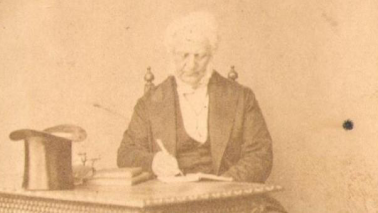
The latest target is Duc de Richelieu, Odessa’s first governor, who turned an Ottoman garrison town into a thriving seaport and whose statue famously crowns the Potemkin Steps. In 2022, Odessans sandbagged him and the Duke, swaddled from Russian missiles, became the emblem of the city’s resistance. Now a handful of activists demand his removal. One has altogether dismissed Odessa as an ‘imperial myth’. It is true that, if every trace of Russian language and history were to be effaced, Odessa itself would have to be wiped from the map – or handed back to Turkey. Harassed daily by Russian drones, Odessa is also under attack by Kyiv’s cultural commissars, the ‘new komsomol’ as people call them.
There is a grotesque paradox in this
Privately, most Odessans are horrified, but to speak out publicly brings the risk of being branded a ‘Putinist’, or worse. A local historian on the front who criticised ‘decolonisation’ was stripped of his rank and threatened with punitive reassignment. When academics are blacklisted for Russophone publications and men are beaten and seized by conscription brigades, fear of denunciation, career ruin, vindictive mobilisation and the very real risk of death keeps many silent.
The grotesque paradox is this: Putin insists that all Russian speakers are ‘Russians’, and nationalist hardliners who deny Russophone Ukrainians a place in the nation echo the lie – making ombudsman Kremin sound like the Kremlin’s spokesman. Yet Russophone Ukrainians are among this war’s greatest victims and heroes, from Kherson and Mariupol to the hundreds of thousands on the front.
Out of fear, error or miscalculation, Kyiv is endorsing the groups stripping Ukrainians of rights guaranteed by the constitution — and blighting their patriotism. Odessan soldiers on the front describe a growing sense of betrayal and alienation; in the city people whisper about ‘neo-Stalinism’ or ‘neo-colonialism’ driving them into ‘internal immigration’.
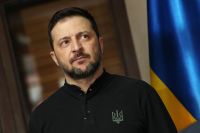
Zelensky once understood this better than most. At his inauguration he switched into Russian to address occupied Donbas, cutting short a nationalist MP who objected: ‘Stop dividing the country!’ Today his government is doing precisely that.
Comments