America

Is X still worth £38 billion? Elon Musk thinks so

When Elon Musk bought Twitter in 2022, his many critics gleefully predicted a catastrophe. We were told that everyone would quit the site for its rivals, such as Bluesky and Mastodon. The rebranding to X made Musk the object of ridicule. Musk was warned that he was unlikely to see a return on the $44 billion (£38.1billion) he had splashed out on the site. But hold on: today brings news that Musk is attempting to raise extra cash for his site at the same valuation as what he bought it for. Musk’s critics will no doubt say he is deluded. But his business acumen speaks for itself: this is a

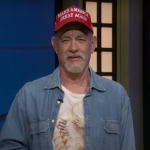
Why is Tom Hanks mocking Trump supporters?

We have long become accustomed to actors holding and sharing their progressive political views. So when David Tennant opened the Bafta awards on Sunday with a dig at Donald Trump, repeating the line that the American President is a dangerous moron, many people were annoyed, but few were surprised. Mechanically reciting fashionable mantras is what actors do, and Tennant, hitherto known for his vocal support for the trans movement, is no exception. The entire film Team America: World Police (2004) was founded on this reality about thespians.  When his counterpart on the other side of the Atlantic, Tom Hanks, did similarly at the weekend, there was, however, genuine shock. Appearing on

Freddy Gray

Was ‘free trade’ really working?

29 min listen

Oren Cass, founder and chief economist of think-tank American Compass, sits down with Freddy Gray at the ARC conference in London. They react to the announcement by President Trump over the weekend of reciprocal tariffs: the decision by the US to match import duties levied by other countries.  What’s the strategy behind Trump’s decision? And what could the consequences be for American companies and for global trade? They also discuss the broad political consensus behind free trade in the US since the 1990s. Given the ‘lived reality’ that faced many American investors and companies – for example competing with Chinese Electric Vehicles – was the free trade really working anyway?

Freddy Gray

Vance criticises Britain: is this a new era for free speech?

15 min listen

The fallout continues from US vice-president J.D. Vance’s speech at the Munich Security Conference. Criticising Europe over what he sees as the retreat of free speech, he singled out the case of Adam Smith-Connor in the UK as something that worries him about the direction that Britain is heading in. Smith-Connor was arrested in 2022 and prosecuted for breaching an abortion buffer-zone in Bournemouth. Freddy Gray speaks to Paul Coleman at the ARC conference in London. Paul is executive director of ADF International, a faith-based legal advocacy organisation that has been advocating for Smith-Connor. What is the truth behind abortion buffer-zones? Is this part of a wider ‘censorship industrial complex’?

Mark Galeotti

Is Trump’s hostile takeover of Ukraine a trap?

That Donald Trump’s vision of the presidency is less statesman and more CEO of USA Inc. is evident in the terms of the deal he tried to foist on Ukraine last week. As talks begin between the US and Russia in Saudi Arabia, a leak reveals that Trump wanted Kyiv to sign away much of its mineral resources to Washington. Ukrainian President Volodymyr Zelensky has rejected this piece of blatant economic colonialism, but the Ukrainians expect further such demands to come. This is the essence of Trump’s brave new world The draft frames this as the establishment of a joint investment fund such that ‘hostile parties to the conflict do

Freddy Gray

Rob Henderson on Musk, monogamy & meritocracy

36 min listen

Political commentator, and author of Troubled, Rob Henderson joins Freddy Gray from the ARC conference in London. They discuss the political reaction to the news that Elon Musk has allegedly had his 13th child – are there signs of a new, more permissive conservatism? They also discuss Trump’s administration so far – particularly his flurry of executive orders – with critics decrying them as the tactics of a populist, yet supporters approving of the speed of activity. What’s the psychology underpins these political viewpoints? Vice-President J.D. Vance’s speech in Munich over the weekend has also left many European leaders reeling – but should they really have been surprised? Produced by Natasha

Gavin Mortimer

Europe should listen to America’s uncomfortable truths

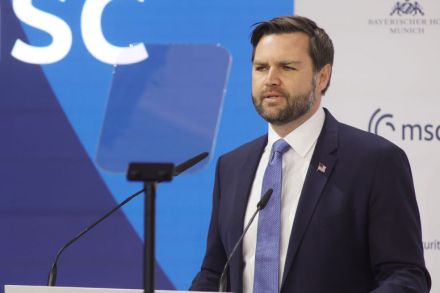
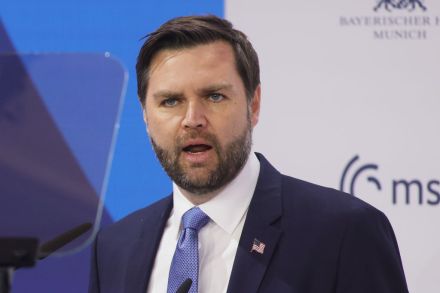
The response in Europe to J.D Vance’s speech at the Munich Security Conference last Friday was one of predictable outrage. Media outlets described it as a ‘rant’ or a ‘sermon’, and politicians and diplomats queued up to criticise the vice-president of America. Kaja Kallas, the EU’s High Representative for Foreign Affairs and Security Policy, accused the Trump administration of ‘try[ing] to pick a fight with us, and we don’t want to a pick a fight with our friends’. Apparently, there were ‘dry laughs’ from some of the audience when Vance talked about ‘shared’ values. European diplomats have laughed at Trump before, notably in 2018 at the UN General Assembly, when

What Putin wants and what America will do

If I had a penny for every time I have been told that Russian President Vladimir Putin only wants respect. Or that he is only interested in eastern Ukraine. Or that if Kyiv is only denied NATO membership then he will call off the tanks. Well, in the last seven days US President Donald Trump has given Putin all this and more. And, though it is still early days, so far the war is showing no sign of slowing. And what has the man who wrote The Art of the Deal asked for in exchange for all this diplomatic largesse? Absolutely nothing. In fact, the only substantive demand Trump has

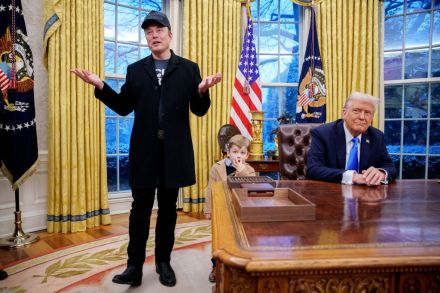
Elon Musk is America’s Trotsky

I never imagined that I would see a real revolution, at least not in the West. Sure, when I was a student, I fantasised, along with a number of my Edinburgh University lecturers, about a socialist revolution in the UK. Expropriate the expropriators! Ban the bosses! Nationalise everything and abolish money. But, of course, nothing so dramatic ever happens in mature liberal democracies. Except that it just has. Okay, the Trump takeover of the US government is hardly a communist revolution, and Elon Musk is not immediately obvious as a reincarnation of Leon Trotsky, but what is happening right now is revolutionary – just not quite in the way my

James Heale

The UK’s balancing act over Trump’s ‘Ukraine peace plan’

13 min listen

Leaders from around the world are gathering at the Munich Security Conference, with the UK represented by Foreign Secretary David Lammy. All attention has turned to Ukraine, given statements this week by President Trump that he had spoken to Putin (and later Zelensky) about ending the Russia-Ukraine war. Trump’s statements, for example that NATO membership should be off the table, put him at odds with European allies. The UK signed a joint statement with leaders from France, Germany and others, that Ukraine’s independence and territorial integrity are unconditional. Is the UK walking a tight-rope between the US and Europe? Where does this leave the NATO alliance? And, with a strategic

Lara Prendergast

Britain’s bureaucratic bloat, debating surrogacy & is smoking ‘sexy’?

40 min listen

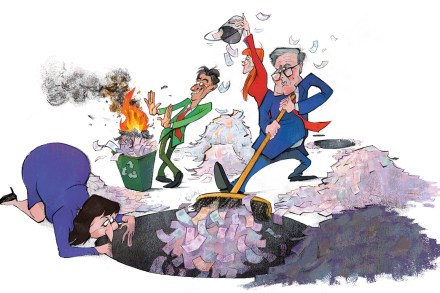
This week: The Spectator launches SPAFF The civil service does one thing right, writes The Spectator’s data editor Michael Simmons: spaffing money away. The advent of Elon Musk’s DOGE in the US has inspired The Spectator to launch our own war on wasteful spending – the Spectator Project Against Frivolous Funding, or SPAFF. Examples of waste range from the comic to the tragic. The Department for Work and Pensions, Michael writes, ‘bought one Universal Credit claimant a £1,500 e-bike after he persuaded his MP it would help him find self-employment’. There’s money for a group trying to ‘decolonise’ pole dancing; for a ‘socially engaged’ practitioner to make a film about someone else getting

Trump risks playing into Putin’s hands on a Ukraine peace deal

With the phone call between Donald Trump and Vladimir Putin, the quest for a peace deal for Ukraine is off to a troubling start. The conversation hinted at an eventual normalisation of United States-Russia relations and signalled that negotiations are likely to be led over the heads of Europeans – and Ukrainians – and possibly without input from Trump’s own Ukraine envoy, Keith Kellogg.  ‘As we both agreed, we want to stop the millions of deaths taking place in the War with Russia/Ukraine’, Donald Trump wrote after his conversation with the Russian leader. ‘President Putin even used my very strong Campaign motto of, ‘COMMON SENSE.’ We both believe very strongly

Does Trump deserve the Nobel Peace Prize?

Donald Trump told reporters this week that he deserved the Nobel Peace Prize for helping to free some of the Israeli hostages in Gaza. But, he went on, ‘they’ll never give it to me’. Trump’s chances of putting on white tie and tails in Oslo have receded to a distant speck with his plan to Make Gaza Great Again – by removing the Palestinians.  This proposal may have doomed the brittle ceasefire and jeopardised further hostage releases. It has made the prospect of a deal between Saudi Arabia and Israel vanishingly small. It might also end up destabilising Jordan and Egypt. But the agent of chaos in the Oval Office

Mark Galeotti

Will flattery buy Zelensky help from Trump?

For all the efforts on every side to manage expectations, there is a sense that some kind of Ukraine deal – even if more likely a ceasefire rather than some comprehensive settlement – is coming. With the risk that this is, as Vladimir Putin would prefer, a decision made between Moscow and Washington, over Kyiv’s head, the Ukrainians are scrambling to gain traction on the process. We have already had Volodymyr Zelensky’s suggestion that the United States could get priority investment access to Ukraine’s mineral wealth. Now in a set-piece interview with the Guardian, he has offered a finely-balanced mix of flattery and entreaty in the hope that even a

Why whisky may be worse for you than cocaine

Colombian President Gustavo Petro has hit out at the longstanding US ban on cocaine, in response to Donald Trump’s crackdown on the drugs trade. ‘Cocaine is illegal because it is made in Latin America, not because it is worse than whisky’, Petro argued last week, adding that ‘scientists have analysed this’. He also suggested that the global cocaine industry could be ‘easily dismantled’ if the drug was legalised worldwide. Although I was not consulted directly by Petro, I am one of the scientists he was referring to who have analysed the harms of various drugs. In 2010, I was the lead author of a Lancet paper which argued for the first

Trump has backed Hamas into a corner

Donald Trump’s second meeting with a Middle Eastern leader in the Oval Office – this time with King Abdullah of Jordan – was even more striking than his first with Israeli Prime Minister Benjamin Netanyahu. If last week’s encounter signalled a seismic shift in US Middle East policy, yesterday’s developments confirmed it: the balance of power has decisively tilted in Israel’s favour. The image of King Abdullah, visibly uneasy, twitching as he unexpectedly declared that Jordan would accept 2,000 sick Gazan children, was a moment of profound significance. It suggested that Trump’s relentless pressure – both public and private – was beginning to bear fruit. The message from Trump and

Freddy Gray

Could Trump target Britain with tariffs?

25 min listen

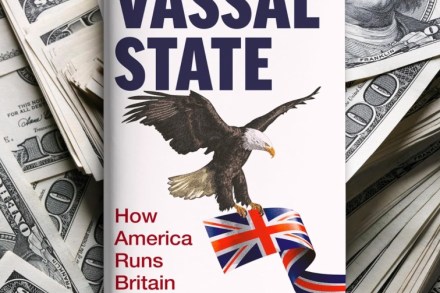
Angus Hanton, author of Vassal State: How America Runs Britain, joins Freddy Gray to talk about the economic relationship between Britain and America. As the world adjusts to the new US administration, every day seems to bring news of new potential tariffs. Is the UK a prime target for Trump? What could the impact of tariffs be? And what are the long-term questions facing British politicians about both the economic and political relationship with the US? Produced by Megan McElroy and Patrick Gibbons.

Mark Galeotti

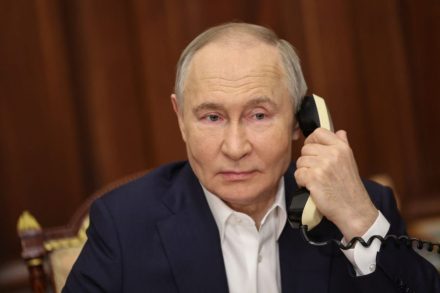
Has Putin picked up the phone to Donald Trump?

So, did they speak? How often? What about? The very coyness around the question of whether Donald Trump and Vladimir Putin spoke on the phone – Trump says so, maybe more than once, while the Kremlin is neither confirming nor denying – suggests that pre-discussion discussions on the war in Ukraine are indeed already taking place. General Keith Kellogg, Trump’s special envoy for the war, has stated that no peace plan will be unveiled at next weekend’s Munich Security Conference (the Davos of the security set). But in some ways that is disingenuous. As one Foreign Office staffer suggested, ‘It’s not necessarily the time and place for a public reveal,