Politics

Read about the latest UK political news, views and analysis.

Michael Simmons

Mahmood's right turn, as migration figures revised – again

19 min listen

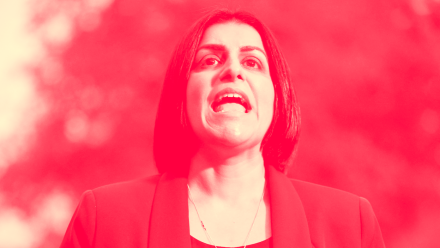
Economics editor Michael Simmons and Yvette Cooper’s former adviser Danny Shaw join Patrick Gibbons to react to the Home Secretary’s plans for asylum reform. Shabana Mahmood’s direct communication style in the Commons yesterday has been praised by government loyalists and right-wingers alike, but her plans have been criticised by figures on the left as apeing Reform. Will her calculated risk pay off and how will success be judged? Plus, as ONS migration figures are revised – again – Michael restates his appeal for more reliable data. And how could migration data affect the budget next week? Produced by Patrick Gibbons.

James Heale

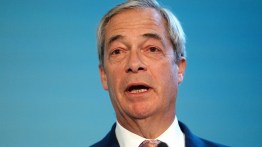
How Nigel Farage would cut spending

At 94 per cent of GDP, UK government debt is the fourth highest among advanced European economies. With the tax burden at a record postwar high, there is increasing evidence to suggest that voters’ attitudes on public spending are hardening. Yet any political party proposing retrenchment faces the same problem: what cuts are they prepared to make that will not harm their electoral coalition? Nigel Farage offered his party’s answer to that question at a press conference this morning.  Reform’s ideology is perhaps best characterised by its in-house philosopher James Orr, who champions ‘the politics of national preference.’ The party’s diagnosis of Britain’s ails is that the balance of power between this

Kemi: Labour will punish voters for its own mistakes

The Budget countdown is on, and with just over a week to go until Chancellor Rachel Reeves’s big fiscal statement her political opponents are keen to offer up their (unsolicited) advice. The media had to choose their fighter this morning as Reform’s Nigel Farage was speaking at exactly the same time that Conservative leader Kemi Badenoch took to the podium. The Tories set out their stall on the economy at their party conference in October – and today provided an opportunity for Badenoch and her shadow chancellor Mel Stride to reiterate their message: Labour is hiking taxes to protect benefits. ‘Everything else is a smokescreen,’ Badenoch advised her crowd. The

Are AI stocks about to crash?

Bitcoin has lost almost a quarter of its value. The tech-heavy Nasdaq index on Wall Street has started to fall. And even leaders of the industry, such as the Google CEO Sundar Pichai, have started to warn about valuations getting out of control. We already knew that AI was driving a boom in investment. But this week there are worrying signs the market is about to crack. The only real question is whether that turns into a full scale crash. Bitcoin, as so often, is leading the market rout. More than $1 trillion has been wiped off the value of the crypto market over the last six weeks, with Bitcoin

In defence of ticket touts

Ticket touts have never been popular. Yet this unpopularity is no warrant for Labour to deprive ticket holders of their right to resell them at a higher price, with the dire consequences for economic efficiency which will result. The exploitation ticket touts are alleged to put consumers through is predicated on the entirely false notion that everyone should have a fair chance to get tickets to concerts. No. Theatres, musicians and performers have a right to charge whatever they like for their tickets, and that includes granting said right to third parties, i.e. the ticket touts, via their tickets’ terms and conditions. Fairness be damned.  The government plans to ban the

The film Nuremberg is almost unforgivable

It is said there is only one rule when it comes to dramatising the Holocaust: don’t. The argument is essentially this: the unique horror of the event is beyond the scope of conventional artistic representation. Illuminate what happened with a documentary, sure, but apply a glossy Hollywood sheen to those monstrous events and you risk artistic catastrophe. I’ve seen many productions which fall into that category but here’s two recent ones: Hunters, an Al Pacino series for Amazon which portrays a gang of 1970s New York Nazi hunters as superhero vigilantes, and Sky Atlantic’s tastefully shot The Tattooist of Auschwitz, a sentimental, semi-fictionalised (why? Is the truth not enough?) account

Steerpike

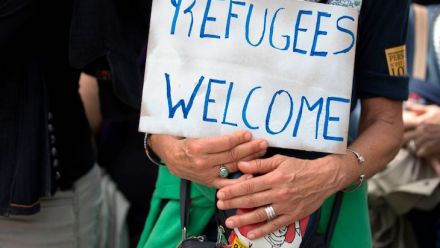
Full list: Labour politicians attacking asylum plans

Home Secretary Shabana Mahmood will this afternoon announce big reforms to the UK’s asylum policy – including fast-tracking illegal migrant deportations, changes to human rights law and plans to stop granting visas from certain African countries if their governments don’t co-operate on immigration. While Mahmoud’s tough talk will go down well with voters concerned about Britain’s borders, there are concerns that her proposals may be torpedoed by some of her own rather sceptical colleagues. Mr S has the full list of Labour MPs attacking the Home Secretary’s migration plans below… Tony Vaughan, MP for Folkestone and Hythe: ‘These asylum proposals suggest we have taken the wrong turning… The rhetoric around

Britain needs a Stolen Valour Act

Next month Jonathan Carley will appear in court in Carmarthen, charged with wearing military uniform without permission. This charge comes after a man purporting to be a Rear Admiral was pictured at a Remembrance Sunday service in Llandudno while wearing an impressive row of medals. One was Britain’s highest awards for gallantry – a Distinguished Service Order. This case of alleged ‘stolen valour’ highlights an odd loophole in the law. While it is illegal to wear military uniform if not serving in the armed forces, there is no current criminal sanction for wearing unearned medals. A previous legislative attempt to deal with this issue failed. Parliament should act again. Stolen

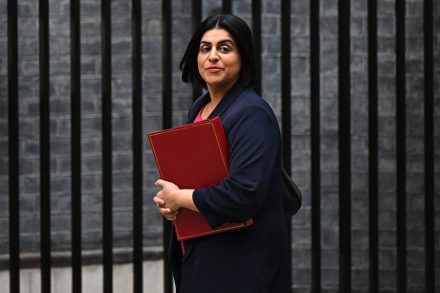
Shabana Mahmood speaks like a leader

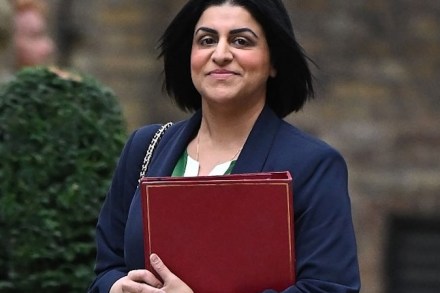
The most apposite comment on Shabana Mahmood’s proposed reforms to the asylum system came from Kemi Badenoch during yesterday’s Commons statement on the plans: ‘The Home Secretary has done more in 70 days than her predecessor managed in a year.’ On one level that was damning with faint praise, given that Yvette Cooper’s tenure in the Home Office produced nothing of any consequence. But the Conservative leader clearly – and correctly – did not mean it as an insult to Mahmood. Whatever one’s view of the reforms themselves, one thing has been obvious since the day Mahmood became home secretary: she is a serious politician with her own ideas and

Britain must quit the ECHR

Shabana Mahmood is a bright minister among a cabinet of duds, dealt a difficult hand and playing it rather well. There was a good deal to like about her speech this afternoon, launching the document describing the government’s plans to deal with refugees and deportation. The idea of reviewing refugee status every 30 months, with a view to ending it if the country of origin is no longer dangerous, is overdue. That temporary unrest in a particular state should entitle those at the sharp end automatically to claim permanent rights to remain here is wrong, however much they may prefer their settled life in Britain, when this negatively impacts native Britons.

Stephen Daisley

The return of migration centrism

None of Shabana Mahmood’s asylum reforms is as radical as the terms in which she is talking about this issue. In an op-ed teeing up Monday’s announcement, she writes: ‘Unless we act, we risk losing popular consent for having an asylum system at all.’ I cannot remember the last time a Home Secretary made such a clear-headed statement of the facts: asylum policies, like everything else government does, is contingent on the consent of the governed. Mahmood’s plans might sit firmly to the right of the parliamentary Labour party but they represent the leftmost asylum policy the British public would be willing to tolerate When it comes to border security,

The less cosy side of Danish hygge

Judging by how well it fares in the annual UN World Happiness Report, there’s not much rotten in the state of Denmark. It regularly tops the UN chart and while it might feel slightly glib to compare wealthy nations with warzones – why can’t those gloomy Afghans, languishing at 147th, cheer up? – the wider world can’t get enough of those Danish feelgood vibes. This, after all, is the land that gave us hygge, a hard-to-define word translating roughly as ‘cosiness’ – wellness candles, fresh pastries and nights in by the fire. Many Danes have clearly decided that hygge is not quite compatible with open borders and multi-culturalism Recently, however, the Danish

Steerpike

Poll: Scots are fed up with both governments

Another day, another bad poll for Labour. YouGov research has revealed that a whopping 75 per cent of Scots disapprove of the UK government, with just half of those who backed Labour in 2024 saying they would consider voting for the reds again. But this doesn’t necessarily spell good news for the nationalists: while 37 per cent of Scots would consider backing the SNP in a future election, more than half of the country is fed up with John Swinney’s government. Oh dear… Polling carried out between 31 October and 5 November shows that, with just six months to go until the 2026 Holyrood election, the SNP is in the

How to make universities appeal to the working class

‘Long Eaton is dying a death. I was born and bred here, so I’ve seen it go downhill quite quickly. There’s not a lot here. We’ve got two supermarkets, bad road infrastructure, it’s dying.’ Listening to a mum from the outskirts of Nottingham describe her frustrations with her community in a recent focus group, the other participants, all local to the area, nodded along in agreement. The mood was one of resignation. All the members of this group had cast their vote for Labour in 2024 hoping to arrest the pervasive feeling of decline and decay this woman described. But barely a year into Labour’s term, and with things seeming

Ross Clark

The fatal flaw in Shabana Mahmood’s migration plan

Today we will learn exactly what Home Secretary Shabana Mahmood meant when she hinted last week that the government would adopt a Danish-style migration policy to deter new arrivals. One thing she will announce is a ban on visas for nationals of three countries which she says are not taking back enough failed asylum seekers: Angola, Namibia and the Democratic Republic of the Congo. The ban may be extended to other countries later. How about withdrawing aid from any country which refuses to take back every single one of its failed asylum-seekers? It is a pretty token gesture. None of these three were in the top 20 countries for illegal

James Heale

Shabana Mahmood’s asylum reforms are a calculated risk

This afternoon, the Home Secretary will set out in the House of Commons her proposed reforms to the asylum system. The headline changes proposed by Shabana Mahmood have been well briefed in the weekend press. Refugees will have temporary status and be required to reapply to remain in Britain every two and a half years. Those arriving would have to wait 20 years before they can apply for permanent settlement. Countries that refuse to take back migrants will be threatened with visa bans: Angola, Namibia and the Democratic Republic of Congo are among those likely to be initially punished. The Home Secretary told broadcasters on Sunday that she will also

Shabana Mahmood has gone further than expected

‘This is a moral mission for me, because I can see illegal migration is tearing our country apart, it is dividing communities. People can see huge pressure in their communities and they can also see a system that is broken, and where people are able to flout the rules, abuse the system and get away with it.’ These are not my words, the words of a Tory or Reform MP, or of Rupert Lowe. They are the words of Home Secretary Shabana Mahmood, who is to announce a number of new asylum policies today. The Home Secretary’s goal is to ‘make it less attractive’ for illegal migrants to come to

Steerpike

Siddiq's aunt handed death sentence

To Bangladesh, where the country’s ousted former prime minister – and aunt of Labour MP Tulip Siddiq – has been found guilty of crimes against humanity and sentenced to death. A special tribunal judged Sheikh Hasina responsible for ordering a violent crackdown on student-led protests in 2023 – during which up to 1,400 people died, according to UN estimates. Good heavens… Protests arose over Bangladesh’s policy of reserving almost a third of civil servant jobs for veterans of its war of independence from Pakistan in 1971 – and their descendants – which tended to go to supporters of Hasina and her Awami League party. Concerns about cronyism on a backdrop