
Society

James Forsyth

Your election night viewing guide

Here’s Americano’s guide what to watch for hour by hour on Tuesday night  / Wednesday morning: 7 pm (Midnight UK Time) Polls close in six states. The battleground states of Virginia and Indiana won’t be called instantly but watch to see if Georgia and South Carolina are. If they’re not, that suggests that black turnout has soared. If Virginia is called within the hour for Obama, that means that he is almost certainly on course for victory and quite comfortably.  7.30 pm Ohio’s polls close. This state is an absolute must win for McCain but they don’t count their votes quickly here. 8 pm 15 states and the District of


The Old Crowd

After the headline-grabbing returns of Peter Mandelson and Alistair Campbell, it’s looking increasingly likely that David Blunkett will be the next New Labour veteran to be welcomed back into the governmental fold.  According to today’s Mail on Sunday, he’s already discussed taking on a “party troubleshooter” role, although he’s said to be holding out for a Cabinet position.  Word is: he just might get one, too. You can see the thinking behind this redraft for The Old Crowd – experienced hands in a time of trouble; dogged war-horses who can take the fight to the Tories, and all that.  But it’s a risky approach.  The fact remains that Mandelson, Campbell,

Lewis Hamilton, World Champion

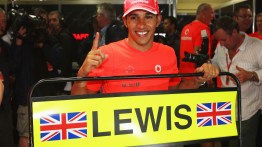
Lewis Hamilton, 23, becomes the youngest-ever winner of the Formula One drivers’ world championship.  And in dramatic style.  He achieved the fifth place he needed in today’s Brazilian Grand Prix only on the very last corner of the race.  Great stuff.

James Forsyth

What 9/11 effect?

Four years ago, Bush v. Kerry was essentially a foreign policy choice. If you knew someone’s view on the war, you probably knew which way they were going to vote. The final days of the campaign were dominated by arguments about who could best keep America safe. But now foreign policy has largely been bumped from the closing conversation. Both McCain and Obama talk about it far less than they did during the primaries. One of the many ironies in all this is that if the primary electorates had know how little role foreign policy would play in the general election, they probably wouldn’t have nominated McCain or Obama. Instead,

Licence fee under fire

The BPIX poll in today’s Mail on Sunday gives the following headline voting-intention figures: Tories on 45 percent (down 1); Labour on 31 percent (up one); and the Lib Dems on 13 percent (no change).  Political Betting’s Mike Smithson  outlines the reasons to be wary of those numbers – but some of the poll’s below-headline findings on the BBC remain striking.  They suggest that around 73 percent of 18 to 29-year-olds – the so-called ‘yoof’ audience that the BBC targets with hosts like Jonathan Ross and Russell Brand – think that the current licence fee is unjustified.  Across all age ranges, that figure rises to 74 percent. Now, this –

Heaven & Hell

The term “video installation” normally sets my cultural alarm bells off.  But, on my Sunday stroll around the internet, I’ve come across one such video installation that’s actually quite effective – so effective, in fact, that I thought I’d share it with CoffeeHousers.  Entitled Civilisation – and put together by Marco Brambilla – it’s a three-minute long depiction of Hell, Earth and Heaven, which meshes together hundreds of pre-existing video clips to form a busy and intricate collage.  In other words: Hieronymus Bosch for the 21st Century.  It’s currently being screened at the Christopher Grimes gallery in Los Angeles – where its 26-foot dimensions must make playing the ‘What Film

Fraser Nelson

Barclays took the right path

The angry reaction to Barclays’ decision to recapitalise using Middle Eastern money rather than a taxpayer bailout mystifies me. In my News of the World column today, I argue that Barclays may well become 30% Arab but its 100% correct. It has no duty to accept a UK taxpayer bailout over more expensive Arab money, as is widely suggested. Its duty, in fact, lies is in the reverse. A taxpayer bailout is supposed to be the last resort, preventing the banking system from collapse. I’m glad that John Varley, Barclays’ chief executive, realises that even if some politicians do not. As Guido notes, Vince Cable has disgraced himself in claiming

Fraser Nelson

Losing the war on drugs

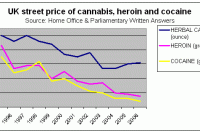
Are UK drugs seizures really going up? The Home Office said exactly this in a press release last week but closer inspection reveals the most extraordinary statistical manipulation, rumbled by my colleague at the Centre for Policy Studies, Kathy Gyngell, who blogs on it here. Here’s the scam. The Home Office boasts about “a record 186,028 drug seizures by police and HMRC… an increase of 15 per cent’”. Clear enough. What purports to be a statistical bulletin makes the case further, showing the steady rise of seizures going back years plus a handy graph showing this triumphant, latent surge. But what about the amounts seized? Here is where one smells

Wall Street Journal – correction

The Spectator corrects a recent article Correction: In the version of Victoria Floethe’s story that appeared in this week’s magazine, we inadvertently referred at one point to the Wall Street Journal instead of the New York Post.  We accept that there is no basis for suggesting that the WSJ might have indulged in an act of gleeful revenge towards Michael Wolff.  We apologise for our mistake.

Letters | 1 November 2008

Poorer each day Sir: Patrick Macaskie (‘The market needs short-sellers’, 25 October) is indeed correct in suggesting that the problems caused by excessive borrowing could be solved by a round of inflation; in the same way the problem of a building having caught fire can be solved by allowing it to burn down. As Macaskie points out inflation transfers value from saver to borrower. In the aggressive inflation of the Seventies people who had borrowed money and had employers who were able to provide inflation-linked pay rises did very well as they were able to pay off their liabilities quickly with devalued money. This course may appeal to government, since

Low life | 1 November 2008

The help-yourself breakfast buffet was a single, waxed carton of orange juice (made from concentrate), and a stack of small upturned glasses. I filled one of these, tipped it down my throat, poured another and bore it to a table set for one beside the swing service door leading to the kitchen. A grubby laminated menu on the tea-stained tablecloth said that the Continental breakfast was tea or coffee with brown or white toast. Dotted about at the other tables were what appeared to be foreign tourists: a solitary meditative backpacker, two not quite awake couples, a fitfully vivacious table of four Spaniards. The unspoken shame of having to start

High life | 1 November 2008

New York America’s diminished intellectualism has made this interminable election period as boring as a Nat Rothschild Corfu party for respectable folk. Part of the problem is that presidential candidates try ‘to reach out to younger voters’, hardly an admirable goal as demographic researchers have gone the way of TV programmers, targeting young morons whose Facebooks comprise 90 per cent of their education. Hillary Clinton, Barack Obama and John McCain have all been forced to make appearances on vile and vulgar TV shows — proof that taking the high ground is as much of a vote-getter as George Osborne’s chances of being invited back to Nat’s Corfu lair. It all

Charles Moore

The Spectator’s Notes | 1 November 2008

What would happen if you or I or telephoned an old man we did not know and left a message on his answering machine saying that one of us had ‘f—–ed’ his grand-daughter? What would happen if we then left three more messages, joking about her menstruation and imitating his voice as, in our imagination, he said he would kill himself because of the shame? What if our messages pointed out that most grandparents have pictures of their nine-year-old grandchildren by the telephone on a swing and then went on to say that one of us had ‘enjoyed’ his grand-daughter in that position? What would happen if we also shouted

Diary of a Notting Hill nobody | 1 November 2008

Monday Yikes! Memo from Jed in California marked ‘Urgent and F***ing Desperate’. It’s v. bad news. It seems the brand is recontaminated. Lord A’s latest focus group asked people to name the first four words that came into their heads when shown a picture of Dave and Gids: yachts; hookers; Coke; and moussaka were the top-scoring words. As Jed explained, while we do not resile from being associated with Greece’s best-loved dish, or indeed America’s best-loved drink, or indeed the world’s oldest profession, we must take as a v. serious warning the fact that we are now associated with large boats. We are therefore beginning Operation Humble Pie, to de-yachtify

Wicker’s world

If you have ever received a hamper, you will be familiar with that delicious quiver of anticipation as you unbuckle the creaking wicker lid to see what lies within. How often have you then suppressed a twinge of disappointment to find that, apart from a pretty tin of lapsang souchong and a bottle of decent Sancerre, there is nothing you really want? More than likely those jars of stilton, piccalilli and mincemeat no one knows how to cook with any more are still languishing at the back of your kitchen cupboard. It might seem obvious to fill a hamper with things we really, really want but, like all great, simple

Toby Young

Status Anxiety | 1 November 2008

I am surprised by how ready my journalistic colleagues have been to accept Nat Rothschild’s public explanation of why he behaved as he did. According to him — and his anonymous ‘friends’ quoted in the press — he was furious that George Osborne broke the time-honoured rule whereby guests at upper-class house parties are obliged to respect the privacy of their fellow guests and not talk about anything that was said or done in the press. What happens in Corfu stays in Corfu. While such a rule undoubtedly exists, the usual punishment is simply to cross the offender off your Christmas card list, not to write a letter to the

Mind your language | 1 November 2008

‘I hate jokes,’ said my husband affably, and added: ‘Hwumph!’ The latter was an oral marker as he heaved his body from his armchair to the sideboard where the contents of the whisky bottle needed adjusting. With the former remark, I concurred, for he meant formalised jokes (‘Have you heard the one…?) that emerge from the ether like a flu virus. The internet has changed the dissemination of these, as it has changed the way quotations arrive in waves. A quotation from Cicero has been applied to our economic crisis: ‘The budget should be balanced, the Treasury should be refilled, public debt should be reduced, the arrogance of officialdom should

Ancient & modern | 01 November 2008

Last time we saw that the Romans did not have anything like a banking system i.e. a machinery for creating credit through various negotiable instruments. What they did have was minted coin — and that was the sole monetary instrument. So at a personal level, if you wanted money, you went to a rich friend and hoped he would help you out with a loan. But if there were no bankers in our sense, there were small-scale businessmen such as money-changers, charging up to 5 per cent to change high-value into low-value coins, who also received deposits and advanced credit. We hear of one Novius receiving a short-term loan of 10,000