
Society

Rory Sutherland

The case against koalas

There was a reason 18th-century rulers were eager for their subjects to grow and eat potatoes: the miraculous tuber offered an alternative source of nutrition to grain, hence reducing bread prices. In the event of a catastrophic harvest, people could survive. To the rulers themselves, however, the biggest benefit was probably what happened when the grain harvest was merely disappointing. With grain no longer critical to survival, the price of bread would be far less volatile. And high bread prices might be more likely to lead to civil unrest than no bread at all. Humans evolved to be foraging omnivores, but agriculture made us over-reliant on whatever crop could best


The mystical power of the coronation spoon

A spoon may seem too homely for grand ceremony. It might even, in this sceptical and utilitarian age, seem slightly ridiculous. This prompts the question of how, or whether, we value ancient traditions and ceremonies whose original meanings and power are largely lost to us. And if we do value them, why? This particular spoon, undeniably, is a very special one: doubtless the world’s most important spoon, and certainly one of the most beautiful examples of that humble genus: silver-gilt, finely engraved with acanthus scrolls, decorated with pearls, and with its bowl strangely divided into two. It dates from the 12th century, and may have been used ever since Richard

Jonathan Ray

Wine Club: six beauties from Yapp Brothers

I’m seeing Jason Yapp next week and am deeply nervous. It’s been a while since we caught up and as followers of this column might recall, he and wicked step-brother Tom Ashworth have form in leading me astray. I think I told you about our little adventure in that backstreet bar in Biarritz. It was years ago and I’m still in shock. And still paying off the credit card. And still apologising to Mrs Ray, although she really should have moved on by now. The fact that mighty Gavin Rankin, le patron of London’s finest eatery, Bellamy’s – that fabled ‘club without a sub’ – is going to be joining

I demand reparations for my ancestors’ fall from grace

Recent births and deaths in my family have got me thinking about the family tree. A few years ago, we pieced together a remarkably discernible lineage that goes right back to William the Conqueror, or at least his alleged Anglo-Saxon concubine, and various Norman knights who used to own much of England. And it is this lineage that has made me realise: the hideous underprivilege and mistreatment of my ancestors entitles me to reparations. For centuries the Peverels taxed and brutalised their serfs, but then chose the wrong side in the odd war The story begins with that Anglo-Saxon woman Maud Ingelric. Many historians believe she was the mistress of

The comedy of the Queen’s coronation

Once, years ago, making small talk with Elizabeth II, I asked her if it was true that many peers attending her coronation in 1953 had taken sandwiches into Westminster Abbey hidden inside their coronets. ‘Oh, yes,’ she said. ‘They were in the abbey for something like six hours, you know. The Archbishop of Canterbury even had a flask of brandy tucked inside his cassock.’ Apparently, His Grace offered Her Majesty a discreet nip, but she declined. When I pressed the Queen for any amusing recollections of the great day, she did recall the moment, after the crowning, when England’s premier baron, William Stourton (22nd Baron Stourton, 26th Baron Segrave and

The cost of mass migration

Way back in the long distant 1990s, net migration into this country used to be in the tens of thousands each year. There was no lack of discussion about that, but we were not yet in the ‘dependency’ period of migration: that is, when people routinely said we had to have migration because otherwise who would do the menial jobs that we Brits didn’t want to do? You know, things like work in the NHS, work in restaurants, clean. That sort of thing. The small boats in the Channel are the most visible symbol of the system being broken Then the Blair government came in, sent annual immigration into the

Trans activists will regret picking on Joanna Cherry

Another feminist getting no-platformed in Scotland is hardly news. Poets, writers, students, academics, comedians and, of course, film-makers have become inured to being cancelled north of the border if they stray from the dogma that trans women are women. Normally this kind of thing happens in the shadows, without publicity. People just find, like the poet Jenny Lindsay, that their livelihood disappears. Cancellation is the standard operating procedure for the handful of trans activists who seem to have a stranglehold on Scottish cultural life and education institutions. But this time they took on someone willing to fight back.  The SNP MP for Edinburgh Central, Joanna Cherry, refused to go quietly when the Stand Comedy Club, which was

Ben Lazarus

The godfather of AI: why I left Google

Ten minutes before I meet Geoffrey Hinton, the ‘godfather of AI’, the New York Times announces he’s leaving Google. After decades working on artificial intelligence, Hinton now believes it could wipe out humanity. ‘It is like aliens have landed on our planet and we haven’t quite realised it yet because they speak very good English,’ he says. He also tells me that he has been unable to sleep for months. ‘It’s conceivable that the genie is already out of the bottle’ Hinton, 75, revolutionised AI not once but twice: first with his work on neural networks, computer architecture that closely resembles the brain’s structure, and then with so-called ‘deep learning’,

The religious roots of the coronation

It is many years since anyone seriously entertained the doctrine expounded by Shakespeare’s Richard II: ‘Not all the water in the rough rude sea can wash the balm off from an anointed king. The breath of worldly men cannot depose the deputy elected by the Lord.’ Nevertheless, on Saturday King Charles III will be solemnly anointed in Westminster Abbey in a ceremony whose roots are ancient but whose meaning is fresh. Behind the screen, in a very personal act of commitment, the King accepts his calling from God The Israelites asked for a king so that they could be ‘like all the nations’. Anointed monarchs have a long history but

How heavy is King Charles’s crown?

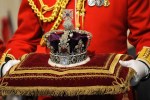
Uneasy lies the head In a 2018 BBC documentary Elizabeth II commented on the weight of the crown at her coronation, complaining that if you wore it for too long ‘your neck would break off’. What will be the burden on Charles III’s head? – At the moment of the coronation Charles will wear St Edward’s Crown, made for Charles II in 1661. That weighs 2.07kg. Prior to 1911 it weighed 2.6kg – although both Victoria and Edward VII were spared having to wear it. – However, for his departure from Westminster Abbey that crown will be removed and he will wear the Imperial State Crown instead, which weighs 1.06kg.  –

Matthew Parris

On looking without seeing

Guadix is a windy, dusty town on the slopes of the dry side of the massive ridge that is the Sierra Nevada in Andalusia, Spain. These slopes are the rain-shadow badlands of the province of Granada: a place few foreign tourists visit. The other side of the mountain, the Mediterranean side, is called the Alpujarra and seems a world away: verdant, flowery slopes with orchards, pastures and little whitewashed villages clinging to them: a landscape and people made famous by the English travel writer Gerald Brenan, who lived there. Our music was not saying anything to these birds, any more than their chirruping said anything to us But our side

William Moore

Vials of ammonia, shaky scaffolding and sword fights: memories of Elizabeth II’s coronation

Lady Rosemary Muir was 23 when she received a letter from the Duke of Norfolk, the Earl Marshal, informing her that she had been chosen as one of the six maids of honour to assist the Mistress of the Robes in the coronation of Elizabeth II. That was in January 1953. From then until the coronation day in June, the maids of honour were the subject of many excited articles. The press dubbed them ‘the Lucky Six… envied by every other woman in the land’.  Envied they certainly were, but luck had little to do with it. Lady Rosemary tells me it was no surprise to her that she was

The battle to restore Britain’s hedgerows

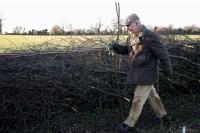
‘I don’t know if hedgelaying is a dying art. But there’s a lot of old hedgelayers that are dying,’ says David Whitaker to chuckles from some of his fellow craftsmen. The occasion is the annual hedgelaying championship, organised by the National Hedgelaying Society, of which Whitaker is secretary. In a good year, the event draws around 100 competitors and a few curious spectators to a marquee in a muddy field in Hampshire. Britain’s oldest hedge dates back to the Bronze Age. Thousands of miles of hedgerow were laid in the late 1700s after the Enclosures Act carved up the countryside. There’s a formula for working out how old a hedge

Martin Vander Weyer

Is Britain really ‘closed for business’?

Is Britain really ‘closed for business’? That, we’re told, is the view of US ‘Big Tech’ as expressed by Activision Blizzard – the company whose most famous product is the violent videogame Call of Duty – in response to the blocking by the UK Competition and Markets Authority (CMA) of Activision’s proposed $70 billion merger with Microsoft, which would have given the latter a dominant position in the emergent field of ‘cloud-based gaming’. You don’t need to know exactly what that means to be worried that the world’s digital giants take a dim view of the UK as a marketplace and investment destination. But are they right? Some pundits have

Letters: How to save red squirrels

Fire-fighting Sir: Your editorial raised the persistent problem of predicting major international disasters in a timely enough way to prepare (‘Eclipses and revolutions’, 29 April). The US academic Joseph Nye said that a good model for wars is to identify three types of cause: deep (the logs for a fire), intermediate (the kindling) and immediate (the sparks). The dilemma is that there are often so many crises on the brink of igniting that preparing early for dozens stretches many governments. Struan Macdonald Hayes, Kent Brain drain from Africa Sir: The majority of Sudanese doctors working in Britain will have been trained in Sudan at local government expense (Eclipses and revolutions’,

Lionel Shriver

I’m a sucker for Tucker Carlson

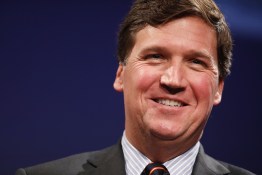
I was asked on Tucker Carlson Tonight only once, while in New York about two years ago, and I turned the invitation from America’s most popular cable news commentator down. Did I worry that while discussing my previous Spectator column, I might put my foot in it? The subject of immigration is always a minefield. No, I believed computer modelling of the astonishingly high number of illegal immigrants really living in the US had attracted far too little press, and a sympathetic host would have given these staggering figures a wider airing. Obviously, then, I was instead loath to appear alongside a notoriously racist, far-right, xeno-/Islamo-/homo-/trans-phobic purveyor of deceit and

King Charles must learn from Spain’s Juan Carlos’s mistakes

As he basks in the warm glow of respect, and even affection, surrounding his coronation this weekend, King Charles should recall the story of his distant cousin and near namesake ex-king Juan Carlos of Spain as a warning of how speedily a popular monarch can go from hero to zero. The ties between Spain’s Royal Family and our own are close in blood and warm mutual regard. Both families are direct descendants of Queen Victoria, with Spain’s current King Felipe calling our late Queen Elizabeth ‘Aunt Lilibet’; our new monarch reportedly had a private lunch with Felipe’s disgraced dad Juan Carlos only last month. The sad downfall of Juan Carlos