Society

Will Brexit save Corbynism?

In the immediate aftermath of an election, its meaning is established. Once this is fixed, it is almost impossible to shift. There are plenty of such mythical explanations for defeat. Most famously, in 1959 Hugh Gaitskell and his supporters claimed Labour had lost its third election in a row because of the party’s association with nationalisation. It soon became the conventional wisdom and, on that basis, Gaitskell tried to revise his party constitution’s Clause IV, which committed it in principle to the public ownership of industry. But it wasn’t necessarily true: Labour lost for many reasons, with Gaitskell in particular having made a terrible mistake over tax policy during the

This could be Boris’s ‘Nixon goes to China’ moment

This “Brexit election” was about a lot more than Britain and the European Union. It was about the future of globalisation. As Gordon Brown underlined after the referendum, voters who chose to leave the EU had suffered unrelenting indignities on the “wrong side of globalisation”. These voters rang the alarm bells again in the European parliamentary elections in May this year and once again at this general election. As prime minister, Boris Johnson’s test will not be whether he can deliver Brexit. Rather, history will judge him by his ability to counter his party’s conservative ideology and promote new opportunities for those who, with their children, are trapped in a

Isabel Hardman

What happens to ex-MPs?

Parliament returns tomorrow – without 47 of the people who were MPs just a few weeks ago. Some, like those standing as independents, had a pretty good hunch that they’d be booted out by the electorate on Thursday. Others had less notice, and realised only as the campaign wore on that their constituencies, many of which had been solidly Labour for decades, were turning away from them. Many of them will be in Westminster in the next few days to clear out their offices and make their staff redundant. You can usually tell the difference between a re-elected MP and one of their colleagues who lost as you watch them

Sunday shows round-up: McDonnell – ‘I am to blame for election disaster’

John McDonnell – I am responsible for Labour’s ‘catastrophic’ loss Thursday’s general election saw the Conservatives returned to office with a majority of 80, their best performance since Margaret Thatcher’s victory in 1987. Boris Johnson’s gain was almost exclusively Labour’s loss, with the party achieving its lowest total number of seats since 1935. Leader Jeremy Corbyn and Shadow Chancellor John McDonnell have since made clear that they will not try to fight another election as part of Labour’s top team. Andrew Marr asked McDonnell about who bore responsibility for Labour’s historic defeat: JM: It’s on me… I own this disaster. I apologise to all those wonderful Labour MPs who have

Never underestimate Boris Johnson

Much of the political class is still in a state of shock. Many are tempted to echo Lord Melbourne: ‘What all the wise men promised has not happened and what all the damned fools said would happen has come to pass.’ This was an extraordinary election because underneath all the stress it was a very boring affair. From the beginning, the polls predicted a sizeable outright Tory victory. But after 2017, no-one was ready to trust the polls. Among Tories, though well concealed, there was also a widespread fear that Boris would implode. That did not happen. Instead, everyone stuck to the script. To the very end, a number of

Cindy Yu

The Edition podcast: what to expect from a new Conservative era

This week, politics becomes a little less volatile as Boris Johnson achieves the biggest Tory majority since Margaret Thatcher. So what happened in this election, and what next (00:50)? Katy Balls talks to Fraser Nelson and writer and broadcaster Steve Richards. Plus, China has interned over a million Uyghur Muslims in so-called ‘re-education’ camps – what is going on in Xinjiang (17:55)? Last year, Harald Maass went undercover to the region, and writes about his findings in this week’s issue. He talks to me on the podcast, together with Professor Rachel Harris, an Uyghur expert at Soas. And last, what are the rewards of mudlarking (31:25)? Lara Maiklem has found

James Forsyth

The Tories know they must deliver for their new voters

‘If Darlington high street isn’t visibly better in four years’ time, we’ll be in trouble’, one of Boris Johnson’s confidants told me the other day. Boris Johnson and his team are, as I say in The Sun this morning, acutely away that if they are going to make Thursday night’s electoral shift permanent then they are going to have to deliver for those places that swung to the Tories in this election. Part of Boris Johnson’s answer will be improving the infrastructure serving these places. In his interview with The Spectator during the campaign, he indicated that he was going to rip up the Treasury’s rules on capital spending to

Boris Johnson couldn’t have done it without the Brexit party

Dear Boris Johnson, Friday felt like June 2016 all over again. The electorate voted Leave; in their droves. Remain reacted by lashing out at the voters (far too many examples but see this for starters:) This was no ordinary General Election: it had another purpose of wresting back control from a gridlocked parliament that had defied popular sovereignty. Although every vote didn’t count in the same way as a referendum (let’s get rid of FPTP), nonetheless millions of voters reminded us all just who owns democracy, by grabbing the levers of power to reaffirm that they had not changed their mind about leaving the EU. So congratulations on winning. As

What Donald Trump must learn from Boris Johnson’s triumph

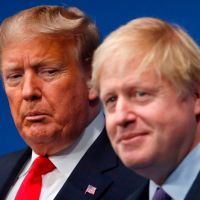
Donald Trump has reason to feel good about the British election. The success of the Brexit referendum in June 2016 was the harbinger of Trump’s own sensational victory against Hillary Clinton five months later. Will history now repeat itself, with Boris Johnson’s triumph heralding Trump’s re-election? What connected Brexit to the Trump-Clinton race was the stagnation of conventional left-right politics on both sides of the Atlantic. In each country, a critical mass of voters on the right were sick of leaders who embraced a neoliberal version of conservatism — soft on immigration, accommodating toward liberal cultural values, and more concerned with maximising returns to globalisation than with strengthening the bargaining power

Alex Massie

Boris’s big strength could soon become a Tory weakness

First, a clarification. I may previously have suggested that Boris Johnson is an unprincipled egomaniac wholly lacking in both moral character and political judgement. I may have intimated that he does not possess the empathy or imagination a prime minister requires and that he would neither lead his party to a crushing election victory nor deserve to. I now acknowledge that he is, in fact, one of the great political leaders of our lifetime, an English Charles de Gaulle arriving in the nick of time to rescue his country from its own folly. If that means rewriting the rules then let them be rewritten for we shall all be the

Spectator competition winners: Alan Bennett writes to Santa Claus

The first festively themed challenge of this year was to compose letters to Santa in the style of the author of your choice. I failed to track down examples of real letters from well-known writers to Old Nick (although both Mark Twain and Tolkien penned letters to their children from Father Christmas). But this was more than compensated for by the terrific standard of entries: step for-ward, David Silverman, channelling Dan Brown: ‘Dear Santa, I know who you are, buddy! And I can prove it! You’re an anagram of SATAN!…’; John Samson as Irvine Welsh: ‘Dear San’a, Gonny gi’e us back ma literary credentials…’; and Adrian Fry’s Harold Pinter: ‘I’ll

Gus Carter

Is Blyth Valley Boris’s Sunderland moment?

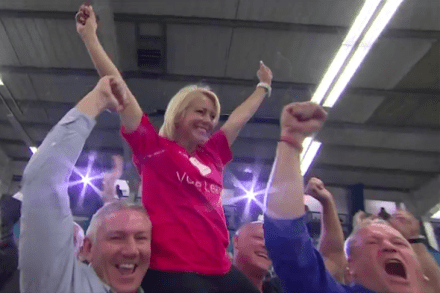
In 2016, it was Sunderland that signalled what was to come. The North-Eastern town voted for Brexit by a margin of 61 to 39 per cent. That announcement was seen as a turning point on the night of the EU referendum – if a town as reliant on foreign manufacturing (namely the Nissan plant) could vote so decisively for Brexit then surely the rest of the country could well follow suit. The pound duly dropped three per cent in the minutes after the result, those cheering Leave supporters seared into the memories of those who stayed up to watch the count. This time around, will Blyth Valley become that symbolic

The Lib Dems’s survival now rests with Labour

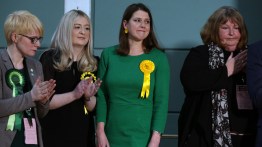
A truly dire night for the Lib Dems. A net loss of one seat and a net loss of one leader. That was not the hoped-for outcome when Jo Swinson took the gamble of agreeing to Boris Johnson’s pre-Christmas election. So what went wrong? First, this wasn’t so much the Brexit election as ‘The Brexit Deal election’. If Boris Johnson had gone for his Plan A – a snap election in September threatening no-deal – I think the result would have been very different. Plenty of suburban Remain-leaning Conservative seats would have seriously been in play for the Lib Dems. But the double act of Hilary Benn and Dominic Grieve

Wales has witnessed a Tory revolution

Never in modern political history has there been such a good general election for the Welsh Conservatives. The expectation before election night, shaped by the final pre-election polls, was that the Conservatives would be on the front foot. But Wales has had a very long history of Labour dominance and Welsh Labour had shown resilience in difficult circumstances before. Perhaps they would be able to do so once again? In the end, the result was better than nearly all Welsh Tories could reasonably have hoped for. The final figures saw the party gain six seats, jumping to 14 overall. All of those seats were won from Labour, who fell from

Take our Spectator Club survey to be in with a chance of winning a case of Pol Roger champagne

Click here to take part in our readers survey. Terms and Conditions The promoter is: Spectator Ltd (company no. 1232804) whose registered office is at 22 Old Queen Street. The competition is open to residents of the United Kingdom aged 18 years or over except employees of The Spectator and their close relatives and anyone otherwise connected with the organisation or judging of the competition. There is no entry fee and no purchase necessary to enter this competition. By entering this competition, an entrant is indicating his/her agreement to be bound by these terms and conditions. Only one entry will be accepted per person. Multiple entries from the same person will

Steerpike

It was Corbyn wot lost it

At 10:10pm last night, the shadow chancellor began the inevitable firefight against claims that it was Jeremy Corbyn and the Labour leadership itself that lost the party this election. John McDonnell told Andrew Neil: ‘We knew it would be tough because Brexit has dominated this election… As I say, I think this was a Brexit election… I hate to use this expression but I think [the voters] most probably did want to “get it done” and that will be it.’ This has set the tone for the fierce debate that has followed. While prominent pro-Corbyn figures have blamed the media, tactical voters and even global political forces, it is Brexit

Steerpike

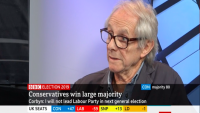
Ken Loach on anti-Semitism ‘campaign’ against Corbyn

Ken Loach is loyal to Jeremy Corbyn to the very end, even after the Labour leader led the party to its disastrous defeat overnight. The ‘Kes’ filmmaker said Corbyn has been the victim of a ‘torrent of abuse that has been off the scale’. Loach said Corbyn was: ‘A man of peace who has been called a terrorist. He’s been arrested against racism, and been called racist.’ Emily Maitlis then quizzed Loach on accusations of anti-Semitism within the Labour ranks. Loach responded by saying this was ‘a campaign that was going to run and run’. He then repeated claims that anti-Semitism was ‘weaponised to undermine the Corbyn Labour party’. Oh dear…

Isabel Hardman

Boris Johnson promises to ‘unite and level up’ the UK. Can he really achieve that?

Boris Johnson’s victory speech in Downing Street was aimed at the voters unsure about his government, whether they be the voters who backed his party for the first time, or Remainers who didn’t vote Tory. In an acknowledgement of how difficult it will have been for many traditionally Labour voters to turn away from their party, he said: ‘To all those who voted for us, for the first time, all those whose pencils may have wavered over the ballot and who heard the voices of their parents and grandparents whispering anxiously in their ears, I say thank you for the trust you have placed in us and in me and