Fiction

Cairo in crisis: The Republic of False Truths, by Alaa Al Aswany, reviewed

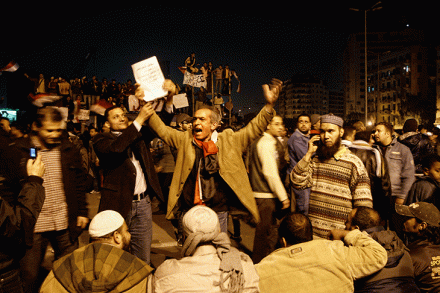
Certain novels complicate the very notion of literary enjoyment. This, by the author of the international bestseller The Yacoubian Building, is such a one. Despite its gripping narrative, compelling structure and vivid characters, every time I picked it up it was with a sinking heart. In telling the story of the Egyptian revolution of 2011 through the viewpoint of a variety of Cairenes both for and against, Alaa Al Aswany holds out the slender straw of hope against the slashing shears of repression. General Ahmad Alwany has just supervised the torture of a man and the abuse of his wife at his HQ. But it’s not as though he’s devoid
Hitting the buffers: The Passenger, by Ulrich Alexander Boschwitz, reviewed

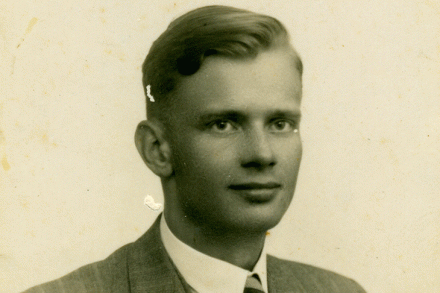
‘They’ll slowly undress us first and then kill us, so our clothes won’t get bloody and our banknotes won’t get damaged.’ These words, spoken by Otto Silbermann in Ulrich Alexander Boschwitz’s The Passenger, are startling. Not because they so perfectly articulate the obscene ethos of Auschwitz but because they were written several years before the fact. Composed in 1938, after its author had escaped the more murderous developments of Hitler’s regime, The Passenger is a tense, nightmarish account of one Jewish man’s attempt to survive in a country that is systematically stripping him of his right to exist. Initially blind to the dangers around him, Silbermann, a respectable businessman, suddenly

Stealing the story: A Lonely Man, by Chris Power, reviewed

Robert Prowe has writer’s block. An Englishman reaching middle age, he lives in Berlin with his Swedish wife and their two young daughters: two prams in the hall, two enemies of promise. Having enjoyed some success with a collection of short stories, Robert has been commissioned to write a novel; but the submission date was 18 months ago and he now spends his mornings deleting, letter by letter, the few words he produced the day before. His stories had once come easily: they grew out of his quotidian world in the form of anecdotes passed on to him by friends, family and strangers in bars. But nothing around him will

Water, water everywhere: Touring the Land of the Dead, by Maki Kashimada, reviewed

Maki Kashimada won the 2012 Akutagawa Prize for Touring the Land of the Dead, the strange, unsettling novella that makes up half of this volume. It is translated here for the first time from the Japanese into English by Haydn Trowell, alongside Kashimada’s ‘Ninety-nine Kisses’, a short story based on Jun’ichiro Tanizaki’s classic novel about four unmarried women, The Makioka Sisters. In Japan, Kashimada has become known for her avant-garde, nonconformist style. These two offerings are exemplary pieces. In Touring the Land of the Dead, a woman called Natsuko returns to a hotel she went to as a child with her mother and brother; now she is with her disabled

An independent observer: Whereabouts, by Jhumpa Lahiri, reviewed

After falling in love with Italy as a young woman, the Pulitzer Prize-winning author Jhumpa Lahiri broke with English and began writing in Italian. Her new novel — a slim and bewitching tale of a woman at her midpoint — she wrote first in Italian and has since translated. The story is told in a series of vignettes, the lengthiest six or so pages. Each is titled with the setting — in the office, at the register, on the street — and paints an exquisite picture of a single soul moving thoughtfully about her city. ‘I don’t share my life with anyone,’ says that soul early on. She lives alone

Eliminate the positive: Come Join Our Disease, by Sam Byers, reviewed

Sam Byers’s worryingly zeitgeisty second novel, Perfidious Albion, imagined a post-Brexit dystopia dominated by global tech companies, corrupt spin doctors, shady think tanks and the corporate manipulation of government. So far so true — were it not for the current pandemic, one might call him a soothsayer. His third, aptly titled novel, Come Join Our Disease, dispenses with the crystal ball and instead explores the fear that the internet, despite its boons, is making us all ill. The pestilence, in this instance, is virtual. Byers’s heroine is Maya, a homeless woman once ‘peripherally employed’ in the tech world, now staying in a geographically indeterminate encampment. When JCBs arrive to clear

Ice and snow and sea and sky: Lean Fall Stand, by Jon McGregor, reviewed

Jon McGregor has an extraordinary ability to articulate the unspoken through ethereal prose that observes ordinary lives from above without judging. While he is also skilful at depicting the particular, it is his overview of different lives running in parallel that is so bewitching, as if he is looking down on ants running around with their own urgent purposes, but each one minuscule in the scheme of the world. All his books have been treasures, capturing both the scramble of individual lives and the stillness of the universe and nature, impassive and immutable. His latest novel centres around an Antarctic expedition, where catastrophe seeps into the tranquillity like blood on

Puzzle Pieces: Cowboy Graves, by Roberto Bolaño, reviewed

This might seem an odd confession, but the work of Roberto Bolaño gives me very good bad dreams. When I first read his epic masterpiece 2666 I had three nights of fractured nightmares. This happened with every other book as well — usually dreams about reading a book by Roberto Bolaño, except the words melt and shift and are land mines or tripwires on the page. It happened again with Cowboy Graves: 3.08 a.m., and I’m re-reading the central piece, convinced there is a character and a scene in it that doesn’t exist. In an eloquent afterword, Juan Ródenas gives a plausible reason for Bolaño’s seeming capacity to hack the

A meditation on everyday life: Early Morning Riser, by Katherine Heiny, reviewed

There were many moments in Early Morning Riser that made me laugh out loud in recognition. An episode where the main character, Jane, coaxes a wailing child to the car with marshmallows and milk after ‘a temper tantrum so severe that it might have qualified as a psychotic break’ so precisely pinpoints the absurdity of life with small children that it is hard to know whether to laugh or wince. ‘Patrice took a sip and yelled, Kalt! Apparently she had returned from psychosis speaking German.’ Yet Katherine Heiny’s new novel isn’t so much about parenting or marriage (a common target of her merciless yet affectionate wit) as it is a

A study in vulnerability: The Coming Bad Days, by Sarah Bernstein, reviewed

When the unnamed narrator of Sarah Bernstein’s The Coming Bad Days leaves the man with whom she has been living because she can’t bear the sight of the tidy line of his shirt collars hanging in the wardrobe, she triggers an existential crisis that dominates this debut novel: ‘The notion that I was free in theory but also in practice to do whatever I liked with my life was terrifying: it was nothing short of a nightmare.’ She moves to a cottage, where she lives alone, worrying variously about the plight of women and the state of a world that is on fire or under water depending on the season.

Dark days for Britain: London, Burning, by Anthony Quinn, reviewed

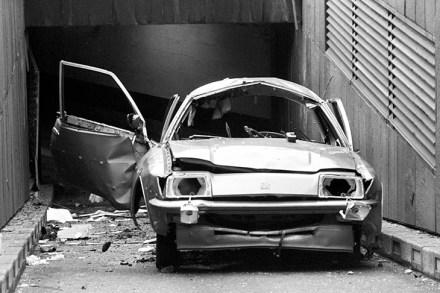
Not long ago, a group of psychologists analysing data about national happiness discovered that the British were at their unhappiest in 1978. Reading Anthony Quinn’s enjoyable novel set in that year and early 1979, it’s not difficult to see why. In case you’ve forgotten, strikes were spreading like wildfire. The National Front were reaching a peak of popularity. Most alarming of all, the Provisional IRA were expanding their bomb attacks on mainland Britain. There were compensations. Kate Bush’s whiny lament ‘Wuthering Heights’ was released in 1978, and there was a new Pinter at the National Theatre (Betrayal). Punk rock was going commercial. One of the characters in London, Burning turns

Ghosts of the past: The Field, by Robert Seethaler, reviewed

Give dead bones a voice and they speak volumes: George Saunders’s Lincoln in the Bardo was clamorous with the departed having their say. Edgar Lee Masters, 100 years earlier, startled the American literary world with Spoon River Anthology, poems that were miniature autobiographies of the occupants of a small Illinois graveyard. Now, The Field by the Austrian novelist Robert Seethaler has the post-lifers of a German town delivering their own epitaphs. In a neglected corner of an old cemetery a man sits on a bench, listening to the people whose resting place this is. Who they were. The lives they led. Not damned souls from Dante’s circles, or creatures in

The dictator of the dorm: Our Lady of the Nile, by Scholastique Mukasonga, reviewed

In the cloud-capped highlands of Rwanda, even the rain-makers sound like crashing snobs. When two teenage pupils from Our Lady of the Nile lycée slope off to consult the sorceress Nyamirongi about some boyfriend trouble, she sizes up their genealogies and comes over all Mitford duchess: ‘You’re not from very good families. But nowadays they say it no longer matters.’ Like so much in Scholastique Mukasonga’s novel, it’s a comic scene with a rumble of menace in the background — akin to the rainy season’s distant thunder in these lush, green hills. Where you belong — your people, your connections, your identity — has been a matter of life and

Problem parents: My Phantoms, by Gwendoline Riley, reviewed

Gwendoline Riley’s unsentimental fiction hovers on the edge of comedy and bleakness, and has drawn comparisons from Jean Rhys to Albert Camus. First Love, her fifth novel, put a toxic relationship under the microscope, winning the Geoffrey Faber Memorial Prize in 2017 and being shortlisted for five others, including the Women’s Prize for Fiction. Expanding on one of its strands, her sixth book zeroes in on child/parent dynamics. In My Phantoms, Bridget, an academic, reflects on her relationship with her late father and mother. Glimpses of her suburban upbringing reveal a mother miserably yet willingly shackled to convention. When Bridget asks Helen why she married the monstrous husband she left

A celebration of friendship: Common Ground, by Naomi Ishiguro, reviewed

Naomi Ishiguro began writing Common Ground in the aftermath of the Brexit referendum. The title refers to both Goshawk Common in Newford, Surrey, where 13-year-old Stanley Gower meets 16-year-old Charlie Wells, and the threads that bind the boys despite their differences. Stan isn’t a talker; he tends ‘to stay quiet and stare at people’, which, together with his second-hand clothes and his desire to learn, has made him a target at school. Charlie is the opposite, with ‘his cigarettes and talk of girls and his recklessness and messiness’. Yet a friendship blooms on this ‘scrubby grass and tumbling hillside in the south of England’ — on common ground. We soon

Man about the house: Kitchenly 434, by Alan Warner, reviewed

I have enjoyed many of Alan Warner’s previous novels, so it gives me no pleasure to report that his new book is so monumentally tedious that when two accountants turn up halfway through you think: great! Things might finally be getting interesting. Kitchenly 434, set in Thatcherite Britain, is narrated by Crofton Clark, an aging hippy who lives at Kitchenly Mill Race, a Tudorbethan pile belonging to the mainly absentee rock star Marko Morell. Crofton loves both Marko and the house with an obsessiveness signalled by his frequent mentions of the fact. ‘I’m your, eh, caretaker,’ he reminds the owner. ‘I’m the retainer. I’m a faithful retainer of this house

Mommy issues: Milk Fed, by Melissa Broder, reviewed

This is a novel about ‘mommy issues’. Rachel is a Reform Jew, ‘more Chanel bag Jew than Torah Jew’, and her mother has always been preoccupied by her daughter’s weight. ‘Anorexics are much skinnier than you’, she tells Rachel when she develops the condition as a teenager. ‘They look like concentration camp victims.’ Rachel’s therapist, Dr Mahjoub (who, we are told, fills her consultation room with elephants in trinket form) recommends a total break in contact between mother and daughter for 40 days. Before this begins, Mahjoub makes Rachel perform an art therapy exercise: to create a sculpture of how she sees herself out of modelling clay. ‘I made massive

Escape from reality: How to Survive Everything, by Ewan Morrison, reviewed

Ewan Morrison is an intellectually nimble writer with a penchant for provocation. His work has included the novels, Distance, Ménage and Swung, which looked at the conditions of desire, normality and love under capitalism, and a hybrid collection of essays, reportage and fiction, Tales From the Mall. This new novel forms the final part of a loose trilogy, which is concerned with various forms of eccentric utopias. Close Your Eyes involved a spiritual commune with strict rules; Nina X was an uplifting book about a young woman freed from a Maoist cult and bemused by modernity. How to Survive Everything is narrated by teenage Haley, who has been abducted, along

Slanging match: rein GOLD, by Elfriede Jelinek, reviewed

I’ve tried hard to think of someone I dislike enough to recommend this novel* to, but have failed. Elfriede Jelinek is Austria’s leading contemporary literary figure, and to open rein GOLD at random is to get the impression that she is the successor to Thomas Bernhard — page after page without a single paragraph indentation, a general ranting tone, maddening repetitiveness, and cult status. Just in case Jelinek’s is an unfamiliar name: she is an extremely neurotic person, a sufferer from many phobias — unable to travel to collect her Nobel Prize; a copious writer, many of her books having been translated into English among other languages; and, most significantly,

Celebrating Jesus’s female followers: Names of the Women, by Jeet Thayil, reviewed

The gnostic Gospel of Mary has long been the subject of controversy, even as to which of the several Marys who feature in Jesus’s life was its author. It is generally assumed to have been Mary Magdalene, not least because it depicts her regular adversary, St Peter, refusing to credit a woman’s testimony. In Names of the Women, Jeet Thayil challenges Peter, along with 2,000 years of church tradition, by placing Mary Magdalene and 14 other women at the very heart of the gospel story. His intention to retell pivotal incidents from a female perspective is evident from the opening words ‘Mary, write,’ which are repeated in various forms throughout