Culture

Culture

The good, the bad and the ugly in books, exhibitions, cinema, TV, dance, music, podcasts and theatre.

TB is back with a vengeance

More from Books

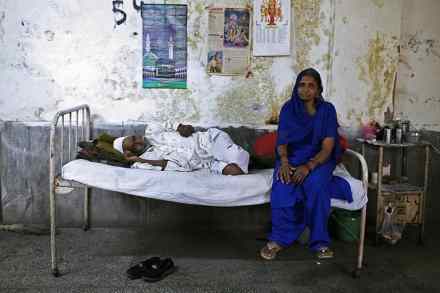
If you were a teenager before 2005, one reminder of tuberculosis in British life is that small circular scar on your bicep. Maybe you’ve explained to your children why it’s there, if you ever knew. The BCG is no longer a routine vaccination in the UK, a revision which signalled to many that TB was
The torment of mentoring spoilt rich kids

More from Books

For 20 years of my adult life, I moonlighted as a private tutor. After a full day in the office (at a literary job which paid me the price of a Mars Bar p.c.m.), I would traipse the streets, from Notting Hill mansion to cramped suburban flat and everywhere in between, leaving a trail of

What the Anglo-Saxons made of 1066 and all that followed

More from Books

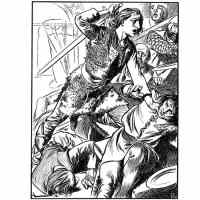
By any yardstick, the Norman Conquest was a ghastly business. Within two decades, the English aristocracy had been more than decimated, all of England’s cathedrals were being levelled and rebuilt, the north had been harried and the language of government changed. What made it worse was that it was utterly unnecessary. In 1066, Edward the

The fuss over Mary Seacole’s statue has obscured the real person

Lead book review

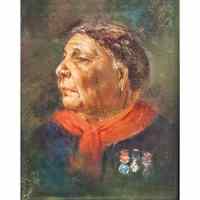
Who would have thought that a statue of a West Indian-born nurse in south London has a role in today’s culture wars? Unveiled in 2016, it stands three metres tall outside the great teaching hospital, St Thomas’, and depicts Mary Seacole, an extraordinary Creole woman who was loved and renowned for giving succour to British

Do we still need explorers today?

More from Books

In November 2017 Benedict Allen found himself at the centre of a media frenzy. He’d been in Papua New Guinea (PNG) on a one-man expedition and hadn’t been heard of for weeks. Declaring him ‘lost’, several papers turned on him, accusing him of being overprivileged and imperialistic. One even suggested the whole thing was a

Has the role of resistance in the second world war been exaggerated?

More from Books

When in 1941 Winston Churchill famously declared that the newly formed Special Operations Executive, set up to encourage resistance movements, would ‘set Europe ablaze’, neither he nor anyone else could have known the extent of the help the partisans would provide to the liberation of the continent. Nor, indeed, did anyone envisage the fact that

Margaret Atwood seems embarrassed by the sheer volume of her output

More from Books

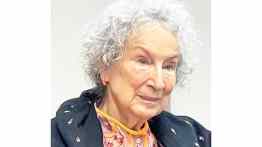
Margaret Atwood is among the major writers of English fiction of our time. This is a very boring way to start a review, but it is true. Atwood, now 82, is prize-winning, popular and prolific. She’s won two Bookers. Several of her books have attained totemic status with readers, most obviously the reproductive dystopia of

That sinking feeling: The Swimmers, by Julie Otsuka, reviewed

More from Books

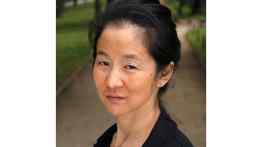
Julie Otsuka has good rhythm, sentences that move to a satisfying beat. Even as her tone shifts — from tender to funny to cynical to sinister — the beat goes on uninterrupted. In this, her third novel, the narrative has a steady flow. The Swimmers traces the cracks that develop in an underground pool, and

The machinations of the Dudleys make Game of Thrones look tame

More from Books

This is the gripping story of the ever-fluctuating fortunes of three generations of the Dudley dynasty, servants to — and at times rivals for — the Crown in the 16th century. As Joanne Paul observes in her engrossing biography of an extraordinary family, ‘had fate, Fortuna, Nemesis or God made only the slightest adjustment to

Truly magnificent: the splendour of Suleiman I

Lead book review

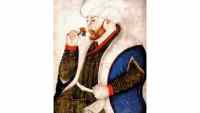
In this luminous, erudite book, Christopher de Bellaigue tells the story of the early years of Suleiman the Magnificent, the best known and most powerful of the Ottoman sultans.It is far from a standard narrative history. Drawing on sources in English, French, Italian and German, de Bellaigue has written a gripping account that evokes an

Lionel Shriver

What’s to become of Africa’s teeming youth?

More from Books

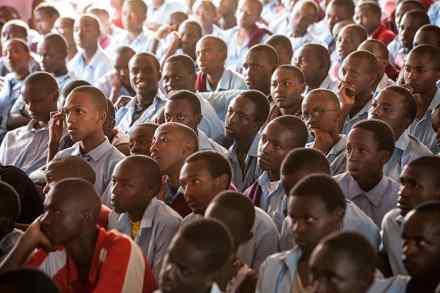
Demographers are attached to their theories. The field’s most enduring is the ‘demographic transition’, whereby modernisation inexorably lowers a society’s once-high fertility to replacement rate. Unfortunately, reality is obstreperous and doesn’t always obey the rules. The United Nations Population Division bases population projections on the assumption that all countries will eventually follow the pattern of plummeting

Christina Patterson overcomes family misfortunes

More from Books

The journalist and broadcaster Christina Patterson’s memoir begins promisingly. She has a talent for vivid visual description, not least: ‘We are a pink and navy family. Two pink girls, a navy boy and a navy wife.’ Her early family holidays in Sweden, where her mother is from, are full of lingon-berries, hammocks and mini-golf. She

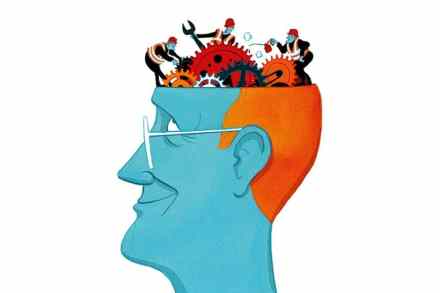
Know your left from your right: the brain’s divided hemispheres

More from Books

The dust jacket of The Matter With Things quotes a large statement from an Oxford professor: ‘This is one of the most important books ever published. And, yes, I do mean ever.’ Can any contemporary work withstand such praise? The ‘intelligent general reader’ (the book’s target audience) should, however, not be discouraged, for Iain McGilchrist

An innocent abroad: a Dutch tour operator in 1980s Russia

More from Books

‘One morning in late October 1988,’ begins The Long Song of Tchaikovsky Street, ‘this dapper-looking guy from Leiden asked me if I might be able to deliver 7,000-odd Bibles to the Soviet Union.’ It’s the kind of line you might hear in a bar when you accidentally catch the eye of the resident storyteller —

A Canadian’s experience of the migrant’s ordeal

More from Books

No one boards an overladen dinghy and sets out across a choppy sea without very good reason. Laden into migrant boats go backstories as well as bodies: tales of war-hit homes and bloodied police cells, of empty larders and decrepit schools. But illegal migration is as much about what lies ahead as what’s left behind:

The best and coolest decade: nostalgia for the 1990s

More from Books

The long 1990s began with the Pixies album Surfer Rosa in 1989 and ended with the invasion of Iraq in 2003. Or perhaps the short 1990s began with Nirvana’s Nevermind in 1991 and ended with The Matrix in 1999. Or perhaps the 1990s never really ended for those of us who have lived blissfully ever

Lonely voices: Dance Move, by Wendy Erskine, reviewed

More from Books

‘The drawer beside Roberta’s bed contained remnants of other people’s fun’: so begins ‘Mathematics’, one of 11 stories in this outstanding collection by the Belfast author Wendy Erskine. The opening is Erskine in miniature: the wry, unostentatious prose; the sad interiors with their charged objects (‘a small mother-of-pearl box inlaid with gold, a lipstick that

Watcher of the skies: John Constable, painter and meteorologist

Lead book review

A surprising amount of classic painting turns out to have specific, often literary meaning, even in genres which tend to strike us as innocent observations of reality. Dutch flower paintings, for instance, might be celebrations of wealth or contemplations of mortality; still lifes were seldom just renderings of a few bits of fruit and vegetables

Sam Leith

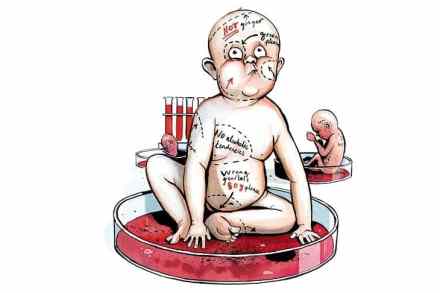
Eugenics will never work – thankfully

Lead book review

In his most recent book, How to Argue With a Racist, the geneticist Adam Rutherford set out a lucid account of how the basis for many widely held and apparently commonsensical ideas about race are pseudoscientific; and he lightly sketched, along the way, the historical context in which they arose and the ideological prejudices that