Culture

Culture

The good, the bad and the ugly in books, exhibitions, cinema, TV, dance, music, podcasts and theatre.

Investment special: Be very afraid

Features

In The Fear Index, the latest thriller by Robert Harris, now heading for the Christmas bestseller lists, a brainbox hedge fund manager with little in the way of interpersonal skills discovers that his computer-driven trading system has flown out of control and threatens to send the world’s stock markets into a tailspin. Anyone familiar with


Melancholic visions

Exhibitions

At the less than enticing Guildhall Art Gallery, a purpose-built museum that manages immediately to depress the spirits by its utterly unsympathetic design, is a major exhibition of John Atkinson Grimshaw (1836–93), the celebrated Victorian painter of moonlight. The show is the brainchild of Jane Sellars, director of the Mercer Art Gallery, Harrogate, where it

Lloyd Evans

Exclusive: Michael Boyd to quit the RSC

The theatre world is abuzz with rumours that Michael Boyd, director of the Royal Shakespeare Company, has quit this afternoon. He was appointed in July 2002 and was expected to complete at least a decade in charge. His colleague Vikki Heywood is also expected to resign. Boyd will probably be best remembered for overseeing the

A thoroughly English affair

Calm reigned outside Kensal Rise Library this afternoon, following the dramas of the morning. Contractors arrived at 6am to board up the building after a court decided that Labour controlled Brent Council could close six libraries as part of its austerity drive. They discovered two people standing guard at the front door, who immediately stood-to and

Guildford diary: The Bell tolls

It is Guildford’s turn to pick up the literary baton and kick off its 10-day Book Festival. Here is the first of our dispatches from Surrey. At the summit of the sprawling city of Guildford, with its cobbled streets and quaint hideaways, looms the Cathedral famed for featuring in The Omen.  Last night its bells

I only have ‘ize’ for you

It’s easy to blame the Americans, but sometimes — as the courts ruled in Perugia last week — they’re innocent. The case brought to mind another instance of injustice meted out to our transatlantic cousins, all in the name of that most exacting of mistresses: grammar. Of the many linguistic crimes we’ve accused them of

A scribbling spat

The prognosis is grave for the Booker Prize, say more than a few literary commentators in response to the news that a cabal of publishers, authors and agents plan to establish a “well-funded prize” that would have a “different set of priorities” to the Booker. For different “set of priorities”, read “high-brow”; the prize may

Briefing Note: Boomerang by Michael Lewis

What’s it about? The Great Crash of 2008 inspired a glut of books aiming to demystify the credit crunch for the financially illiterate. Michael Lewis’ Boomerang attempts to do the same for this new Eurozone crisis. Based on articles he wrote for Vanity Fair, the book is a whistlestop tour through Iceland, Greece, Ireland, Germany

In praise of the footnote

What’s the future for the footnote? Seems a strange question to ask about such an antiquated device. But modern technology, I think, could see a renaissance for that tricky little beast lurking at the bottom of the page. The thought has occurred because I’m currently reading one of those books (a real one, that is,

In response to the Guardian’s top 10 novels on farming

Over at Guardian Books, Irish playwright Belinda McKeon has picked her top 10 farming novels. Here’s her list: 1. Stoner by John Williams 2. Tarry Flynn by Patrick Kavanagh 3. O Pioneers! by Willa Cather 4. Let Us Now Praise Famous Men by James Agee and Walker Evans 5. That They May Face The Rising

Wisden’s voyage into cricket’s future

Muslim, Hindu or Sikh, cricket is India’s first faith – or so the cliché says. Wisden, the cricket Bible, announced earlier this week that is to launch an Indian edition. I’m surprised that Wisden does not already have a sub-continent edition, given that money-spinning cricket innovations such as the Indian Premier League have accompanied the region’s boisterous economic expansion. You

Kate Maltby

Ground zero, part 2

This is the second half of Kate Maltby’s essay on the representation of September 11th in art. You can read the first here. Decade succeeds in humanizing moral failings: fear, shame, doubt. In the simplest and most intimate scene, we hear a blokish, British New Yorker talk through the guilt of swapping his day off

Briefing note: Charles Dickens by Claire Tomalin

Why do I keep hearing about Dickens? This is just the start of it. 7 February 2012 is the bicentennary of Dickens’ birth, and there are all sorts of commemorative shenanigans planned for next year. Expect lots more biographies and documentaries. Who’s Claire Tomalin? An award-winning biographer of Jane Austen, Thomas Hardy, Samuel Pepys, Mary

A most unlikely hero

What is it about George Smiley that makes him translate so well onto the screen? The man doesn’t fight, he doesn’t gamble, and he barely seems to notice women (apart from the wife who continually cuckolds him) — in fact the only hobby that appears to brighten him up a bit is a homely interest

Rod Liddle

Here's how the Beeb might save some cash

Good point made by Charlie Brooker in today’s Guardian. If the BBC wishes to save a bit of money without affecting quality of output —indeed, by improving it — the corporation should stop making vastly expensive trailers for its forthcoming programmes. Brooker says it “turns him silver with rage” when he sees these specially shot

Kate Maltby

Ground zero, Part 1

Kate Maltby’s essay on artists’ responses to the terrorist attacks of September 11th will appear here in two halves. This is the first. There’s a moment in Rupert Goold’s latest production, Decade, in which a gaunt widow (Charlotte Randle) stares up and into the empty space just left of where the North Tower used to

Online poetry competition

Thank you to all those readers who entered our online poetry competition last week. There were lots of novel, witty and entertaining entries on the ostensibly mundane subject of ‘games’. The winner is ‘hc18’, who should contact dblackburn @ spectator.co.uk to claim their bottle of champagne. Here is the winning entry: ‘The sweat, the fear, the aching limbs, the

Across the literary pages | 10 October 2011

Tomas Tranströmer, Nobel laureate, is the toast of the literary world at present. He was a near ubiquitous presence in the weekend’s books pages. Philip Hensher has written a profile in the Telegraph that says anything and everything you need to know about the enigmatic Swedish poet. ‘Tomas Transtromer was by profession a psychologist who

Better than his party

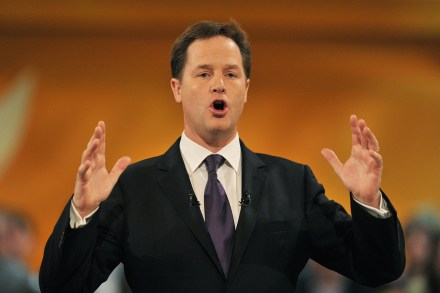
I have been awaiting a definitive biography of Nick Clegg for a while. And while I’m not entirely sure whether Chris Bowers’ Nick Clegg, The Biography quite gets there, don’t let me discourage you. This is an excellent book and a fascinating insight into the man. The trouble is that most of us who enjoy

Pictorial intelligence

Exhibitions

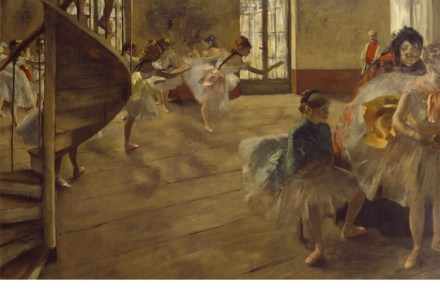
Edgar Degas (1834–1917) was born into a banking family, always knew he wanted to be a painter and was fortunate enough to be encouraged in his enthusiasm by his parents. After a classical training he began to paint portraits and history subjects, before seeing the relevance of real life and developing ways in which to

Northern lights | 8 October 2011

Arts feature

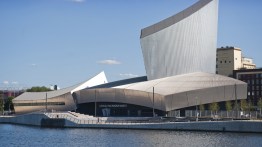
Those BBC refuseniks will rue the day they passed up the chance to relocate to Salford, England’s new cultural capital, says William Cook Standing on the roof of Daniel Libeskind’s Imperial War Museum North, staring at the shiny new buildings down below, you could be forgiven for thinking you were in Hamburg or Berlin. There’s

Barometer | 8 October 2011

Barometer

Late winners The Nobel Prize is not usually given posthumously; but an exception was made this week for Ralph Steinman, a cancer scientist who, unknown to the Nobel committee, had died three days before being awarded the Nobel Prize for Medicine. He is in good company in being honoured posthumously. Peter Finch, George Gershwin and

Beguiled by Weill

Opera

  Street Scene may well be Kurt Weill’s most successful work from his American period, but seeing it in as good a production as the Opera Group’s at the Young Vic was cause for both enjoyment and reservations. In the next couple of weeks it will be touring to Basingstoke, Edinburgh, Newcastle and Hull, so

Dare to care

Cinema

Tyrannosaur is very much in the British working-class miserablist tradition in the sense that it is full of masculine fury and the women who take the brunt of it, and if this does not sound an attractive proposition, it’s because it isn’t, and never is, but, as far as these unattractive propositions go, this is

House rules | 8 October 2011

More from Arts

Britain needs more houses, and the government’s highly unpopular draft National Planning Policy Framework (NPPF) at least asks how to get them — the right question even if it gives the wrong answer. Anyone who deals with the planning system knows how overblown it has become, and that the cost and effort can exhaust a

Smart operator

Radio

Back in the Fifties, it was possible for a single TV sitcom to capture 92 per cent of the small-screen audience; 92 per cent? It sounds astonishing to us now. The idea of so many people watching the very same comic gags at the very same time. Those fabled water-cooler, coffee-machine chats about what was

James Delingpole

Nice Mr Fry

Television

Whenever I find myself dreaming about how awful things would be under a red/green dictatorship — increasingly often, these days — the one person who gives me a glimmer of hope that I might get out of the hell alive is Stephen Fry. He’s a leftie, of course — but, like Frank Field and Kate

All that jazz | 8 October 2011

Music

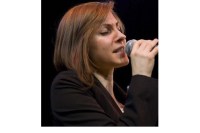
The human voice has always been celebrated as one of the most direct forms of musical and personal expression. This is especially true in jazz, where improvisation is such a key element. We so often listen to singers ‘baring their soul’, revealing something ‘deep within’. The human voice has always been celebrated as one of