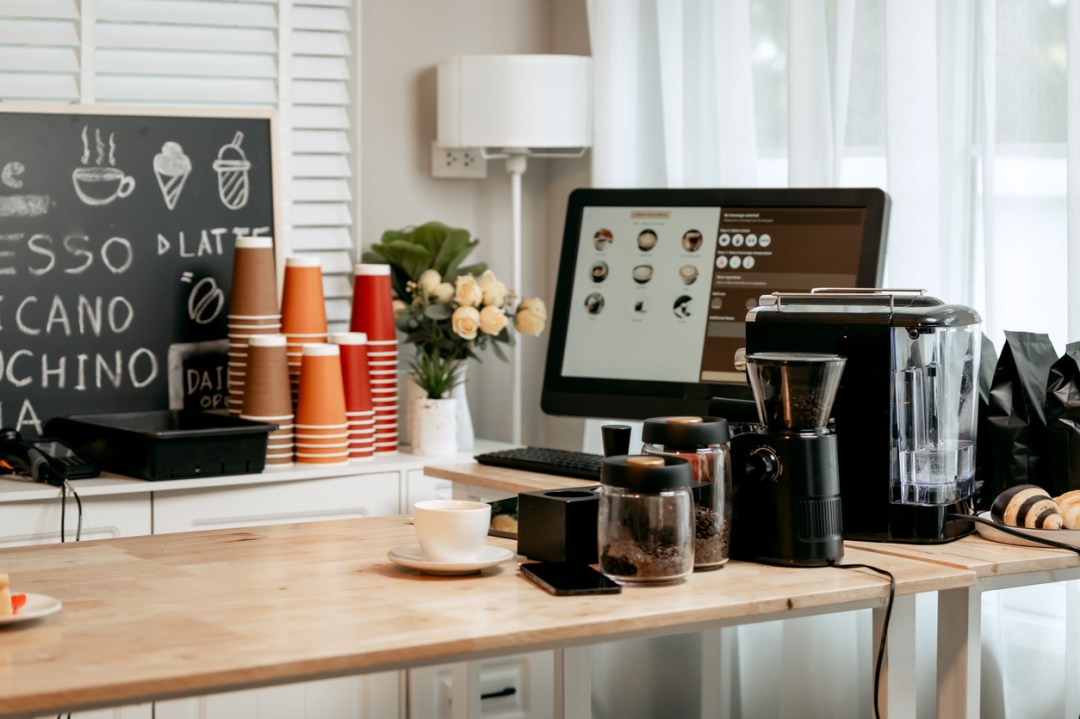
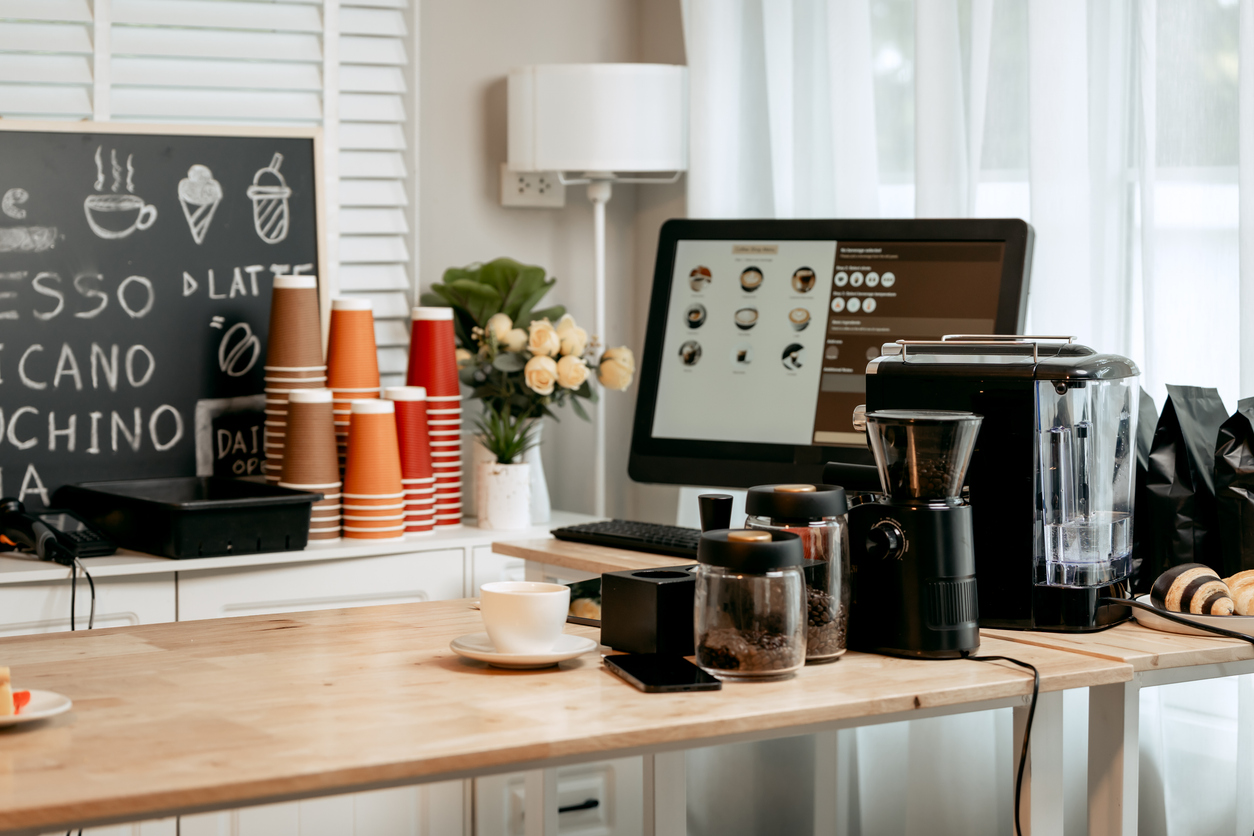
In search of coffee on my way to work the other day, I stopped short mid-way into a branch of a popular coffee shop when I noticed the digital ordering screens. Nothing will lose my business faster than being asked to queue twice and do the work of someone else for something simple. But these ordering screens seem to be becoming ubiquitous in our towns and cities, forcing those of us who have actually come into the office, likely to sit in front of a screen, to spend our lunchtimes also staring at a screen scrolling through options, when there is an actual human being standing behind a counter a few feet away with nothing to do.
Recently, in a gelato café, overwhelmed by the variety available, my husband and I were offered tasters of different flavours by the very nice man behind the counter. Once we had made our decision, he then directed us to a digital screen in front of him to put through our orders. No one else was in the café. How could this possibly be saving anyone any time? We were already chatting to the man who would make our order. We then had to pause, place the order via a machine, wait for him to receive it and then wait for him to make it. Surely we have added steps into the transaction here?
While the world goes into meltdown over artificial intelligence, divided into teams of awe (‘Isn’t ChatGPT amazing!’) and apprehension (‘AI will come for your job’), all I seem to encounter are machines making life worse for everyone.
Every time I do my big food shop – usually with toddler in tow – carefully using the self-scan-as-you-go method, I am without fail the victim of a random trolley check when I reach the checkout, negating the time that should have been saved by scanning the items myself. Wouldn’t it make more sense for security guards to identify suspicious shoppers for checks, rather than have staff keep checking rushed mums who mis-scanned a tuna in brine as a tuna in spring water (which cost the same) because they were being forced to sing ‘Old MacDonald’ while they reached for the tins? Or better yet, open up some more manned tills and bring back shop baggers, I’d love a hand.
And don’t even get me started on the self-service checkouts, which are most definitely not child-friendly as tiny hands remove things from the bagging area, or lean on it and cause the machine to go into an apoplectic fit, flashing angry red lights that might as well be accompanied by a loudspeaker blaring ‘THIEF!’.
A few years ago, Tesco took this to the next level and launched a till-free branch around the corner from my office. It worked via an app on your phone. Of course, I was unaware of this advance in grocery shopping when I tried to run in quickly for breakfast supplies and was promptly stopped by the barriers because I did not have the app installed. A supermarket where you cannot simply walk in and buy something seems counterintuitive to me.
We were already chatting to the man who would make our order. We then had to pause, place the order via a machine, wait for him to receive it and then wait for him to make it
Technology has its uses, of course, but so often it feels like AI is used to create ‘solutions’ to non-existent problems. Perhaps we should be asking who benefits from these interventions, as 99 per cent of the time it’s certainly not the customer. It would be wonderful if more companies could follow the example of family-owned northern supermarket chain Booths, which has removed self-checkouts and employed more till staff. Booths said it has seen an increase in customer satisfaction and decline in theft since it started the scheme.
In an episode of offbeat comedy It’s Always Sunny in Philadelphia, one of the main characters, Dennis, takes a ‘mental-health day’ in an attempt to lower his blood pressure. While renting a car he is upgraded to a keyless car where you must download an app that turns your phone into the key. Predictably, it all goes horribly wrong. First, he stops for a tea, where having placed an order with an employee he is then told to scan a QR code to download an app and pay. Cue beeping from his blood pressure monitor. He then leaves his phone on top of the car, loses it and ends up locked out of his car. He goes on to buy a new phone but cannot get the phone to connect with his car, and then spends ages on the car manufacturer’s automated helpline trying to get through to an actual human being, growing increasingly irate. It appears to end with him tracking down the car company boss and ripping out his heart – which turns out to be a fantasy he uses to bring his blood pressure down. But up until that moment, it all seems very plausible.



Comments