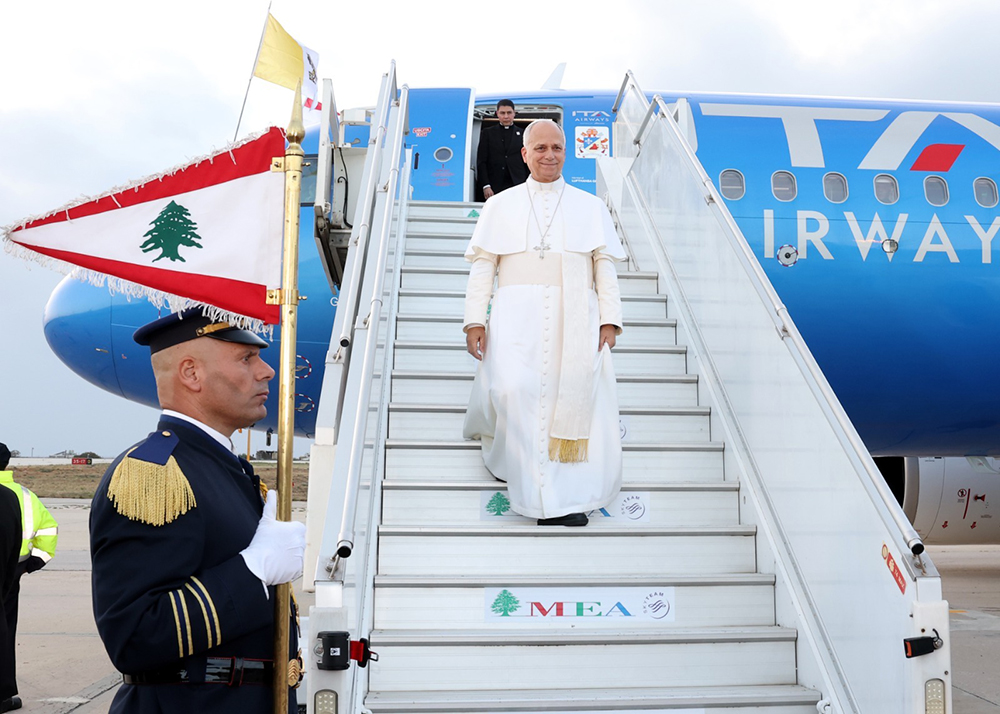

The Pope is visiting Lebanon and Turkey. Will anyone be raising the vexed question of the Latin mass and sacraments with him and asking him exactly why it is so vexed?
Though Jesus spoke Aramaic, the New Testament first appeared in Greek in the 1st century ad because that was the common language of the Mediterranean. It remained the language of the liturgy until Pope Damasus I (d. ad 384) invited St Jerome to translate the whole Bible into Latin (the Vulgate: vulgatus, ‘widely used, common’). The Roman empire collapsed in the 5th century ad and local languages started replacing Latin, but the Roman liturgy remained standard in western Europe. It was not until 1546 that the Vulgate was declared the inspired word of God.

Wherever Christianity was introduced, there was no problem about expressing the faith in the local language, with one iron-clad exception: the mass and sacraments were invalid if not celebrated in accurate Latin. As the Jesuits discovered, this caused terrible problems in e.g. China, where the locals found it impossible to pronounce the Latin correctly (te absolvo a peccatis tuis became Nghe te yapesolva ya pekiatisu tuisu) and it left the Chinese in giggles (a compromise was made in 1949).
Ferocious arguments sprang up on the issue. Surely it was absurd that the mass and sacraments should be available only in a language which the worshippers did not understand but simply had to repeat like so many parrots. But there was no shifting of the priests’ position: ‘Latin is the language that takes us back to the origins of our holy religion, that puts us in communion with the thought and works of the apostles and fathers who codified our faith and creed into definitive texts.’ A dead language preserved the ‘purity of the faith’ and the ‘integrity of its sacramental ritual’. Wanting to understand everything ‘centred the liturgy on man and not on God… just restore a sense of the sacred, of the infinite, give people a taste of it, and they will grumble no more against Latin’.
The issue was the ‘magic’ of the sacred language. But the secular could be no less magical. We know it when we experience it – if we still can.



Comments