
Society

Toby Young

Don’t like our diversity agenda? You’re fired

Earlier this week, a technology website published an internal memo written by a Google employee called James Damore criticising the company’s efforts to diversify its workforce. This is ‘where angels fear to tread’ territory. The American technology sector has come under fire for years for failing to hire and promote enough women and Google is being investigated by the US Department of Labor for allegedly underpaying its female employees. What makes this memo particularly controversial is that Damore takes Google to task for discriminating in favour of women. He begins by saying that he is pro-diversity and accepts that sexism is one of the reasons women don’t constitute 50 per

Diary – 10 August 2017

No sympathy from me for the Brits stuck in the European heatwave. I’ve never understood people who go abroad for their holidays at this time of year. OK, as this week shows, you’re not absolutely nailed on for sunshine back home. But it’s probably going to be at least pleasant, and certainly won’t tip over into the furnace-like conditions of Italy and Greece. Even France gets too hot. Why not stay and explore all those places in Britain you keep meaning to visit, and take your foreign sun in January, when you really need it? If funds or holiday allowance permit only one trip per year, copy the family I

Dear Mary | 10 August 2017

Q. I was brought up to stick rigidly to any invitation accepted and never to ‘chuck’ when a better one came along. Recently, therefore, when invited to lunch at Boisdale to meet my favourite actor on the same day as a long-standing invitation to lunch at White’s with an old friend, I didn’t chuck the first invitation for the ‘better’ (because unrepeatable) one. Later, I wondered if it is ever acceptable to play Invitation Trumps — to just be honest and say: ‘I’ve had a once-in-a-lifetime opportunity to meet X on the same day as I’m meeting you. Would you mind if we postponed our lunch?’ What is the protocol,

Wuthering

Haworth is in a constant simmer of Brontë anniversary fever. It is looking forward to Emily Brontë’s 200th birthday next year. (This year is poor old Branwell’s.) I can’t think of a book title more widely mispronounced than Wuthering Heights. Soft, effete southerners pronounce it with a short u. But the wuthering in the title is a good Yorkshire word and its first vowel must be pronounced like the vowel in good. Yet if you look up wuthering in the big fat Oxford English Dictionary, you’ll find it under whither, the main English form deriving from the Old English hwitha. Emily Brontë should perhaps have called her novel Whithering Heights,

Fraser Nelson

Sales of The Spectator: 2017 H1

The UK magazine industry figures have just been published, and The Spectator has an extraordinary set of results to report. Our sales stand at the highest level in our 189-year history. We are not just the oldest weekly magazine in the world, but today’s ABC figures show that we’re growing faster than any comparable magazine with sales up 8 per cent year-on-year. The introduction of a paywall has not stopped our traffic hitting an all-time high. Our new podcast, Coffee House Shots, has released 100 episodes since the election announcement, with over 1.3 million listens. And this in a tough market. Newspaper sales have fallen by more than a third in the last

Should we all be investing in bitcoin?

Like the splitting of the atom – but perhaps not as significant to the whole of mankind, the bitcoin split into two on August 1. We now have bitcoin cash. For the less knowledgeable investor, the bitcoin is a digital currency which was launched in the wake of the financial crisis in 2009, borne out of a general mistrust of the existing financial institutions. Unlike a traditional currency, the bitcoin has no central monetary authority. Instead it has a peer-to-peer network made up of users’ computers. Without requiring physical presence, bitcoins do not have material form (except in a few cases where companies have fabricated ‘physical’ bitcoins.) Instead, bitcoins work

to 2319: poem III

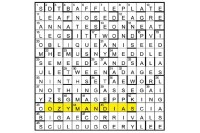
The poem was Shelley’s ‘Ozymandias’. The words from the poem are LEGS (16), TWO (17A), SANDS (26), NOTHING (37), KING (42), ANTIQUE (5), LAND (9), TRAVELLER (10), MET (23), DESPAIR (32). OZYMANDIAS (in the twelfth row) was to be shaded.   First prize P.J.W. Gregson, Amersham, Bucks Runners-up Mrs P Bealby, Stockton-on-Tees, Cleveland;     Mark Foreman, Sholing, Southampton

James Kirkup

Fiona Hill’s key role in the fight against modern slavery

This article is, partly, about Fiona Hill. You remember Fiona Hill, the most evil woman in Britain, the wicked, snarling monster who led Theresa May to disaster then quit as Downing Street chief of staff. That Fiona Hill. That same Fiona Hill is a friend of mine, so you can feel free to ignore everything I say about her: I’m not objective and I don’t pretend to be.  Let’s just say I don’t think you should accept at face value the lazy, unfair and often self-serving caricature of my friend that has been put into the public square by various people, for reasons of their own. Maybe one day I’ll

Sam Leith

How I write

How do they do it? Among writers, the earnest audience member at a literary festival who asks, ‘Do you write by hand or on a computer?’ is a sort of running joke; an occasion for the rolling of eyes. And yet, let’s enter a note in defence of that audience member: how novelists and the authors of literary nonfiction go about their work is interesting. If, as Kingsley Amis argued, most of a writer’s work is the application of the seat of one’s trousers to the seat of the chair, it’s legitimate to ask: what trousers, what chair, sexuality where and when? In my experience the answers are wildly different

Watercolour

Like many artistically inclined children, I was given a set of Daler Rowney watercolours for my birthday one year. My first paints! What delights would I unleash with these cubes of colour? Well, practically none, as it turned out. Unschooled in the art of watercolour and evidently lacking any instinct for the medium, I used them, as undiluted as possible, to colour in my drawings of horses and Dogtanian characters. It was a bit fiddly with the blunt brush provided and, frankly, felt tip worked better. I went on to art school where, in the late 1990s, everyone would rather have dropped dead than be seen prodding around a tin

Lara Prendergast

Snobbery in the age of social media

We like to think we have moved on from the age of snobbery. Judging others by birth or status, or at least being seen to, is the height of rudeness, and just not very cool. But English snobbery is in fact as potent as before — and possibly even more insidious. Among my age group of twentysomethings, it is rife. Our elders might think of us as fiercely egalitarian, and in some ways that’s true. We aren’t as obviously obsessed with class. But we’ve found sneakier ways of being snobs. It starts with social media. Everyone has an online profile, and that has created a new generation of ultra snobs,

The romantic king of clubs

We were discussing romanticism, with me arguing that it should be confined to the boudoir, the bedroom, the library or the stage. When it escapes into public affairs, disaster often ensues. This led to us reminiscing about romantics we had known, and one of our number denounced the late John Aspinall, who, he said, would have liked to pass as a romantic but was really a society card-sharp. The animus was understandable. This chap would have been significantly richer if his great-uncle had never found his way to Aspers’s gaming tables. Aspers led on to Jimmy Goldsmith, undoubtedly a romantic and charismatic figure, but a consistent political menace — and

Rod Liddle

Football wants the ‘somewheres’ to get lost

Some years ago, when Millwall played West Ham United, the Millwall fans sang the following song (to the tune of ‘When The Saints Go Marching In’, if you want to hum along): ‘Oh east London, is like Bengal. Oh east London is like Bengal. It’s like the back streets of Delhi. Oh east -London is like Bengal.’ They haven’t sung it for two or three years, but only because Millwall haven’t played West Ham. I mean, I don’t think that Millwall’s supporters have gradually thought better of it and decided that the ditty was perhaps racist and demeaning, or are worried about the relative geography of Delhi and Bengal. If

Rory Sutherland

Sutherland’s Law of Bad Maths

Imagine for a moment a parallel universe in which shops had mostly not yet been invented, and that all commerce took place online. This may seem like a fantastical notion, but it more or less describes rural America 100 years ago. In 1919 the catalogues produced by Sears, Roebuck & Company and Montgomery Ward were, for the 52 per cent of Americans who then lived in rural areas, the principal means of buying anything remotely exotic. In that year, Americans spent over $500 million dollars on mail order purchases, half through the two Chicago companies. Yet in 1925, Sears opened its first bricks and mortar shop. By 1929, the pair had

A tale of two Valleys

Silicon Valley looks like a cross between Milton Keynes and the set of the Stepford Wives. Row after row of ordinary houses and picket fences, clustered in villages notable only for the mega-companies they serve: Menlo Park (Facebook), Cupertino (Apple) or Mountain View (Google). There’s the odd charm, but it’s generally clean, sterile, young, overpriced. Life here, they say, is five years ahead of everywhere else. Well, if that’s the case, I’ve seen the future and it is a bit disturbing. The surface ordinariness of the Valley hides a deep utopianism. In the late 1960s San Francisco was the home of both hippie counterculture and the early computer communities. Both

Martin Vander Weyer

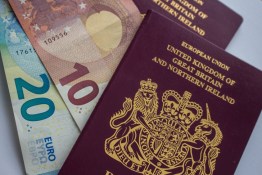
Why is your holiday exchange rate so awful? Because investors see hope for the eurozone

As usual for August, I’m in France, where the news in brief is ‘Euro up, Macron down’. The youthful French president, who swept to power with two-thirds of the second round vote in May, has seen his approval rating plunge to 36 per cent — at the time of writing, 2 per cent worse than Donald Trump’s latest score in the US. Macron’s move to slash housing benefits for millions of lower-income citizens, including students, is one factor that has brought his honeymoon with French voters to an abrupt end, though his proposed labour law reforms are still playing well with employers. Two-thirds of French small-business owners say they are

Monster mash-up

In Competition No. 3010, a nod to the late, great George Romero, you were invited to provide an extract from a mash-up of a literary classic of your choice and horror fiction.   Nathan Weston’s Werewolf Hall, Brian Murdoch’s The Gruffalo in Transylvania, Bill Greenwell’s Three Men and a Zombie and Nicholas MacKinnon’s The Nightmare of Casterbridge were all in with a shout for a place on the winners’ podium. But in a hotly contested week they were squeezed out by the entries below, whose authors earn £25 each. Adrian Fry nabs the extra fiver.   Mr Septimus Harding, warden of Hiram’s hospital, plunged his crucifix into the burning flesh