Society

A clash of creeds

This is a very modern novel. Terrorist atrocity sits side by side with the familiar and the mundane. Where better for this to happen than in Northern Ireland? At the Day’s End pub ‘two eejits in Halloween masks’ enter the bar; ‘Trick or treat,’ they shout. ‘Fut-fut-fut-fut went the gun.’ A woman screams, ‘then a very fast piece of metal entered the side of her head and she stopped’. Throughout the first half of the book, the horror of the pub massacre alternates with the narration of an ordinary family’s home life. The blood-curdling incident impinges drastically on the lives of the family’s two daughters: Alison, who lives with her

Using fear to sell financial products is simply desperation. Selling hope is the future

Using fear to sell products is a powerful strategy. Unsurprisingly, many financial firms have come to rely on fear to fatten their bottom lines. But in 2017, there’s only one word to describe fear-based marketing: desperate. Firms selling pensions, investments, and financial products aimed at the over-50s, such as funeral plans, have traditionally been the worst offenders. The insurance industry also knows a thing or two about using fear to sell. After all, with the exception of a mandated product like car insurance, the raw motivation for buying insurance products is largely fear. None of us plan to drop our iPhones, and yet we buy gadget insurance, just in case.

Steerpike

Revealed: Jean-Claude Juncker’s £23,500 private jet jaunt

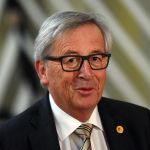
Jean-Claude Juncker is a man with few friends in Britain – and that’s before his latest expenses were published following a lengthy fight. It’s fair to say the documents, which were released today, won’t do the president of the European Commission any favours. Juncker claimed thousands of euros worth of expenses for various trips during the first three months of 2016 alone. But the most eye-watering expenditure came on his official visit to Rome in February 2016. As well as claiming £450 (€500) for his accommodation during the one-night trip, Juncker billed taxpayers a whopping £23,500 (€26,000) for a private jet. Mr S. thinks the next time Juncker makes a

Robert Peston

The 2007 financial crash changed all our lives for the worse

It started as displacement activity, my immersion in the market mayhem of the summer of 2007. I was at home looking after my wife Sian Busby and our youngest child. Sian had just been diagnosed with a horrible cancer, and was recovering from radical surgery. She did not want a fuss. And did not want our friends to know the seriousness of what had happened. So in the absence of being able to talk about it, I needed a distraction. So in the study across the hall from where Sian was convalescing, I tried to work out what the hell was happening in global debt markets. What I needed to

Beyond the stethoscope: transforming the NHS with new technology

For technology manufacturers, healthcare is already big business, and, with an ageing population increasingly comfortable with technologies that would’ve been unthinkable even a decade ago, the opportunities to innovate are only going to increase. The Future Health Index, a global report commissioned by Philips, supports the fact that it is not just the UK’s younger generation that are embracing these technologies. However are these products – from popular or trendy FitBits to state-of-the-art imaging equipment – really going to revolutionise the country’s medical care? And will the NHS require a head to toe change of ethos to accommodate them? Spectator editor Fraser Nelson is joined to discuss all this by

What causes riots? An ex-policeman’s view

What causes riots? How do peaceful, civilised protests turn into violence and anarchy? It can take just a few factors. First, the unfortunate death of a criminal who has come into contact with police. Second, poor public relations from the police or IPCC, who are too often sluggish to explain what has occurred and why – especially in those communities with a history of distrust. Last, the involvement of a hard core of individuals with criminal intent, who become parasites on legitimate protest, twisting it into something much nastier. If that makes the process sound like slow evolution, consider the pace at which the 2011 riots took hold. It all

Toby Young

The Google ‘anti-diversity’ memo isn’t anything of the sort

Earlier this week, a technology website published an internal memo written by an employee of Google called James Damore criticising the company’s efforts to diversify its workforce. This is where-angels-fear-to-tread territory. The America technology sector has come under heavy fire for a number of years for failing to hire and promote enough women and Google is currently being investigated by the US Department of Labour for allegedly under-paying its female employees. But what makes this memo particularly controversial is that Damore takes Google to task for discriminating in favour of women. He begins by saying he is pro-diversity and accepts that one of the reasons women don’t constitute 50 per cent of

Camilla Swift

Would you really want to be a farmer in 2017?

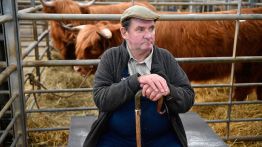
What does being ‘a farmer’ mean to you? For those that have experienced it, the job – or lifestyle, really – the answer might be early mornings, long days, and little pay. Others imagine farming to be more like living the good life. Perhaps that’s the reason why a recent report, commissioned by the Prince’s Countryside Trust, revealed that twenty five per cent of adults questioned quite like the sound of giving up their day job and taking up farming instead. The economics of the profession might make them think again, however. The most startling fact from the report is the gap between the general public’s estimates of a farmer’s

14 questions Owen Jones and Venezuela’s silent fans on the left must answer

Dear Owen, I hear you have finally broken your silence on Venezuela. With that in mind, here are a few questions which you have not answered: 1) In 2008, Human Rights Watch was expelled from the country by force. Why didn’t you feel the need to mention this in any article you wrote? 2) Who paid for that ‘Election Observer’ trip you went on in 2012? 3) Did it ever cross your mind from 2012 onwards that Hugo Chavez referring to Kim Jong-il as a ‘comrade’ he mourned might be a warning sign? 4) Did Chavez’s hero-worship of Fidel Castro and claims that he wanted to turn Venezuela into ‘Venecuba’ ever cause you concerns?

Jacqueline Gold, founder of Ann Summers, on how she became one of Britain’s richest women

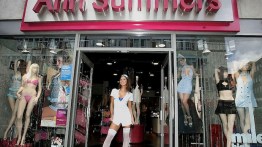
Ann Summers chief executive Jacqueline Gold has been credited with transforming the lingerie company into a more female-friendly business – and in the process has become Britain’s 16th richest woman, according to the latest Sunday Times Rich List. So what was the key to her success? Gold believes that identifying a gap in the market was what turned Ann Summers into such a recognisable brand. ‘I knew that women were desperate to buy sexy lingerie and sex toys, but there wasn’t anywhere they could do that which offered a female-friendly, safe environment.’ she explains. ‘I spoke to friends and saw that we could replicate the popular concept of ‘at home’

Nick Cohen

How alt-right was Roman Britain?

Over the weekend I, like a good dozen others, endured the Twitter rage of Nassim Nicholas Taleb, an old man who rolls around like a drunk trying to prove he’s still the toughest hombre at the bar. He’s the sort of guy who screams at the Cambridge classicist Mary Beard: He’s the sort of guy, who, when I and others objected that bragging about his citations was a ‘crass’ way to behave, cried: He’s the sort of guy who when I replied: https://twitter.com/NickCohen4/status/893098347875246082 Can come back with: He’s that hard. Don’t try to f- with him in ancient or modern languages, or middle English  for that matter. He could have

Martin Vander Weyer

Who is the richest of them all?

There has just been a rather meaningless debate about whether Jeff Bezos of Amazon or Bill Gates of Microsoft should be labelled ‘the richest man in the world’. Both are notionally worth more than $90 billion, although Bezos was briefly ahead by a nose after a surge in the value of his Amazon shares. It was meaningless because such unimaginable wealth ‘can’t change how many people love you or how healthy you are’ — as the world’s fourth richest man, Warren Buffett, once remarked — and can’t even buy you more fun than, say, the $5 billion fortune of our own Sir Richard Branson. The point is that the only

Kevin Myers’ eager critics should feel ashamed of themselves

I have been out of the country for a little while, doing my bit to support the Greek economy. I return to find a most surprising subject for the latest two minutes of hate. Lest anyone think I’m just carrying water for a friend I suppose I should say at the outset that I don’t know Kevin Myers, and don’t believe I’ve ever met him. But like many other people I have admired his writing over the years, and think that his book ‘Watching the Door: cheating death in 1970’s Belfast’ is one of the best memoirs of the Troubles that I know. Brave, funny, moving and profound, it is

Girl power: give women’s sport the credit it deserves

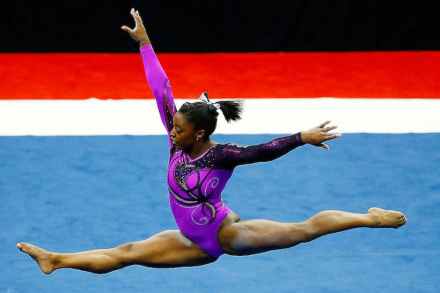
England won the cricket World Cup for the fourth time. Huzzah! England reached the semi-finals of the European football championship. Huzzah again! Or you can, as some have preferred, say well, it’s not really England, is it? It’s England women — and that’s not the same thing at all. Ten points for observation, eh? I remember when I first noticed. But there’s less power, less speed and it’s altogether less thrilling a spectacle than the men’s versions, they say. Anya Shrubsole, the demon fast bowler who secured the win for England by taking six wickets in the final, only bowls at 70 mph; she’d be cannon fodder in a men’s

Lloyd Evans

Ukip’s interim leader on Nigel Farage, Brexit and his party’s death spiral

‘Some wine? How about a beer? Shall we settle into a good old pub?’ I make these suggestions to Ukip’s interim leader, Steve Crowther, as we meet in central London, but he opts for a quiet bistro where he orders a cup of tea. He has a dapper suit, a ruddy, forceful face and a white beard of neatly trimmed bristles. His rat-a-tat laugh resounds across the bar like a well-oiled machine gun. Our intended subject is the Ukip leadership election (hustings this month, results on 30 September), but the n-word elbows its way through and claims our attention. The negotiations. Crowther declines to criticise David Davis and his team,

Isabel Hardman

Parliament’s new tribe | 5 August 2017

Politics is such a fickle game that it’s perfectly acceptable to believe six impossible things before breakfast without ever having to apologise for being so wrong. Remember, for instance, when everyone was predicting that the dead cert increased majority for Theresa May would lead to the creation of a new party? Perhaps, like everyone else who has since gone on to predict another series of impossible things with equal confidence, it’s easier for us to forget those old certainties. No one talks about a new party any more. The facts have changed, so we’ve changed our minds too. There aren’t the same conditions for that proposed new party about which

Spectator competition winners: Ode on a potato peeler

The idea for the latest challenge, to submit a poem about a domestic object, came to me when reading about an exhibition at the University of Hull (until 1 October) of Philip Larkin’s personal possessions. Alongside books, records, a pair of knickers and a figurine of Hitler is the lawnmower that inspired the poem ‘The Mower’, which he wrote in the summer of 1979 after inadvertently killing a hedgehog while cutting the grass. According to Betty Mackereth, Larkin’s secretary and one-time lover, he told her about the incident ‘…in his office the following morning with tears streaming down his face’. Your poems made me smile rather than cry: this was

Stephen Daisley

The pill-popping future of work looks terrifying

In Aldous Huxley’s Brave New World, a dystopia rules mankind in a way that renders the masses compliant consumers. The apex of medical mind control in the book is soma: a tranquilliser offering ‘a holiday from reality’. Huxley describes how its users’ ‘eyes shone (and)…the inner light of universal benevolence broke out on every face in happy, friendly smiles’.  Huxley’s vision was intended as a nightmare but PricewaterhouseCoopers appear to have taken it as an inspiration. Their new report, Workforce of the Future, predicts what the labour market could look like in 2030. As you might expect, automation takes the starring role and a survey of 10,000 workers across the world presents mixed

Classical conundrum

The great Mikhail Botvinnik excoriated chess played at fast time limits. Botvinnik believed that classical chess at time limits of, for example, 40 moves per player in two and a half hours each, was the purest expression of the art and science of chess. Radically faster alternatives cheapened and debased the thought processes, he believed. Of course, he also relished adjournments — now outlawed because of the possibility of computer analysis.   Modern chess faces the problem of excessive draws bedevilling elite events at classical time controls. As rapid and blitz chess have developed their own official ranking and rating lists as well as their own world championships (Sergei Karjakin

no. 468

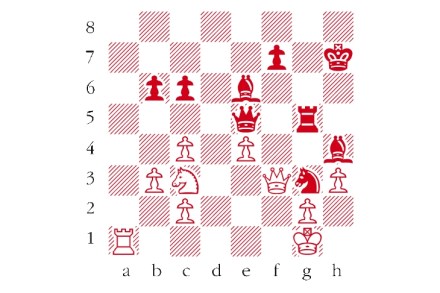
Black to play. This is a position from Kramnik–Carlsen, Leuven Blitz 2017. How did the world champion win even more material? Answers to me at The Spectator by Tuesday 8 July or via email to victoria@-spectator.co.uk. There is a prize of £20 for the first correct answer out of a hat. Please include a postal address and allow six weeks for prize delivery. Last week’s solution 1 Qh6+ Last week’s winner William Anderson, Old Knebworth, Herts