Society

Can Spain’s monarchy survive?

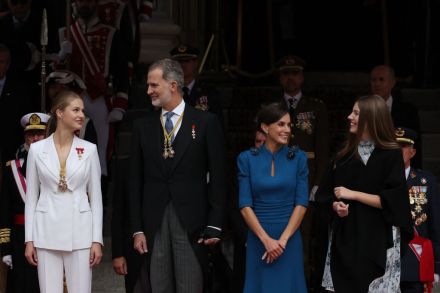
‘We, who are as good as you, swear to you, who are no better than us, to accept you as our king and sovereign lord, provided you observe all our laws and liberties; but if not, not.’ This famous oath of allegiance, sworn hundreds of years ago by the noblemen of Aragon in northern Spain to their king, also neatly expresses the transactional attitude of many contemporary Spaniards to their monarchy. They were willing to accept the restoration of the Bourbon dynasty as part of the post-Franco democratic settlement provided the king deserved their loyalty – but if not, not. And for many, the alleged misdemeanours (personal and financial) of ex-King Juan Carlos mean
Should Charles apologise to Kenya for Britain’s colonial past?

It was no coincidence that Kenya was chosen for King Charles’s first state visit as monarch outside Europe. After all, it was at the Treetops hotel in Aberdare National Park on 6 February 1952 that his mother acceded to the throne. As the politician and diarist Harold Nicholson quipped, ‘She became Queen while perched in a tree in Africa watching the rhinoceros come down to the pool to drink.’ Charles’s visit had to acknowledge the wrongs done in his country’s name while not offering a full, formal apology.  Such symbolism, and historical resonance, will have dearly appealed to Charles, as he acknowledged in his speech after a state banquet on

The Saudi World Cup is a new low for Fifa

Fifa, world football’s governing body, is an organisation that is devoid of anything resembling a moral compass. In its place, the organisation chases money. That is why it comes as no great surprise that Saudi Arabia is set to host the 2034 World Cup, after Australia – the only other nation considering a bid – withdrew. In reality, Fifa did everything possible to pave the way for Saudi success. Earlier this month, it unexpectedly announced that the bidding process for the 2034 tournament would take place at the same time as the one for 2030. Fifa’s decision to bring the timetable forward by three years appears to have been made without

Jake Wallis Simons

Is Suella Braverman wrong about pro-Palestine ‘hate marches’?

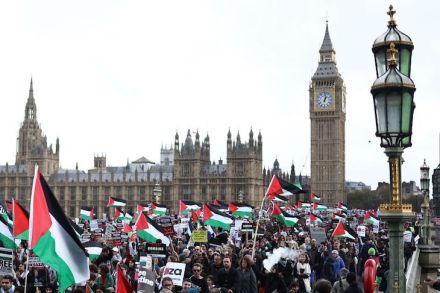
Supporting the Palestinians is a reasonable thing to do. Flying their flag is not an act of hatred. Expressing sympathy for their hardships is not bigotry. There is nothing invalid about arguing for their national self-determination.  The problem has always been the proximity of the Palestinian cause to the Jews. Is accusing the ‘Zionist lobby’ of pulling the strings of politics a reasonable expression of support for the Palestinians? Is accusing Jews of ‘white supremacy’, even though a majority of Israelis are non-white? Is trying to lynch them at an airport? If, as I argue, Israelophobia is the newest version of the oldest hatred, then it is as adept as

Gareth Roberts

Israel, Palestine and the troubling silence of Britain’s anti-racists

There’s no room for racism in Britain, we’re told. EDI (equality, diversion and inclusion) initiatives and anti-racism strategies are everywhere. We’re all familiar with the ‘horror’ of micro-aggressions and unconscious bias. We are forever on alert for dangerous racial ‘dog whistles’. And yet the last few weeks has exposed a troubling blind spot when it comes to tackling racism: it’s clear that Jews don’t really count. Hamas’s attack – and the response from Israel – has unleashed a tide of hate on the streets of Britain. Posters of kidnapped Israeli children have been torn off walls. ‘From London to Gaza, we’ll have an intifada,’ demonstrators chanted during the Palestinian solidarity

The horror of Halloween

Temperate weather, perfect apples, and leaves turning yellow, red, and purple – ‘Fall’ ought to be the most charming time to be in the US. But the season’s natural beauty is defiled by a grotesque American obsession – Halloween. For all of October (and most of September) Halloween kitsch is as ubiquitous as leaves and acorns on the ground. It’s there in offices, bars, restaurants, and coffee shops. It’s outside houses, inside houses, and on top of houses. Butcher’s knives hang from washing lines. There are six-foot tarantulas, eight-foot zombies, and twelve-foot werewolves, some of which move, cackle or howl as you walk past. In a world where so many

Jake Wallis Simons

Jews feel abandoned by the British left

Like 9/11, the massacre in southern Israel changed everything. From the great movements of Middle Eastern geopolitics and international alliances to the sweep of modern Israeli and Arab history, life has been split into the before and the after.  In Britain, nowhere has this been felt more keenly than the Jewish community. There have been a great many bitter lessons, but one overshadows all the others. Before the massacre, we thought we had many more friends here.  In the aftermath of the massacre, it is finally dawning on Jewish progressives that their oldest friend doesn’t care for them at all I’m talking about the political left. In recent decades, the

Brendan O’Neill

Dagestan’s anti-Semitic mob and the truth about Palestinian ‘solidarity’

So now we know what a ‘globalised intifada’ might look like. That’s what people chanted for on the streets of London on Saturday. ‘From London to Gaza, we’ll have an intifada’, they yelled. And now it’s happening, in Dagestan, where last night there was a violent hounding of Israelis arriving in the country by mobs shouting ‘Free Palestine’. What took place at the airport in Makhachkala was truly chilling. Huge numbers of people, some waving the Palestinian flag and holding anti-Israel placards, stormed the airport after hearing that a flight from Tel Aviv was on its way. They were hunting for Jews. It was a pogrom under the auspices of

Mark Galeotti

Why the Kremlin will fear Dagestan’s anti-Semitic mob

As the war in Gaza continues to have global repercussions, a mob in the southern Russian city of Makhachkala stormed their local airport, after news spread that a flight from Tel Aviv was due to land. Beyond the heightened passions of Muslims around the world, this incident also demonstrates the particular challenges for multi-ethnic Russia. Tensions in the predominantly Muslim regions of the North Caucasus had been rising in recent days. Last week, there was an arson attack on a Jewish centre under construction in Nalchik, capital of Kabardino-Balkaria. On Saturday, a rally in Cherkessk, capital of the Karachayevo-Cherkessia, demanded that residents of Israel be banned from entry into the

Why are feminists like me being labelled ‘far right’?

In what would no doubt come as a shock to great feminists like Mary Wollstonecraft, Sylvia Pankhurst and Simone de Beauvoir, arguing for sexual equality today makes you ‘far right’ and a purveyor of ‘hate speech’. Forget Hitler, Mussolini, or even Enoch Powell. According to the London Public Library in Ontario, Canada, it’s people like me, defenders of women’s sex-based rights, who lean perilously close to the wrong end of the political spectrum. When I say ‘people like me’ I actually mean me. Back in May this year, I was invited by the Canadian Society for Academic Freedom and Scholarship to give their annual public lecture. Traditionally, this is held

Activist curators are spoiling Britain’s museums

History, we’re told, is written by the victors. But nowadays, it seems it’s museum curators who really have the final word. Across the UK, our much-loved national institutions have been led astray by a minority of campaigners, with no regard for the wishes of the public at large. It has become almost impossible to visit a museum in Britain today without coming across a sign or installation condemning several centuries of scholarship in favour of an activist’s manifesto. Curators of various galleries and exhibits impose modern cultural and ethical values on every time period, denigrating those that don’t meet their standards. On the long march through our institutions, it becomes clear

Peter Oborne, Kate Andrews and Jonathan Maitland

18 min listen

On this week’s Spectator Out Loud, Peter Oborne reads his letter from Jerusalem (00:55), Kate Andrews talks about why Rishi Sunak has made her take up smoking (07:20), and Jonathan Maitland explains his growing obsession with Martin Bashir (12:15). Presented by Cindy Yu. Produced by Cindy Yu and Natasha Feroze.

Stephen Daisley

How Britain failed Israel

That the United Kingdom’s central institutions are rotten, crumbling, captured and perhaps beyond recovery is not news, but the Gaza intifada has crystallised the scale of institutional debasement. The brutalisation and murder of 1,400 Jews by Palestinian terrorists, and the open celebration of those actions by Jew-haters in this country, ought to have been met swiftly and resolutely. We do not do that sort of thing here. Instead, this demonic behaviour has granted us the most intimate and bracing glimpse at the decay inside the British state since the aftermath of 9/11. At a time when statesmanship is called for, we are forced to choose between Rishi Sunak, a waste

Why are Cambridge University’s librarians judging ‘problematic’ books?

Librarians across Cambridge University are on the look out. Their target, among the ten million-odd volumes in the main library and in the independently-run libraries of the colleges, is ‘problematic’ books. ‘We would like to hear from colleagues across Cambridge about any books you have had flagged to you as problematic,’ a memo sent to colleges by the University Library read. But surely what is most damaging is to bandy around words such as ‘harmful’ and ‘problematic’ without even defining them. It goes without saying that a great library will contain books that some, occasionally nearly all, readers will find disturbing. It would be absurd to put together a library on modern

James Kirkup

The truth about Rachel Reeves’ ‘plagiarism’

With all due respect to the diligent journalists who revealed it, I don’t think it’s a big deal that some bits of Rachel Reeves’ book about women in economics were copied from Wikipedia.  The book, The Women Who Made Modern Economics, was launched at an Institute for Government event in Westminster on Wednesday evening. An examination by the FT of the book found more than 20 examples of passages from other sources that appeared to be either lifted wholesale, or reworked with minor changes, without acknowledgment. Some biographical text about women economists spotlighted by Reeves, who hopes to become Britain’s first female chancellor if Labour wins the next election, was

Do asexuals really face ‘dehumanising discrimination’?

Bored with hearing about discrimination towards lesbians and gay men? Having an empathy meltdown when listening to stories of violence, discrimination and prejudice? Don’t much care about lesbians being sexually harassed by men on a night out? Not to worry! We have a new kid on the block, poised and ready to join the unbreakable Wi-Fi code that is the LGBTQ+ community. Asexuals, or ace-ers, have been welcomed into the queer world – a world that keeps on expanding to the point where no letter in the entire alphabet is safe.  A report by Yasmin Benoit, asexual activist and researcher (she/her), and Stonewall (what/plonkers) has found that those that can’t

What Rachel Reeves’s book blunder reveals

Shadow chancellor’s Rachel Reeves’s new book, The Women Who Made Modern Economics, was meant to put the spotlight on unsung female economists. Instead, the focus has fallen back on Reeves herself – and not for the reason she hoped. Reeves has denied plagiarism after it emerged that the book is littered with passages from other sources, including Wikipedia, apparently lifted without proper acknowledgment. The Financial Times found more than 20 examples of bits in the book with glaring similarities to text from elsewhere. Reeves wasn’t even as savvy as the average GCSE student This is clearly very embarrassing for Reeves, whose office has said ‘These were inadvertent mistakes and will be

Is a Great British Space Race about to take off?

Brits have, for many years, taken a back seat in the Space Race, but that could soon change. An all-UK team of astronauts could soon be heading into orbit, as a result of a deal signed by the UK Space Agency and Axiom Space, an American company that organises visits to the International Space Station (ISS). If the mission gets off the ground – and that does remain a big ‘if’ – it will remove a stain that has marked Britain since the 1950s when we ceded our space ambitions to America. In the early days of the Space Race, there were three competing powers: the Soviets, the US and

Tanya Gold

‘They do better spaghetti bolognese in Hampstead for a tenner’: The Lobby at The Peninsula, reviewed

The Peninsula is a new hotel at Hyde Park Corner. It is part of the trend for absurd expense: rooms start at £1,400 a night and express the kind of preening mono-chrome blandness that will be the London of the future. It is a building of great ugliness – I would type the names of planners who allowed it, but on these pages it is incitement to violence. It sits on its six-lane round-about between the Lanesborough hotel and a long peeling red-brick late Victorian terrace that once appeared in a Stephen Poliakoff film about how things always fall apart. This food knows nothing of beauty, delicacy or comfort: it’s

Roger Alton

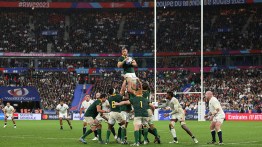
It’s a blessing that England didn’t make the rugby World Cup final

In the days when Spitting Image was funny it featured a song called ‘I’ve Never Met A Nice South African’. In fairness it was in 1986, long before the end of apartheid, though the sentiments would have chimed with the feelings of most English sports fans at the weekend. In the end South Africa was the story: pitted against England on the same day, in two different sports, in two World Cups, resulting in two defeats for England – but two very different post-match emotions. The rugby semi-final felt almost triumphant: okay, so England lost, but what a stirring, intense, physical battle. It was not a game, however, to illustrate