Contemporary art

Slight: Steve McQueen at Tate Modern reviewed

Steve McQueen’s ‘Static’ (2009) impresses through its sheer directness — and it’s very far from static. A succession of helicopter-tracking shots around the Statue of Liberty, it’s the first film you encounter in this quasi-retrospective from the Turner Prize-winning conceptual artist-turned-Oscar-winning film director. Shot shortly after the monument reopened after the 9/11 attacks, it offers the eye an exhilarating whirl of light and colour, while the mind — given the potency of that historical context — goes on an equally dizzying train of associations through the notion of American liberty. While you bring these associations yourself, they seem to emanate naturally and directly from what you’re seeing. It’s that essential
How capitalism killed sleep

What can you make a joke about these days? All the old butts of humour are off limits. No wonder the top ten jokes at the Edinburgh Fringe are starting to sound as though they were banged out in a cracker factory. But this one, from Ross Smith, did make me laugh: ‘Sleep is my favourite thing in the world. It’s the reason I get up in the morning.’ If laughter is an escape valve for our fears, then sleep, or the lack of it, is now comic material. When 10 per cent of the population pops sleeping pills at least three times a week, self-help books about sleep —

The truth about food photography

While looking at the photographs of food in this humorous exhibition at the Photographers’ Gallery, I thought of how hopelessly outdated our own snaps will soon look. What seems fresh, clean and wonderfully modern to our eye — an Ottolenghi salad, say, dotted with pomegranate seeds and za’atar — will soon look almost tragic. How we photograph food betrays some of our deepest fantasies about ourselves. What’s more, good taste can quickly sour. Feast for the Eyes brings together food photography from the 19th century up to the present day and reveals just how much our attitudes to food change. At first, photographers emulated the principles of still- life painting,

A triumph: ENO’s Mask of Orpheus reviewed

ENO’s Mask of Orpheus is a triumph. It’s also unintelligible. Even David Pountney, who produced the original ENO staging in 1986, admitted to me in the interval that he didn’t have a clue what Harrison Birtwistle’s opera was about. But who cares when, visually and musically, you’re being socked between the eyes? Mask makes sense in the same way an earthquake makes sense. Fittingly we begin with total nonsense: Orpheus, in the bath, attempting to reform language. This is Orpheus the Man, in red velour and gelled-up hair, looking like Rod Stewart. An unlikely charmer of fishes and trees, it has to be said. But soon enough another Orpheus pops

Hiding in plain sight

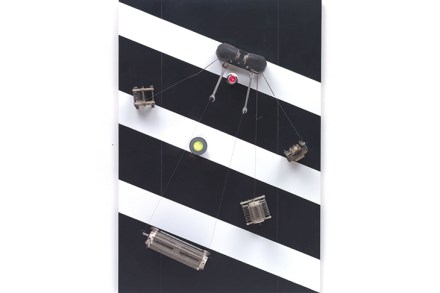
Steel flowers bend in a ‘breeze’ generated by magnetic pendulums. This is the first thing you see as you enter Tate Modern’s survey show. And ‘Magnetic Fields’ (1969) is pretty enough: the work of this self-taught artist, now in his nineties, has rarely been so gentle, or so intuitive. But there’s a problem. ‘I would like to render [electromagnetism] visible so as to communicate its existence and make its importance known,’ Takis has written. But magnetism hides in plain sight. A certain amount of interference is necessary before it will reveal itself. Does the interference matter? Does the fact that gallery assistants have to activate this work every ten minutes

Cutting edge

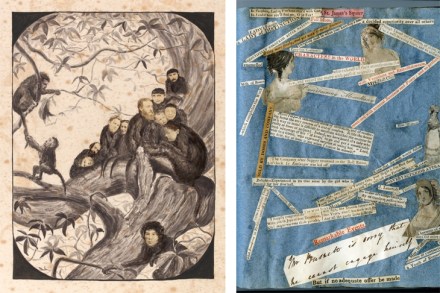
The art-history books will tell you that sometime around 1912, Picasso invented collage, or, actually, perhaps it was Braque. What they mean is that sometime around 1912 a man of sufficient standing took up a technique that had been quietly practised in largely domestic spheres by a largely female army of amateurs, and applied it in his own work. Cue the universal astonishment of observers who pretended they had never seen such a thing before. This narrative has been recycled ever since, assuring us that the collage techniques that shaped the language of dada, surrealism and all the other isms that made up modernism, as well as pop art and

Some like it hot | 13 June 2019

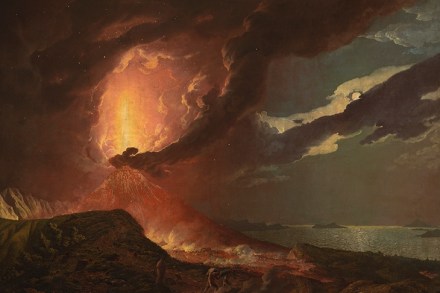
‘Playing God is indeed playing with fire,’ observed Ronald Dworkin. ‘But that is what we mortals have done since Prometheus, the patron saint of dangerous discoveries.’ There’s no Prometheus in the RWA’s new exhibition Fire: Flashes to Ashes in British Art 1692–2019, but there are plenty of flames, some dangerous, some not. The third in the Bristol gallery’s trilogy of shows on elemental themes, following The Power of the Sea (2014) and Air (2017), Fire features the most dramatic of the four elements, and the most fun to paint. Artists love playing with fire. It’s a subject that has held audiences in thrall since medieval worshippers were kept on the

Our flexible friend

Plastics — even venerable, historically eloquent plastics — hardly draw the eye. As this show’s insightful accompanying publication (a snip at £3) would have it, ‘Plastics have no intrinsic form or texture, thus they are not materials that can be true to themselves.’ They exist within inverted commas. They can be shell-like, horn-like, stony, metallic — they do not really exist on their own behalf. Mind you, the first vitrine in Raw Materials: Plastics at the Nunnery Gallery in east London contains an object of rare beauty: a small, mottled, crazed, discoloured sphere that looks for all the world like the planet Venus, reduced to handy scale. It’s a billiard

Oh, I do like to be beside the seaside

It was bucketing it down in Venice, yet the beach was heaving. Families, lovebirds, warring kids, a yappy mutt, all strewn across a sandy expanse, basking on beach towels. Balls were bounced, crosswords filled, timelines scrolled. Out of this idleness, songs would bubble up, light billowy airs — speaking now to suncream mundanities, now to geological anxieties — whisked up to our ears as if on a cooling breeze. We were in the Lithuanian Pavilion inside a dilapidated former military storehouse in a corner of north Venice, being given a god’s-eye view on an extraordinary new opera, Sun & Sea (Marina), by a Lithuanian trio: composer Lina Lapelyte, director Rugile

England, their England | 28 March 2019

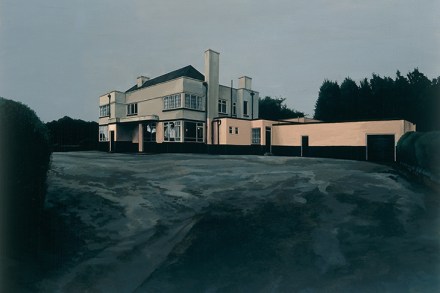
All good narrative painting contains an element of allegory, but most artists don’t go looking for it on a Coventry council estate — unless, that is, they happen to come from there. Since starting his Scenes from the Passion series while at the Royal College in the 1990s, George Shaw has been painting the Tile Hill estate where he grew up. In 20 years he has produced 200 images of the same square mile, revisiting the pubs, library and short cut to the shops of his youth, winkling out the Englishness of the place while lamenting the decline of its fabric and post-war community spirit. Tile Hill is Shaw’s Cookham,

Dream on | 14 March 2019

Art movements come and go but surrealism, in one form or another, has always been with us. Centuries before Freud’s scientific observation that the stuff of dreams will out, artists were painting it. The English have never been much cop at surrealism — too buttoned up; the Celts are better. The Scottish painters Alan Davie and John Bellany, jointly celebrated in Newport Street Gallery’s latest show, Cradle of Magic, were both surrealists in different ways. Both attended Edinburgh College of Art — Davie in the late 1930s, Bellany in the early 1960s — and both came out fighting in a punchy style of painting combining expressionistic brushwork with strong colour.

Keep politics out of art

If you want to lose friends and alienate people in the art world, try telling them you support Britain leaving the EU. As someone on the left, I’ve always argued a left-wing case for leaving. It is, to say the least, an unfashionable position, usually met with anxious looks, sullen silence or overt hostility from one or other artist, curator or art bureaucrat. That the art world should be against Brexit should come as little surprise. It’s striking, however, how far art has become involved in the burning political questions and controversies of the moment, to the extent that making art is often seen as nothing more than an extension

Privates on parade | 28 February 2019

‘Those who can, do; those who can’t, teach.’ If there’s an exception to prove Shaw’s rule, it’s Phyllida Barlow. The 40 years the sculptor spent teaching at the Slade, where her pupils included Rachel Whiteread, have not only left her creative energies intact, but completely failed to keep a lid on them. After turning Tate Britain’s Duveen Galleries into a cross between a lumberyard and an enchanted forest in 2014, then filling the British Pavilion to bursting point at the 2017 Venice Biennale, the septuagenarian who can conjure a sculptural wonderland from the contents of your local branch of Travis Perkins has been let loose on the Royal Academy’s Gabrielle

The empress of art

Somewhere in the bowels of the Tehran Museum of Contemporary Art is a portrait from a lost world. Its subject is a beautiful young woman: Her Imperial Majesty, Empress Farah Pahlavi of Iran. The condition of the work, however, a luminous print by Andy Warhol from 1977, is so bad that it could be a metaphor for Iran itself. Fundamentalist vandals have slashed at it with knives. The Empress — forced into exile when the Iranian Revolution overthrew her husband, the Shah, two years after the portrait was completed — discovered this upsetting news while watching French TV in her Paris apartment. ‘Seeing that, I said, “They are stupid”,’ she

The birth of minimalism

The Spectator is responsible for many coinages. One of the most significant came in 1968, when an article by our 24-year-old music critic, Michael Nyman, appeared with the headline ‘Minimal Music’ (reprinted below). It was a wry joke about music that was more experimental than strictly minimal but it stuck and a musical style that, whatever you think of it, has rarely been matched in influence or reach was born. Walking home from the Fugs’ concert, organised by the Middle Earth at the Round House last week, I was shocked by the 4 a.m. silence — by its awesome superiority to a lot of modern music, and by its unfamiliarity.

What’s That Thing? Award for bad public art 2018

Not a bad year for the award. Honourable mentions must go to the landfill abstractions of Oxford’s new Westgate Centre, to the bees that have appeared in Manchester’s streets to promote the ‘unique buzz’ of the city and to Gillian Wearing, a once decent conceptual artist who has taken to sculpture like a cat to water with her statue of Millicent Fawcett. Nothing, however, brought more mush to our towns than the first world war commemorations. As Simon Jenkins wrote in these pages, ‘reaching for a grand sweeping gesture, something “profound”, is too tempting’ in commissions about war. ‘The search for wishy-washy universals soaks up all the energy and bromides

Spelling it out | 25 October 2018

Just in front of me, visiting Spellbound at the Ashmolean last week, was a very rational boy of about seven and his proud mother. ‘I don’t believe in magic, witches or Father Christmas,’ he announced to the girl presiding over Room One. ‘Perhaps you’re spiritual but not religious,’ said the girl. The rational boy gave her the look she deserved. In that first room pride of place is given to a squat little silvered bottle with a hand-written label: ‘Obtained in 1915 from an old lady living in Hove, Sussex. She remarked: “and they do say there be a witch in it, and if you let un out there’ll be

Antony Gormley

Antony Gormley has replicated again. Every year or so a new army of his other selves — cast, or these days 3-D fabricated, in bronze, iron, steel — emerge from his workshop. Some lucky clones find themselves in wild and beautiful places; others are trapped in private collections. The latest clutch, generation 2018, find themselves in the new galleries at Kettle’s Yard, Cambridge (until 27 August), one sticking out horizontally from a wall, another, an airy stack of steel bars, staring down through a window into town. It’s called ‘Subject’, this work (also the title of the exhibition), and Gormley’s intention is that it acts as an invitation to each

High life | 14 June 2018

New York The summertime exodus is upon us. The Hamptons are overflowing with mouth-frothing groupies looking for celebrities, and the Long Island Expressway is ringing with the hissy fits of enraged drivers stuck in traffic for hours on end. One reason I gave up a beautiful estate in Southampton L.I. was the inability to get there before a lady who had initially said yes changed her mind because of the fatigue and boredom of sitting in a car watching other stationary cars. The Hamptons have become an artistic pit stop for the summer. The nouveaux riches need art as badly as #MeToo needs sexual predators; it justifies their grandstanding. A

Mourning glory | 17 May 2018

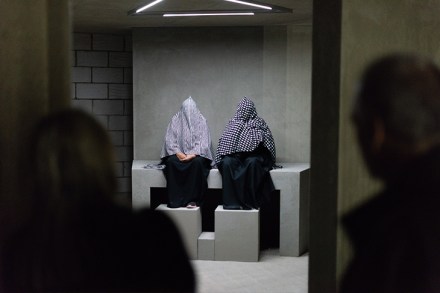
They enter two by two. Grannies, mainly. Headscarved, mainly. Some locking arms. A bit glum. Like rejects from Noah’s ark. Passing through two vertical beams of light, they appear then disappear, shuffling into the darkness. From concrete caves, they begin to wail for the dead. We’re witnessing Artangel’s latest extraordinary commission, ‘An Occupation of Loss’, by Taryn Simon. The piece draws together professional mourners from all corners of the earth — China, Armenia, Ghana, Ecuador — and deposits them under a block of flats in Islington High Street. The Azerbaijanis wallop their thighs as they wail. The Venezuelans sob behind full face veils, the fabric vibrating in sympathy. Some pace